Thinking 21st century art in the world from Niigata
Echigo-Tsumari Art Field - Official Web Magazine
Staff / Behind the Scenes in Echigo-Tsumari
Echigo-Tsumari Cuisine 2020: Winter to Spring
16 May 2020
The entire house is like a treasure chest for food preservation that makes the most of its surroundings.
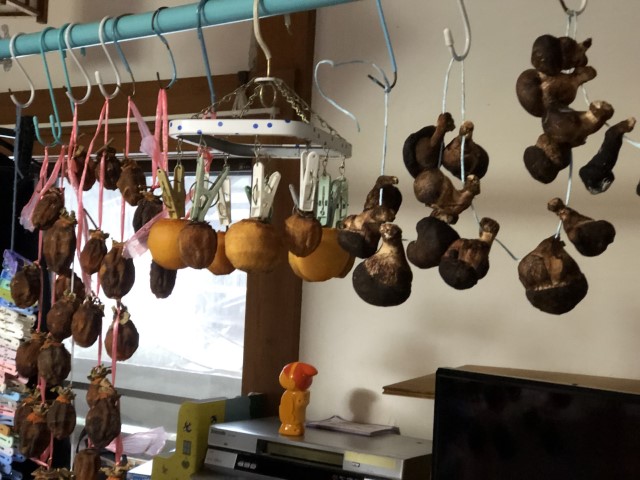
Following last fall’s Special Exhibition, the Matsudai NOHBUTAI Gallery hosted another Special Exhibition this winter, curated by D&DEPARTMENT. Titled “Matsudai Terraced Rice Field Bank: Around the Rice from the Rice Fields—Winter,” the exhibition focused on winter food preservation in Matsudai, a region known for heavy snowfall.Last December, while visiting the seven villages involved in the “Matsudai Rice Fields Bank” with curator Yuki Soma (Director of D&DEPARTMENT), we were told by residents in each village, “We don’t have anything here.”At every stop, we discovered preserved ingredients—prompting us to ask, “What’s this?”—and borrowed them on the spot to create the exhibition. We categorized and displayed the preservation methods for ingredients that have been traditionally passed down—from early spring mountain vegetables to summer vegetables harvested in abundance but too much to eat, and ingredients harvested through late fall—into seven categories: “under the snow,” “in holes,” “inside the house,” “drying,” “salt preservation,” “miso,” and “sake.”
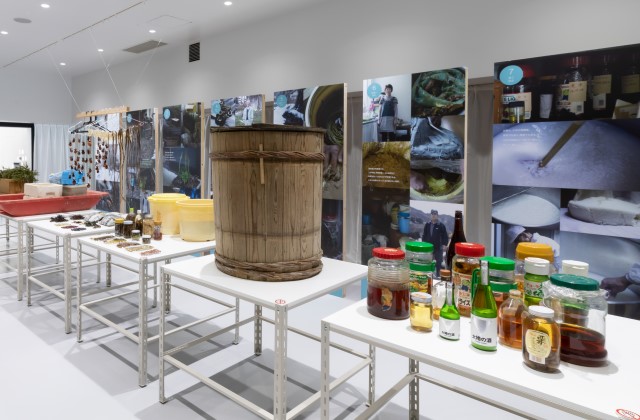
"Matsudai Terraced Rice Fields Bank: Around the Rice Fields—Winter" Exhibition
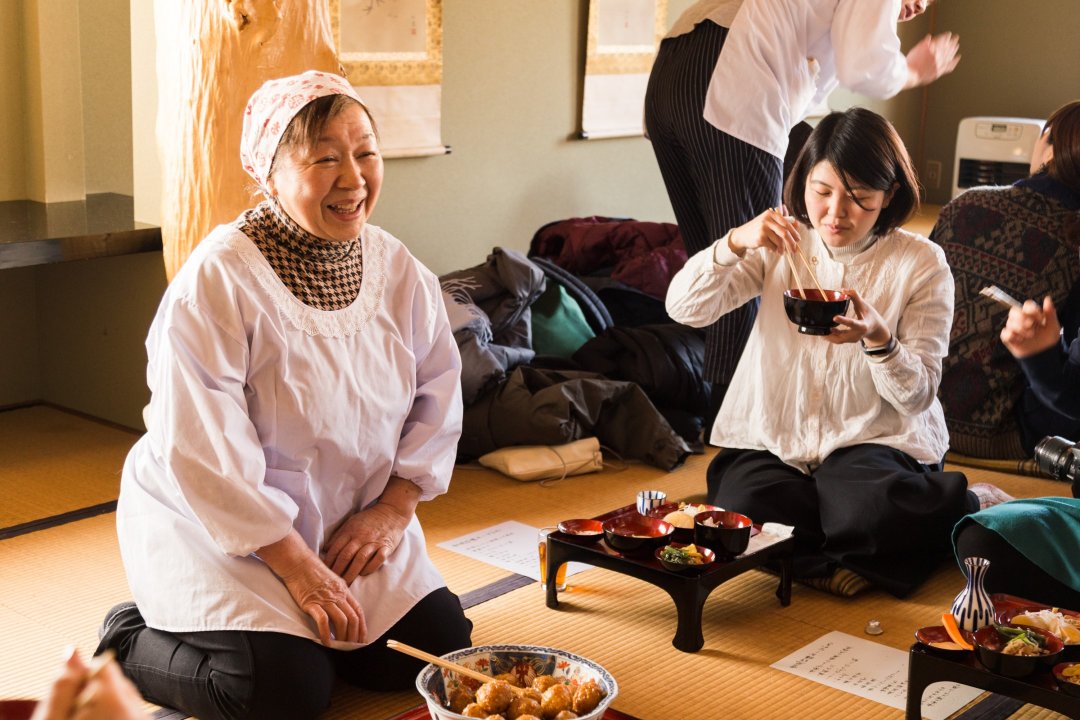
In Echigo-Tsumari, people gather ingredients from the mountains, plant seeds in their fields, grow and harvest them, and preserve them using various methods. After that, the entire process—from preparing the ingredients and cooking them to serving them at the table—was carried out almost entirely by a single person or a family. Each of these practices is unique to the local climate and the way of life shaped by snow and humidity.Although the hands-on experience scheduled for March—a visit to a village to see preserved foods firsthand—could not take place due to measures to prevent the spread of COVID-19, visitors were still able to get a glimpse of this way of life through the exhibition—which the curator described as “a treasure trove of food preservation where the entire house seems to make the most of its environment”—and through the interview record sheets distributed at the Venue.
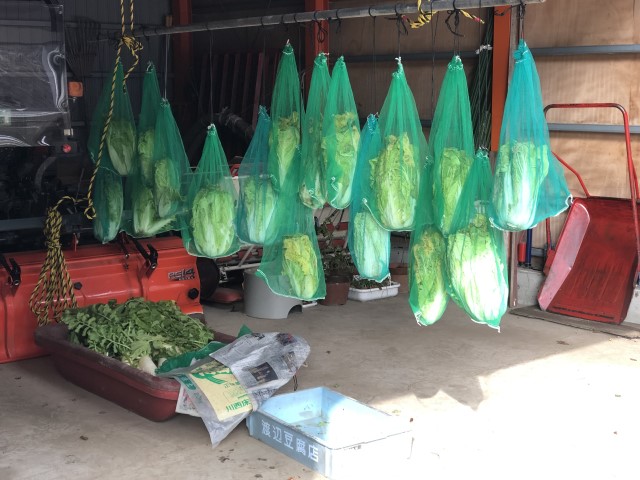
In addition, at Satoyama Shokudo, small flags were displayed on the weekend buffet lunch and dessert menus to highlight dishes featuring preserved foods such as bamboo shoot hearts, takuan pickles, and snow-buried carrots. Even on weekdays, the set meals included “bamboo shoot heart miso soup” made with sake lees. This allowed visitors to actually sample these preserved foods.
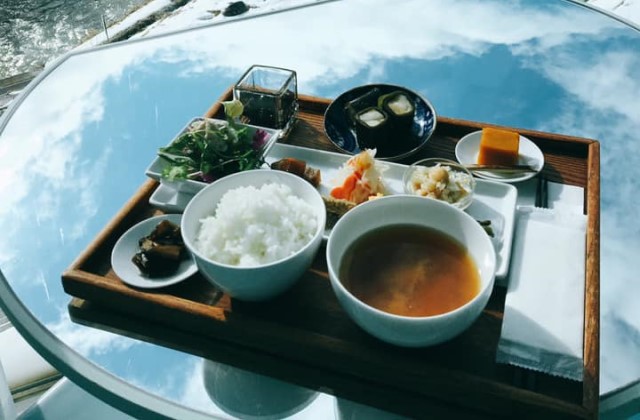
Weekday Set Meal with "Zuiiki Kasujiru"
Chef Fumio Yonezawa × The Cuisine of Echigo-Tsumari
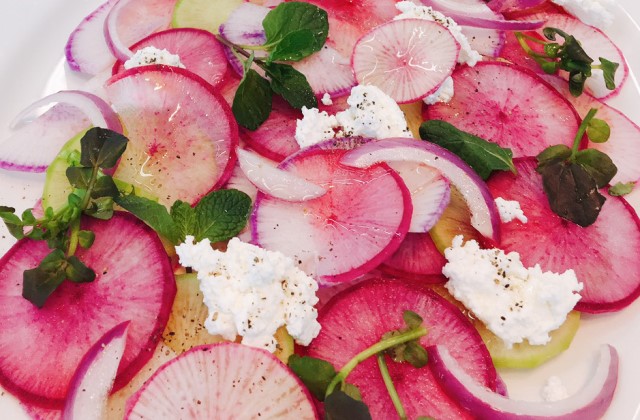
"Colorful Root Vegetable Salad with Red Onions Marinated in Honey and Yuzu, Served with Cottage Cheese and Mint"
At Satoyama Shokudo, following our summer and fall offerings, Chef Fumio Yonezawa has supervised the creation of two new winter dishes: “Tsumari Pork and Herb Meatballs in Orange-Flavored Tomato Soup,” a heartwarming winter dish, and “Colorful Root Vegetable Salad with Honey-Yuzu-Marinated Red Onions, Cottage Cheese, and Mint,” a reimagined take on traditional winter preserved foods that can often seem rather plain.
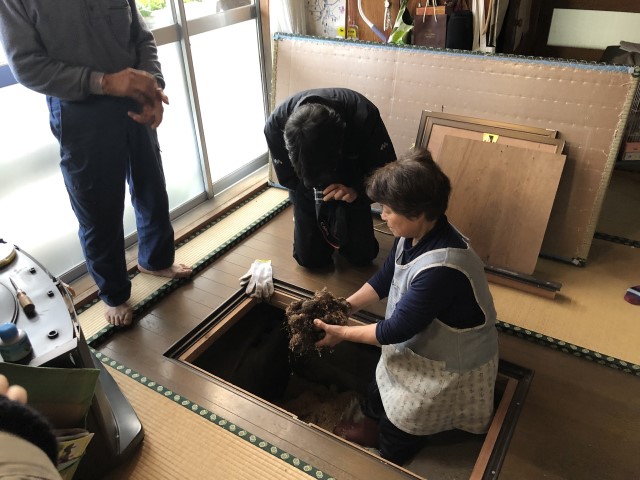
In early February, the chef and I visited the home of Hatsue Yanagi from the Sugakari hamlet—a wild vegetable-gathering expert from Matsudai who has been involved with Satoyama Shokudo since its opening—and talked with her about winter life and preserved foods. She showed us and let us taste various items firsthand, including a kotatsu heated by briquettes, sweet—sweet—mandarins that had been stored since fall and had become even sweeter, and preserved vegetables we found after lifting the floorboards.We made plans to go wild vegetable foraging together in the spring. (Although this foraging trip had to be canceled due to the spread of the coronavirus, we’ve agreed to definitely try again next time.)

Additionally, at Satoyama Shokudo—which had suspended its buffet-style service in March and had been serving individual portions for lunch on weekends as well as on weekdays—Chef Yonezawa began offering the “Tsumari Pork Loco Moco with Butter Rice and Butterbur Shoots,” a dish he had served last spring at “TSUMARI KITCHEN” on the NUNAGAWA Campus, starting in April. Although it was only available for two weeks, from Monday, April 13, until the restaurant closed, the dish was sold during that time.
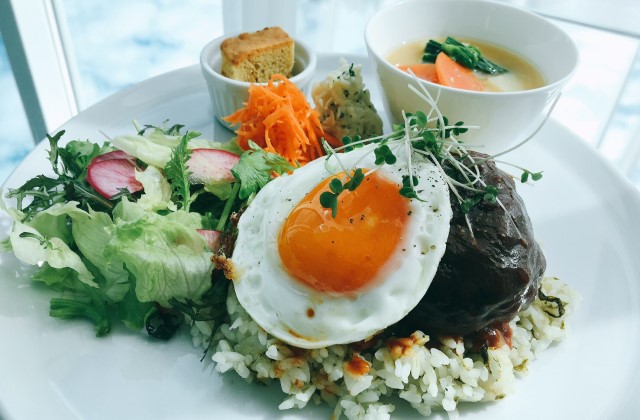
"Tsumari Pork Loco Moco with Butter Rice Topped with Fuki Shoots"
Spring's Bounty—Wild Vegetables—
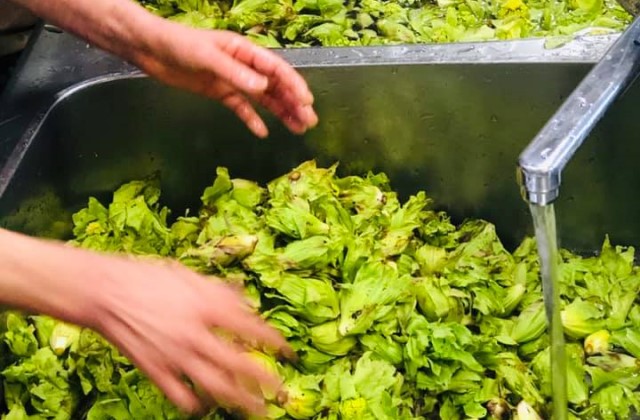
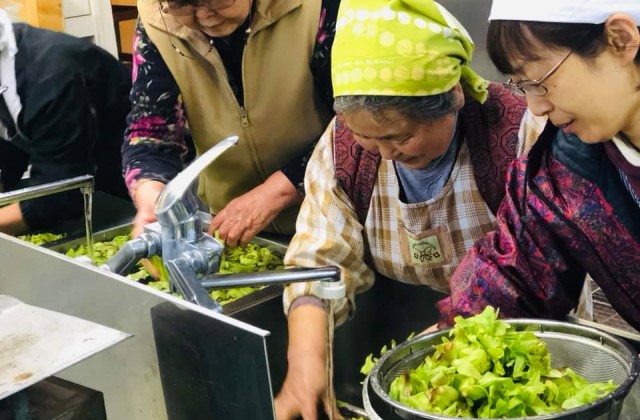
For the past two years, we’ve been working with the mothers in the Murono district of “TSUMARI KITCHEN” every year to freeze fukinotou.Since we had light snow this year, we carried out the fukinoto preparation—which we usually do in mid-April or later—in late March. This year, we processed 16 kilograms of fukinoto picked by the mothers, resulting in about 24 kilograms of frozen fukinoto. Since this is our third year, the mothers worked efficiently and finished by mid-morning. Last summer, we used the fukinoto in dishes such as the “Fukinoto and Tomato Curry” on the buffet menu at Satoyama Shokudo. We plan to continue using it this year as well.

Snowy Scenery × Afternoon Tea

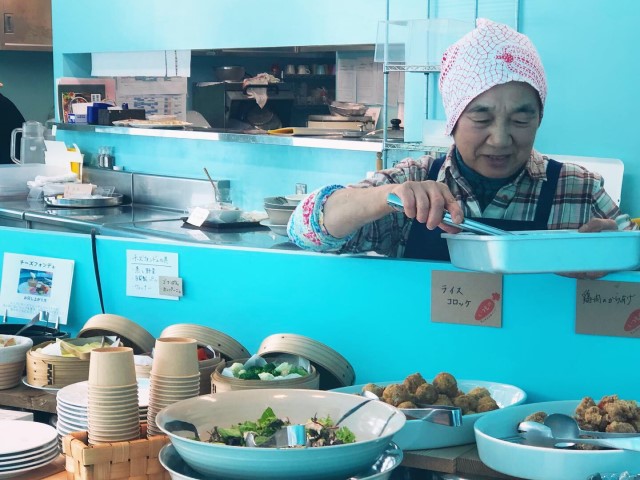
In addition, during the winter months, we offered an afternoon tea set with reservation only on two days each month from February through April. Hoping to encourage guests to enjoy our café time as well, our staff has been expanding our repertoire since last summer so that we can always display several varieties of seasonal cakes in the cafeteria’s display case.
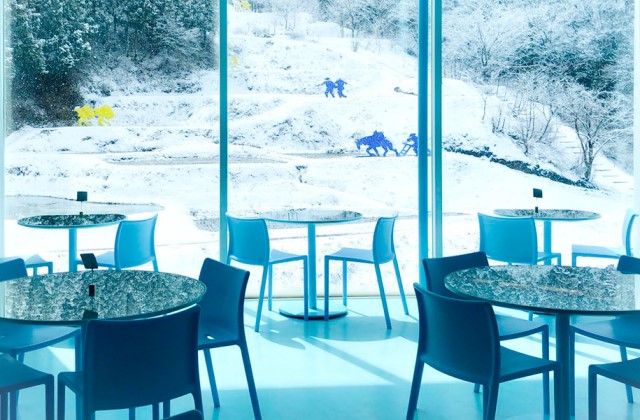
Afternoon tea was an event we planned specifically for the winter period, when heavy snowfall makes it difficult to travel far. This year, however, there was less snow, and on some days we received many reservations from guests, who enjoyed Satoyama Shokudo’s homemade sweets and drinks served on three-tiered stands. While we offered a buffet-style service in February, we adapted our approach in March and April by serving guests at their individual tables. We hope to continue organizing this event as a menu option for guests to enjoy a relaxing afternoon café break after lunch.
Akiko Hida, Food Team Leader and Manager of Matsudai NOHBUTAI at Echigo-Tsumari
(NPO Echigo-Tsumari Satoyama Collaborative Organization)

Articles

Latest Articles

Stay connected with the ETAT official social media to receive the latest news and event information, and the many seasonal faces of Echigo-Tsumari as well as new issue of the ETAT official media, “Art from the Land”.