Thinking 21st century art in the world from Niigata
Echigo-Tsumari Art Field - Official Web Magazine
Staff / Behind the Scenes in Echigo-Tsumari
Chasing the Sound That Pops Out: MonET & Akashi no Yu—A Scene Relay
03 October 2025
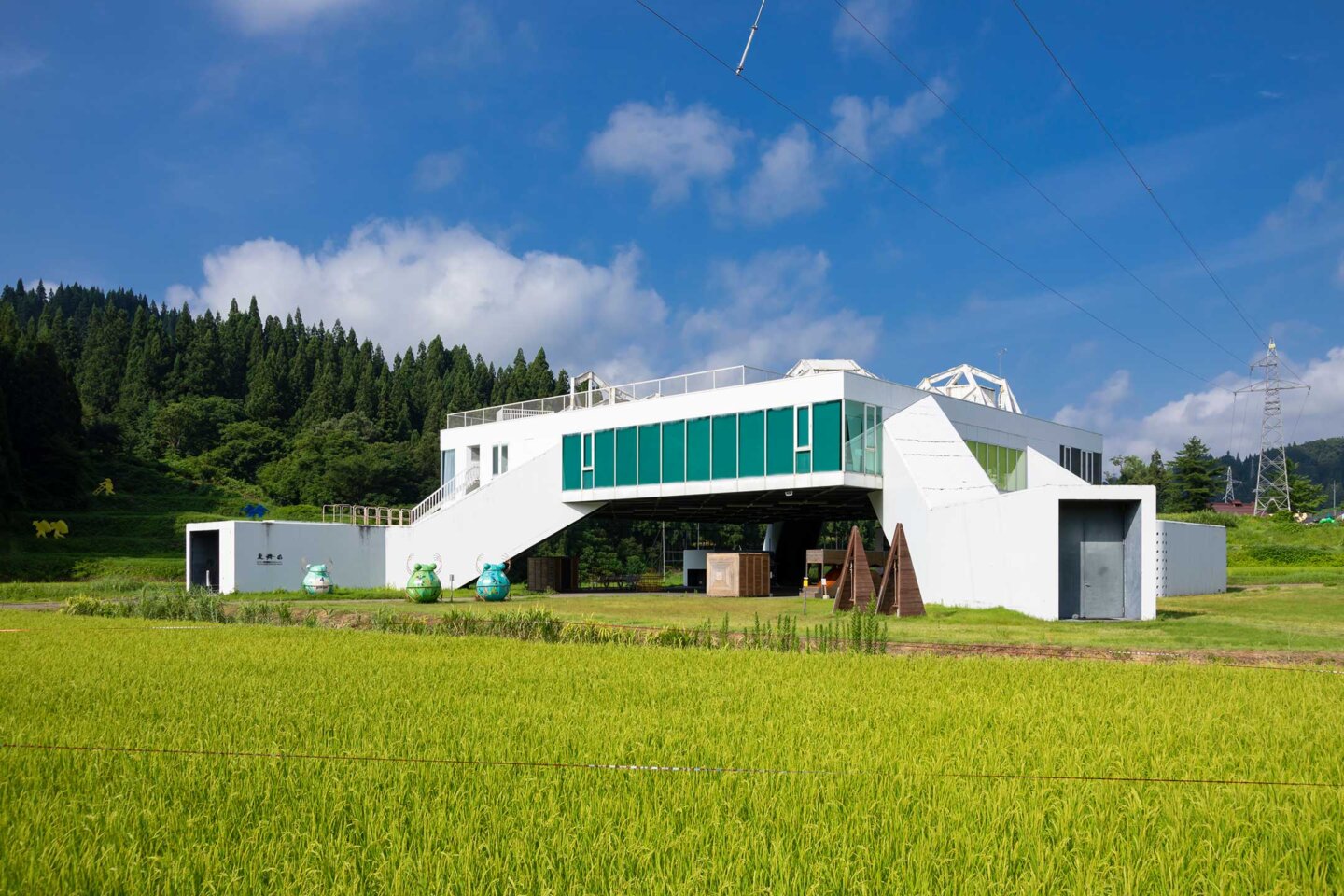
The “Museum on Echigo-Tsumari, MonET” and the “Echigo-Tsumari Exchange Center Akashi no Yu” are hub facilities for the Echigo-Tsumari Art Field, designed by architect Hiroshi Hara, and are physically integrated as a single building. The facilities showcase approximately 15 permanent artworks, host seasonal Special Exhibitions, and operate a museum shop, a café, and a hot spring.
The day begins with cleaning the museum. Including the cleaning staff, everyone works together in the morning to clean and maintain the museum’s environment. Since the museum is open from 10:00 a.m. to 5:00 p.m. and the hot springs are open from 11:00 a.m. to 9:00 p.m., we operate on a two-shift system with early and late shifts. I work as a staff member in charge of the overall management and operations of the facility, and today I’m on the late shift.
It’s almost time for the lunch shift change at the front desk. I’ll take over from the early-shift staff and greet visitors with a warm “Welcome!” Alright, let’s get to the starting line.
On your marks… Get set… Go!
The hot spring alarm buzzer is sounding from the central control panel in the office. When I check, the display reads “Filtration Control Panel Malfunction.” The alarm goes off whenever the water temperature rises even slightly above the set temperature. I have to go to the machine room right away to adjust it.
Once the temperature is back to normal and I return to the office, the internal phone rings with a discordant tone. It’s an urgent call from a guest in the changing room. “Hello, this is the office.” Tension runs through me. Guest: “We’re out of tissues.”I breathe a sigh of relief. Thank you for letting me know.
A little while later, the bell at the front desk chimes—a guest is calling. Front desk staff: “We’ve received an order for ‘Snow-Buried Carrot’ soft-serve.” This is an original flavor we planned and developed in-house to highlight local ingredients—a beautiful orange-colored soft-serve made with snow-buried carrots, whose sweetness has been concentrated beneath the snow. It makes me so happy to see guests taking photos and enjoying it.
In the entrance hall near the front desk, the charming sound of mini glockenspiels rings out. Ah, it’s “Do-Re-Mi” again. Here, the artwork “The Long and Winding River (tunnel and table)” by Rintaro Hara and Yu Hara is on display, where guests can enjoy table games, ping-pong, and mini musical instruments.On weekends, the place is bustling with families. The melodies played by our guests vary widely—from “Twinkle, Twinkle, Little Star” to Ghibli songs—but the frequency of “The Do-Re-Mi Song” is extraordinary. As I listen, I find myself thinking this might be worth some research.
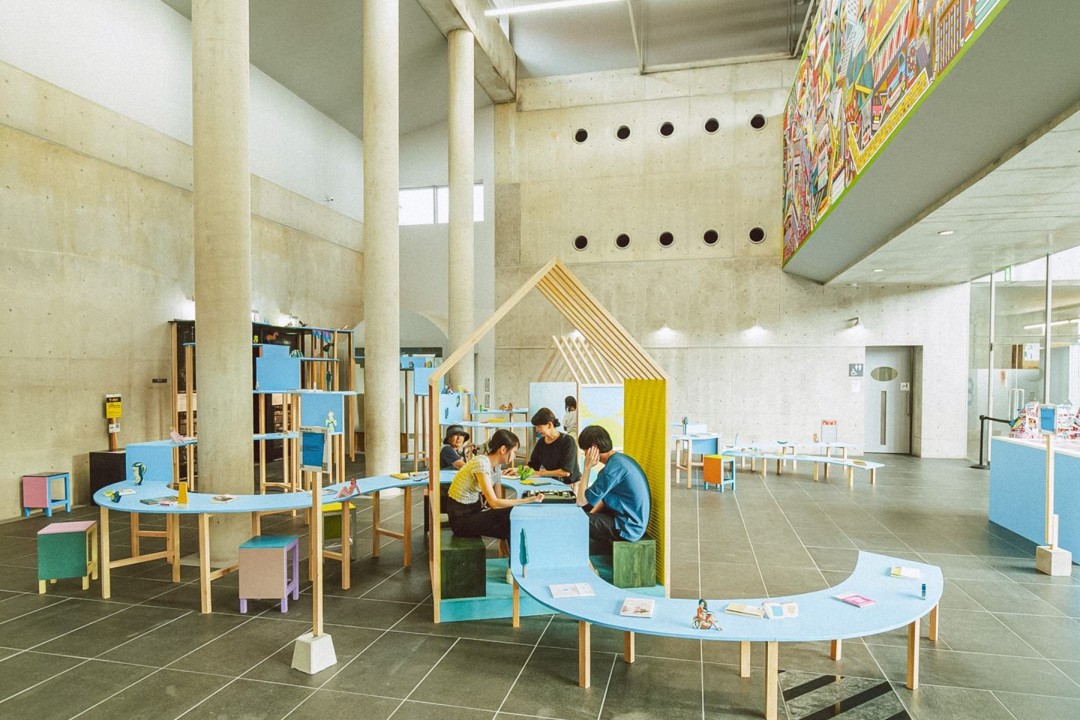
Hot Spring Entrance Photo by Kanemoto Rintaro
Now that the café’s peak hours have died down, I sit down at my desk and get to work on administrative tasks. I enter sales data, reply to emails, and so on. I have an online meeting with Director Kitagawa Fram in a few days to discuss the next Special Exhibition, so I absolutely must finish the materials by the end of today. This is my ultimate goal.
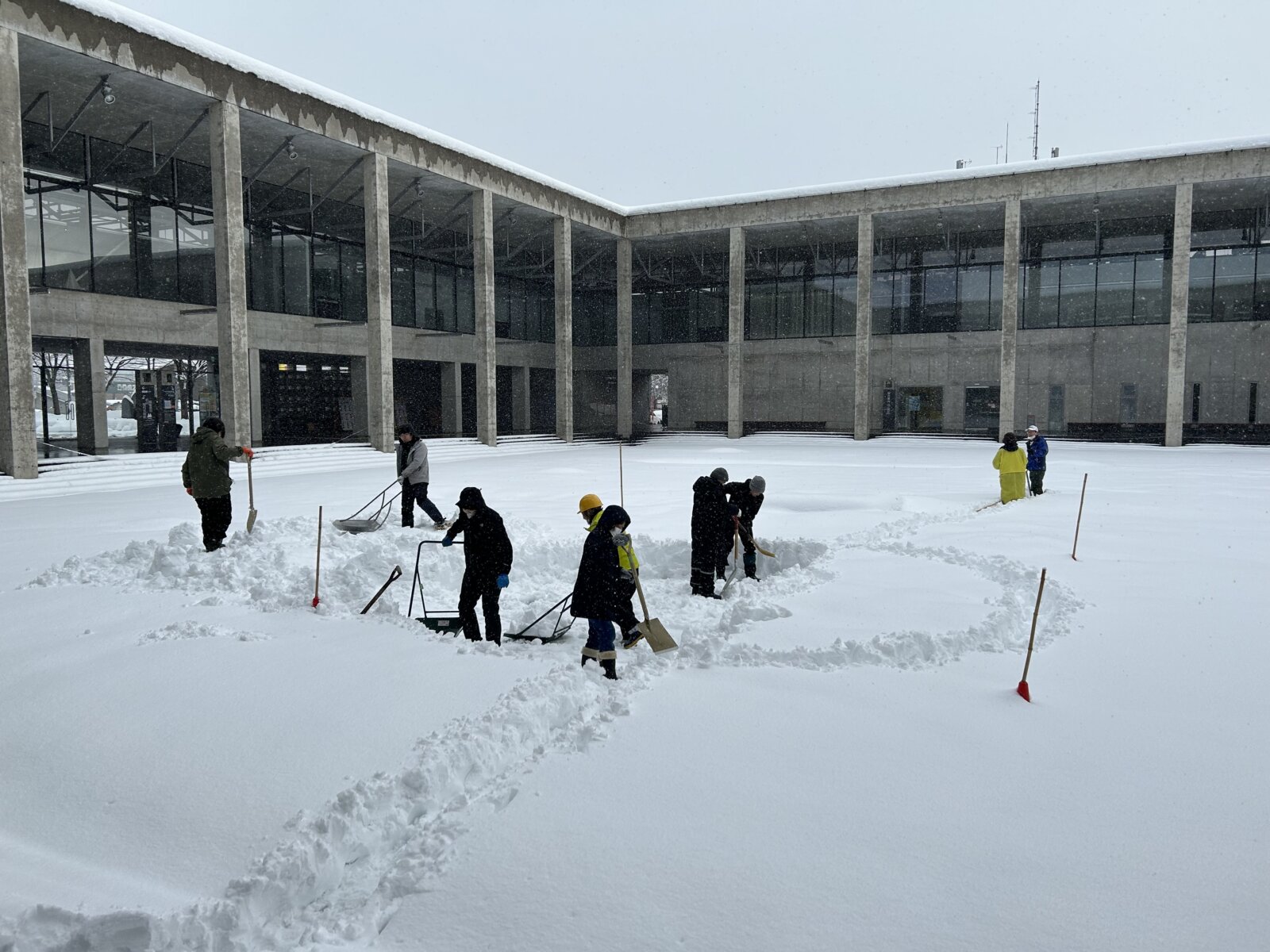
A look at the preparations for the winter exhibition. We’re creating it together with the artist, the Koehi Team, and local residents.
Then, an incoming call from a landline. Customer: “I’d like to tour the art festival—where can I buy tickets?” “Tickets are sold at each venue. If you plan to visit three or more locations, I recommend the Common Ticket—it’s more economical than buying individual tickets.”
Just as I was getting back to my administrative work and focusing, a LINE pop-up appeared on the right edge of my computer screen. It was from the art museum staff’s group chat. “Some of the artworks aren’t moving.” I headed over to check it out right away. This scenario looked familiar—it was a malfunction caused by wear and tear on a power supply unit. It needed to be replaced. I tried calling an electronics store, but it was Sunday, so they were closed. For now, I had no choice but to suspend public viewing. I had to contact everyone involved…
On weekdays, local contractors come and go frequently. Mr. N from the HVAC company: “I’ve brought an estimate for the repair.” (That’s going to cost more than I expected….) Next, Mr. I from the construction company: “I’m here to discuss the roof waterproofing work starting next week.” Following that, Mr. M from the plumbing and plumbing fixtures company: “I’m here to deliver the algae inhibitor.” (That’s the chemical used to maintain the central pond at the museum—I’ve been waiting for it.)
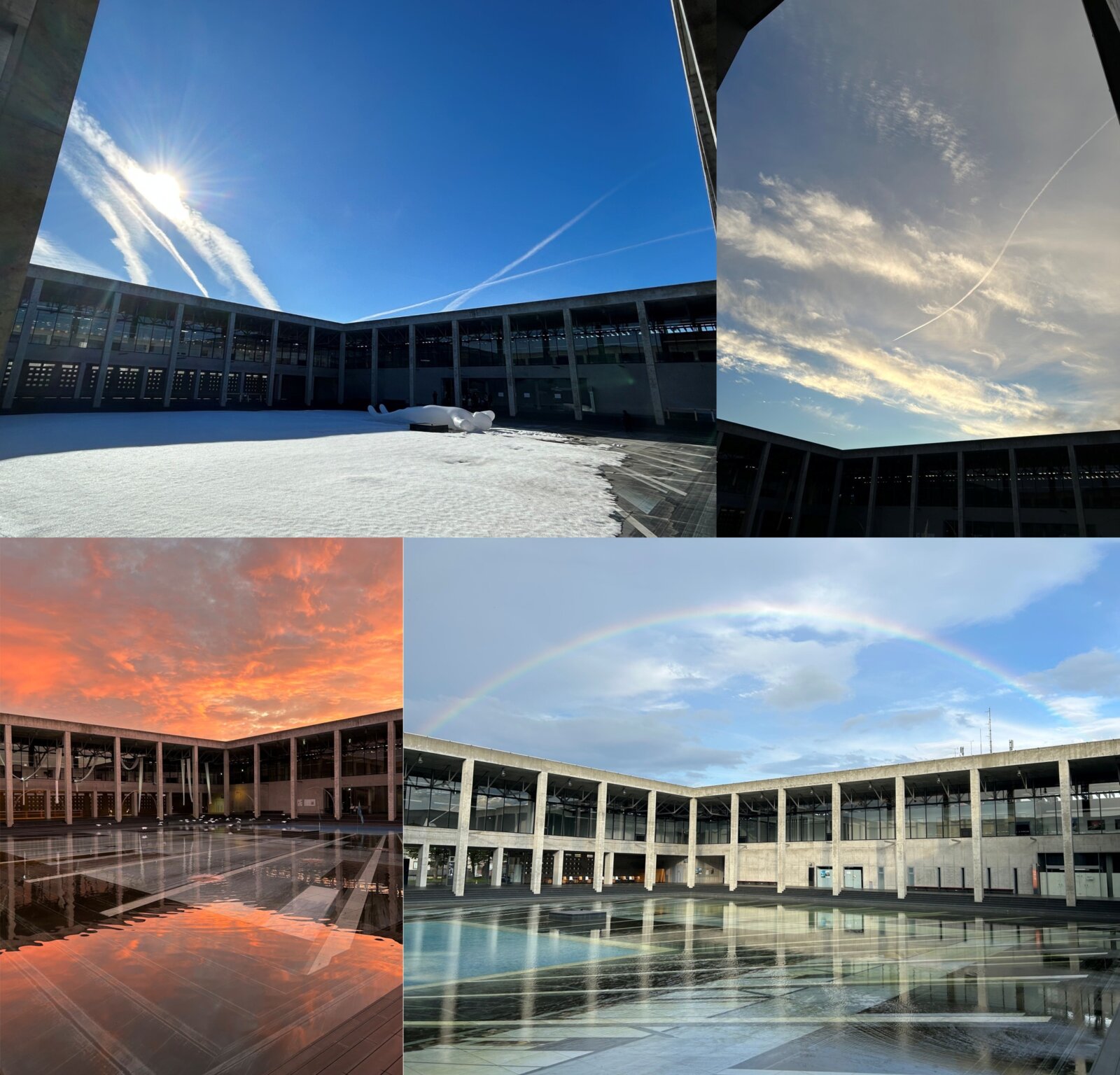
Directly above the pond is an atrium, so you can see the sky. It’s like a canvas cut into a square by the building, with the shapes of the clouds and the colors of the sky constantly changing. The evening sky is especially beautiful—it’s something I look forward to every day. Lately, the sounds of autumn insects and frogs have joined in, providing a soothing backdrop.
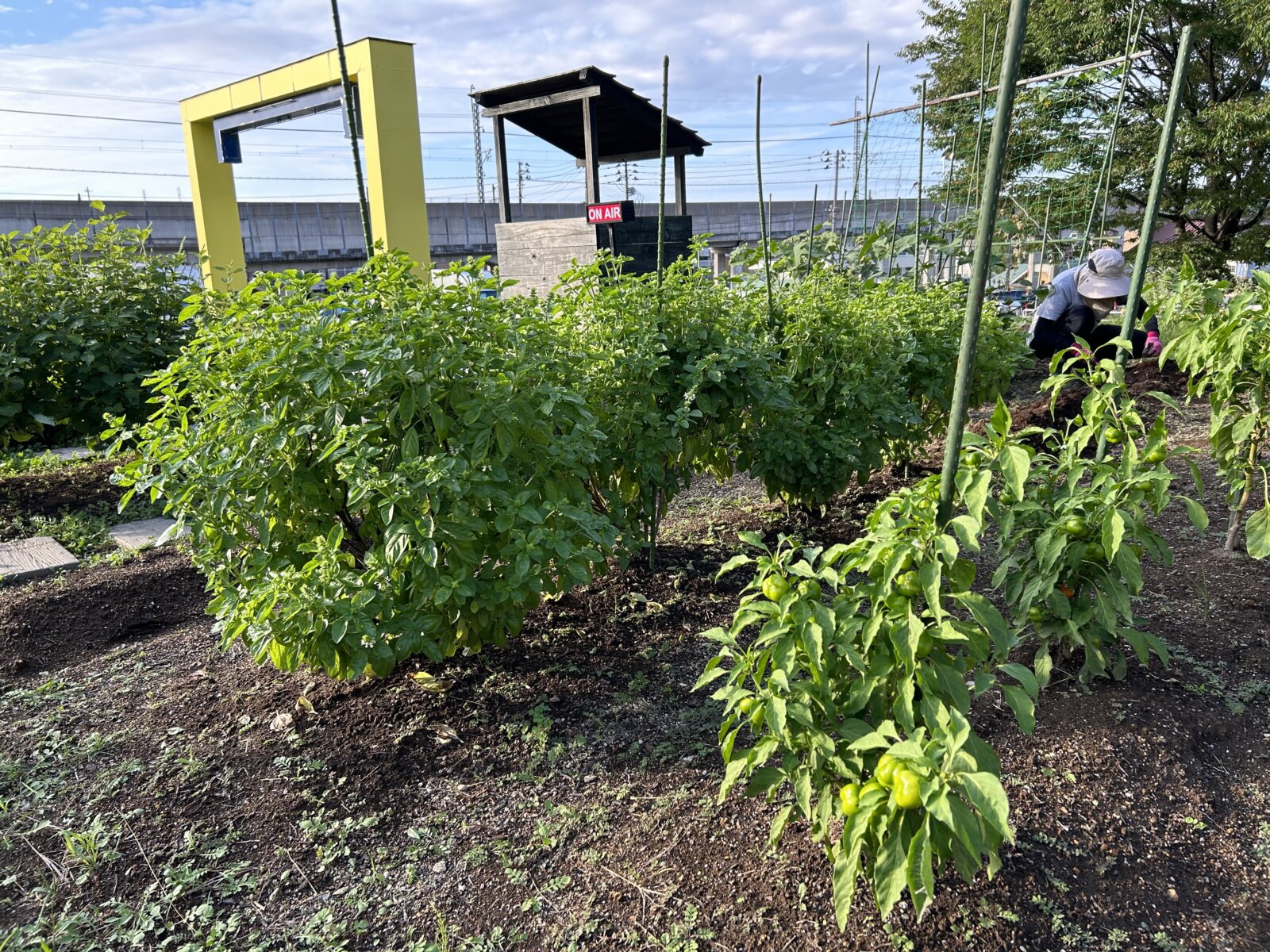
Come to think of it, I wonder what the weather will be like tomorrow. The forecast calls for rain. It looks like we won’t need to water the vegetable patch for “Mole TV,” the outside artwork near the museum, tomorrow. Every year, we decide on the types of crops to grow in consultation with the artist, Kaihatsu Yoshiaki, and the museum staff grow the vegetables under the watchful eye of our neighbor, Mr. T. The basil and bell peppers we grew this year are adding a splash of color to the ga pao rice served at the Akashi no Yu Café.
Ten minutes before closing. It’s time to play “The Light of the Firefly,” our closing song. After seeing off the last visitors, I begin the closing procedures. I’ve also successfully finished the materials I had to submit by the deadline. “Thanks for your hard work today,” we say to each other, and the day comes to an end.
We made it to the finish line!!
Many people visit the Museum on Echigo-Tsumari, MonET, as it serves as the gateway to the Echigo-Tsumari Art Field. I’ve always thought it’s incredibly charming how the region of Echigo-Tsumari attracts such a diverse range of people, leading to so many encounters right here. We all want to work together to ensure that this place continues to be a delightful haven for our visitors.
A Bonus Panel
After getting home, I let out a sigh of relief—it was past 11 p.m. Then my phone rang. The screen displayed “Home Security Company.” Hmm, I wondered what it could be about. When I asked, they explained that a banner I’d forgotten to take down was flapping in the wind, causing the sensor to detect a false alarm. “I’m so sorry! I’ll be more careful from now on.”
Staff of the NPO Echigo-Tsumari Satoyama Collaborative Organization
Yumi Shibayama

Articles

Latest Articles

Stay connected with the ETAT official social media to receive the latest news and event information, and the many seasonal faces of Echigo-Tsumari as well as new issue of the ETAT official media, “Art from the Land”.