
Thinking 21st century art in the world from Niigata
Echigo-Tsumari Art Field - Official Web Magazine
Staff / Behind the Scenes in Echigo-Tsumari
The students’ wild enthusiasm, felt right under my feet. The story behind the creation of “The Shedding House”
16 May 2024
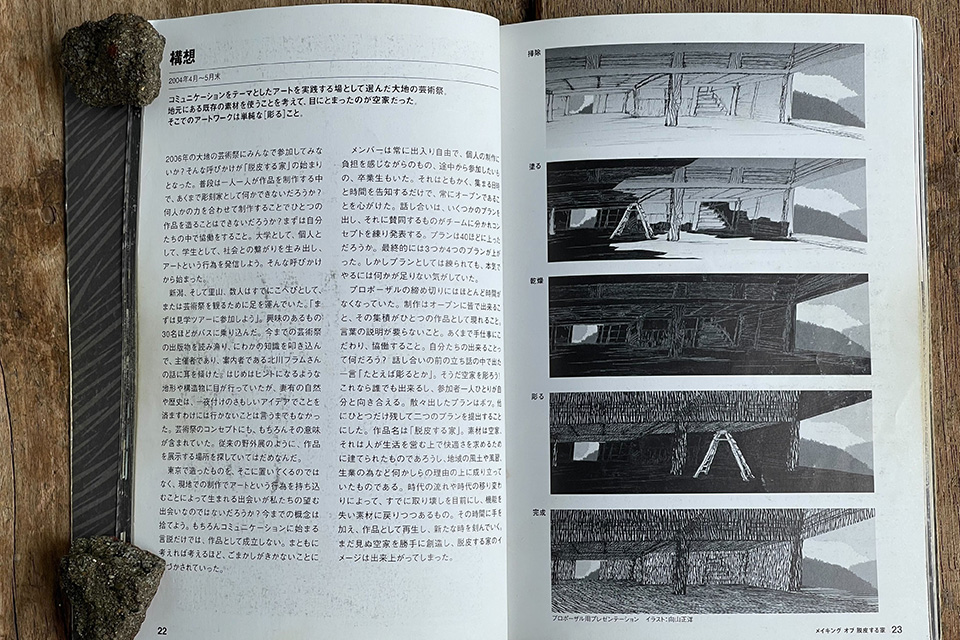
From *The Book of the Shedding House*
Summer 2004.
“We’ve found a vacant house to use for the ‘Shedding House’ project.”
Upon receiving this news, the sculpture course students immediately headed out for a site visit.
However, they were reportedly surprised by the difference between the vacant traditional house they had envisioned in their minds and the actual vacant house located in the Toge hamlet.
The vacant house they had imagined had the charm of a traditional Japanese home, with a thatched roof and a hearth… However, what they actually saw was a house built roughly 150 years ago, with walls and a roof patched together with corrugated iron and corrugated plastic sheets to withstand heavy snowfall, and household goods inside amounting to the load of ten 2-metric-ton trucks.
Spring and Summer 2005.
In order to begin actual production in the fall, they started by cleaning and dismantling the vacant house. Work proceeded in a state where, due to layers of past renovations, no one had even seen the roof trusses before. Although the work became increasingly difficult due to the soot that had accumulated over the 150 years since the house was built, the members of the sculpture course silently carried on with the task at hand. To leave only the roof trusses standing, they dismantled and cleaned the walls, floors, and all plumbing areas.
Late July 2005.
With the cleaning complete and the roof trusses now visible, the work of carving the interior—or “shedding its skin”—finally began. To work efficiently, they erected scaffolding and began carving from the attic, establishing a rule to carve in a right-upward direction as they methodically proceeded (here, too, the battle against soot continued).
Perhaps because much of the lumber used for the beams was sourced locally, a wide variety of wood was employed—ranging from hard to soft, and from smooth surfaces to rough, natural grain. Reportedly, the workers had to stop carving repeatedly to figure out how to handle each type.
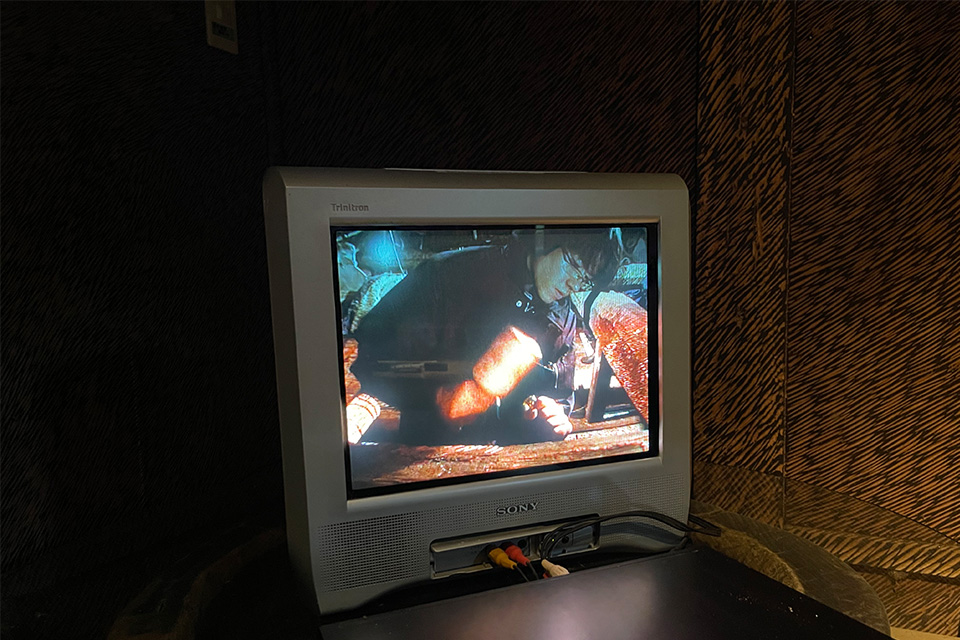
Inside the museum, you can watch archival footage from that time.
October 2005.
Since the house’s foundation had been built using an old, traditional construction method, we had to completely rebuild it using modern techniques. We raised the house about 50 cm with jacks and built a reinforced concrete foundation.
November 2005.
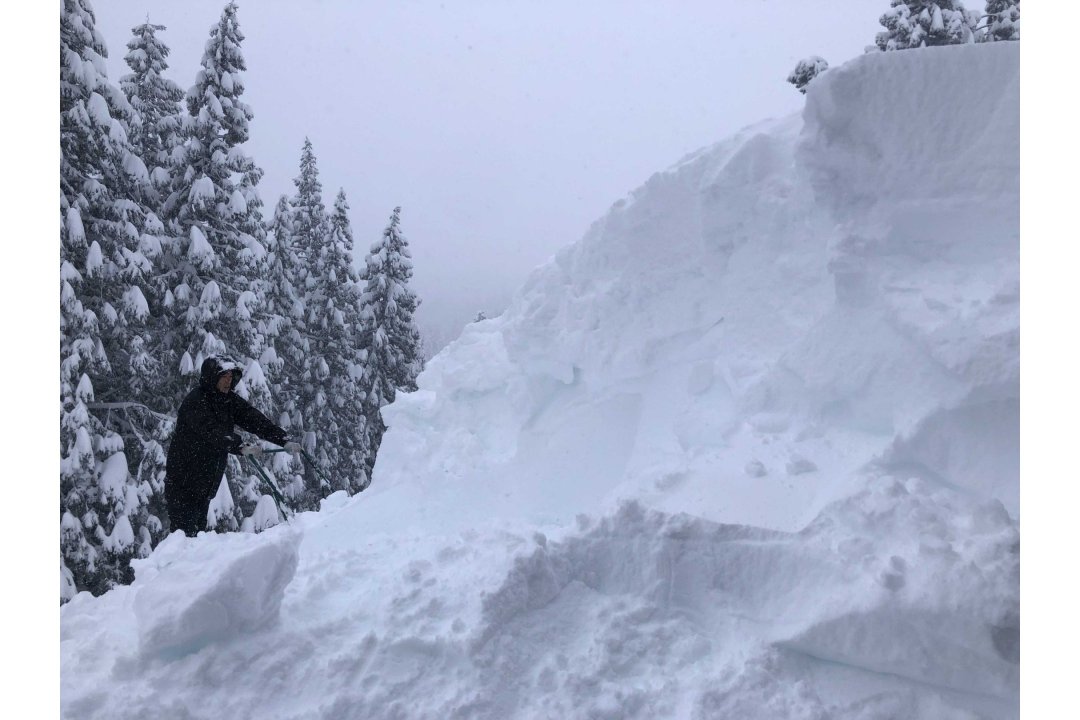
In preparation for the snowfall that was about to begin in earnest, we rushed to complete the exterior wall construction alongside the carving work. In Echigo-Tsumari, heavy snowfall can leave as much as 1 meter of snow on the ground overnight. Even within the region, the Toge settlement receives particularly heavy snowfall; without these walls, everything would be buried in the snow.
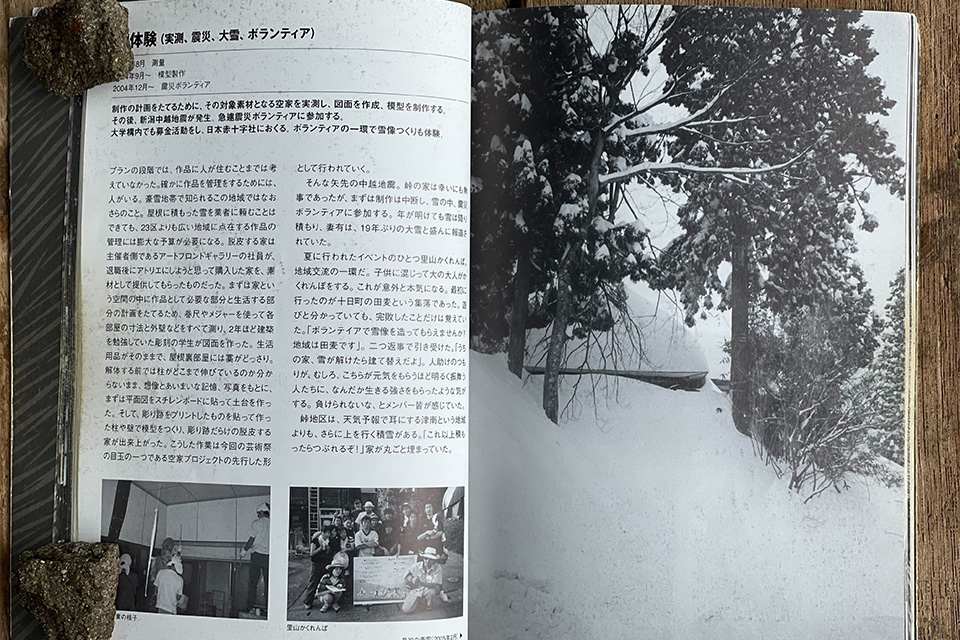
From *The Book of the Shedding House*
February 2006.
Since the university was on break during this period, it is said that the largest number of members came to work on the project during the entire production period. Around this time, residential features such as the kitchen and bathroom began to take shape; while a new living space was being created, the space where the artwork would be exhibited also had to be built within the same house. Various measures were taken on-site to ensure that the two areas did not interfere with one another.
March 2006.
Finally, the carving work moved indoors to the walls. The original walls were coated with plaster, while the newly added walls were painted with red lead and persimmon tannin. The carving began as soon as the paint dried, and the freshly painted surface was almost entirely erased by the carving process. This process continued.
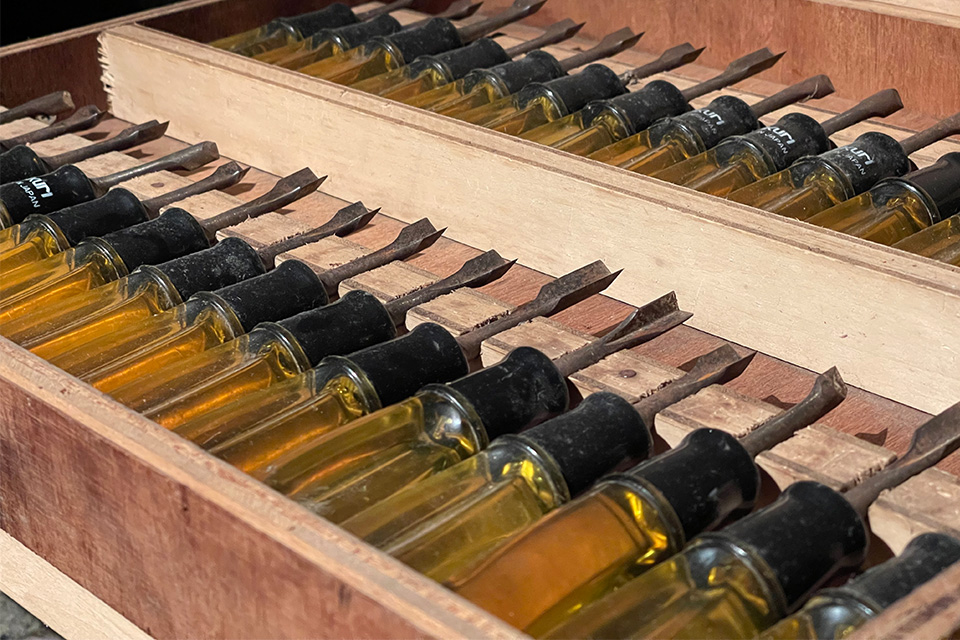
Chisels Used in the Production
May 2006.
We also carved the beams and columns on the first floor. By this time, the scaffolding had been completely removed, and the walls in the wet areas had been painted. At the same time, work on the roof and the new exterior walls was nearing completion, but since the color and texture of the new exterior walls did not match those of the original ones, we pulled off the daring feat of completing the exterior painting in just one day.Kurakake Junichi, the full-time lecturer (now a professor) who led this artwork, looks back on this period as that of “artist-farmers.”
July 2006.
Finally reaching the final stage, we began carving the floor surface. While maintaining the upward-sloping carving technique, we carefully progressed toward a single point in the center of the floor—a surface where people would walk—ensuring the lines converged toward that point.
We finished carving all surfaces on the morning of the art festival’s opening day.

From *The Book of the Shedding House*


Even the shed-its-skin low table is on the rise (Photo by Ishizuka Gentaro)
After approximately two and a half years—from initial planning and conception through production to completion—and involving a total of 3,000 people and more than 160 days of work on-site, “The Shedding House” was born. Upon entering the house, the overwhelming passion of the craftsmanship becomes vividly apparent. It possesses a pure, compelling power that moves many people.Furthermore, the organic carvings made by human hands sometimes resemble an animal’s fur, embodying a power that brings the word “molting” to life.
Beyond the charm of the artwork itself, this area offers the wind blowing through the satoyama woodlands, Japan’s finest The Rice Fields, the Milky Way stretching endlessly across the night sky, and a sea of clouds that appears in the early morning—each of these elements casts a spell that draws people in and compels them to visit.
Why not come and feel the shed wood surfaces, the refreshing breeze weaving through the mountains, and the water droplets in the sea of clouds against your own skin? A night spent at “The Shedding House” will be an experience you won’t find anywhere else in the world.
NPO Echigo-Tsumari Satoyama Collaborative Organization
Masayuki Kobayashi
Basic Information
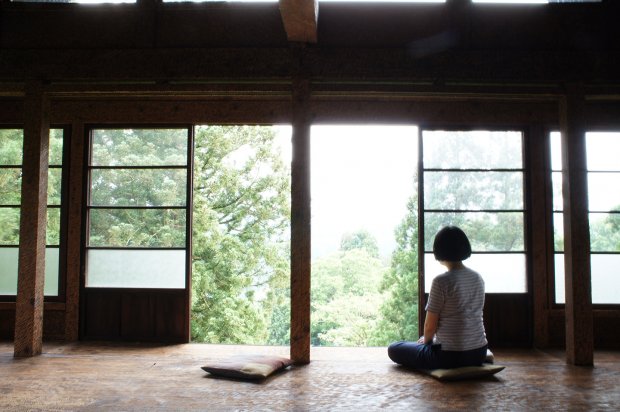
Kurakake Junichi + Nihon University College of Art Sculpture Course: “Shedding House”
Fully equipped with a bath, kitchen, and toilet. Accommodates up to 8 guests across one bedroom and a living area on the first floor, plus one bedroom on the second floor. Self-catering is allowed.It’s perfect not only for families and groups of friends but also for corporate retreats and student training camps. Surrounded by an awe-inspiring art space and the imposing presence of a traditional farmhouse, enjoy quiet nights, mornings with crisp air, beautiful The Rice Fields, and the unhurried pace of rural life—spend a luxurious night away from the hustle and bustle with your group or family.
[Stay Dates] April 25, 2025 (Fri) – November 9, 2025 (Sun) *Closed on Tuesdays and Wednesdays
[Rates] Accommodation Fee: Facility usage fee 22,000 yen + Adults 3,300 yen, Elementary School Students 1,650 yen, Preschoolers 1,100 yen (tax included)
[Address] 776 Toge, Tokamachi city, Niigata Prefecture
Book Information
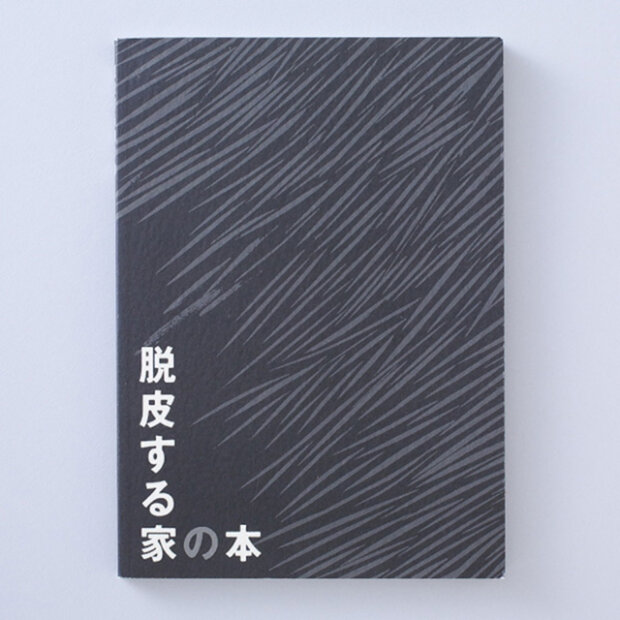
"The Book of the Shedding House"
“The Shedding House,” created in 2006 by Kurakake Junichi and students from the Sculpture Course at Nihon University’s College of Art. This artwork was created by carving an entire vacant house with sculpting chisels at “Hoshitoge,” a location in the Matsudai area known for its beautiful Rice Fields. This limited-edition book, which documents the creative process, is not available at general bookstores.
Language: Japanese
Format: A5
Number of Pages: 98 pages
Publisher: Nihon University College of Art
Publication Date: February 20, 2007
*Please note that depending on the quantity ordered or when combined with other items, shipping fees may apply even if you select DM Mail. We appreciate your understanding.
≫ Echigo-Tsumari Online Shop

Articles

Latest Articles


Stay connected with the ETAT official social media to receive the latest news and event information, and the many seasonal faces of Echigo-Tsumari as well as new issue of the ETAT official media, “Art from the Land”.