Thinking 21st century art in the world from Niigata
Echigo-Tsumari Art Field - Official Web Magazine
Artwork / Ito Makoto
NUNAGAWA Campus Special Exhibition: “Let’s Walk with Our Heads Held High”
Artwork / Ito Makoto
NUNAGAWA Campus Special Exhibition: “Let’s Walk with Our Heads Held High”
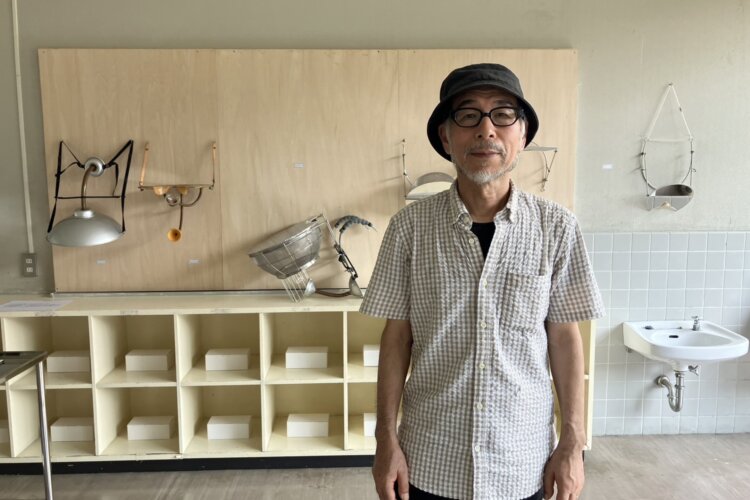
Experiencing space is what [shapes form]
Interview: Ito Makoto
04 August 2023
Starting on July 29, summer exhibitions and events as part of the Echigo-Tsumari Art Field’s year-round program, “Echigo-Tsumari 2023,” will begin one after another. In preparation for the 9th edition of the festival in 2024, the NUNAGAWA Campus will showcase artworks designed to be enjoyed with all five senses. As a prelude to this, we spoke with artist Ito Makoto ahead of his Special Exhibition, “Let’s Walk with Our Heads Held High.”
An Exploration of [Shaping Forms]
――I believe *Crescent*, the artwork created at Matsudai Castle Shiroyama in 2000, was a sculptural artwork. Since this time it’s an experiential artwork, has your approach to creating art changed over the past 20 years?
I still engage in “creating forms,” and I’ve been doing so all along. The inspiration for this artwork, “Let’s Walk with Our Heads Held High,” came from a question I asked myself while continuing to create forms: “What does it mean to ‘experience space’?” “Experiencing space” means experiencing public art together, doesn’t it? However, this artwork was born out of the question: “Are we really all having the same experience?”
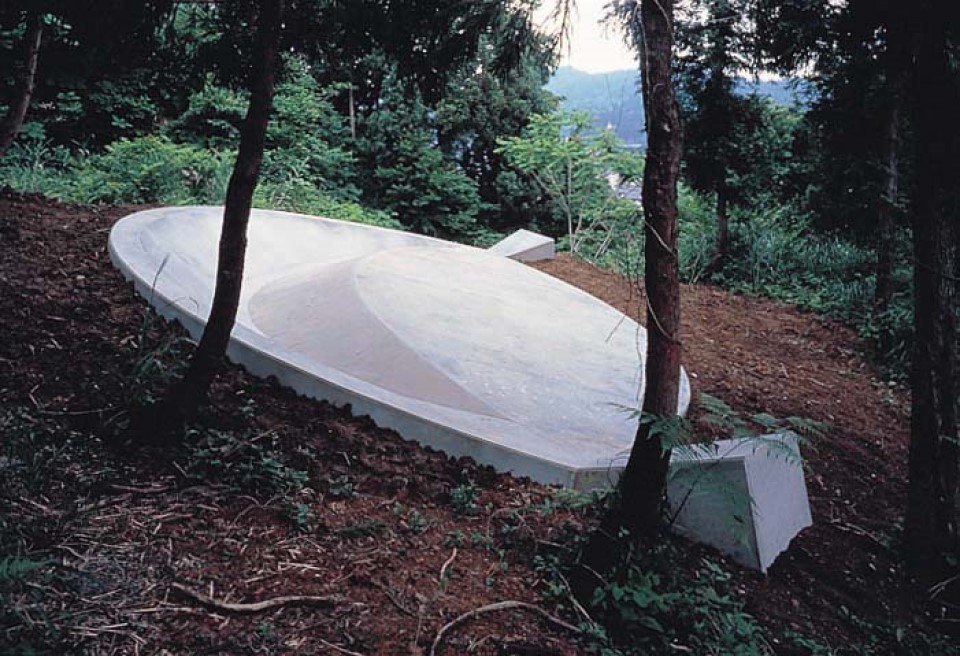
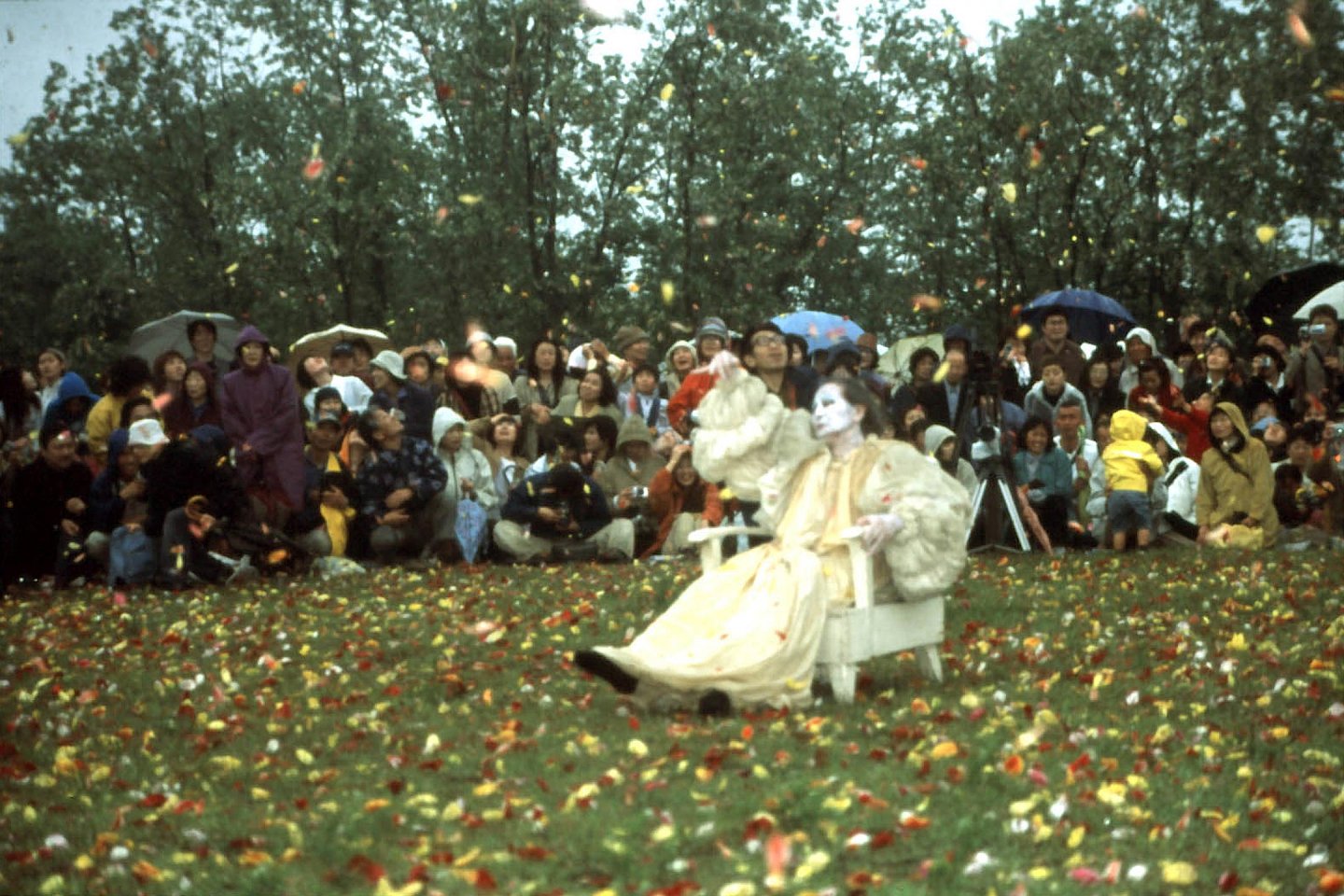
“Crescent” (2000) Photo: ANZAÏ
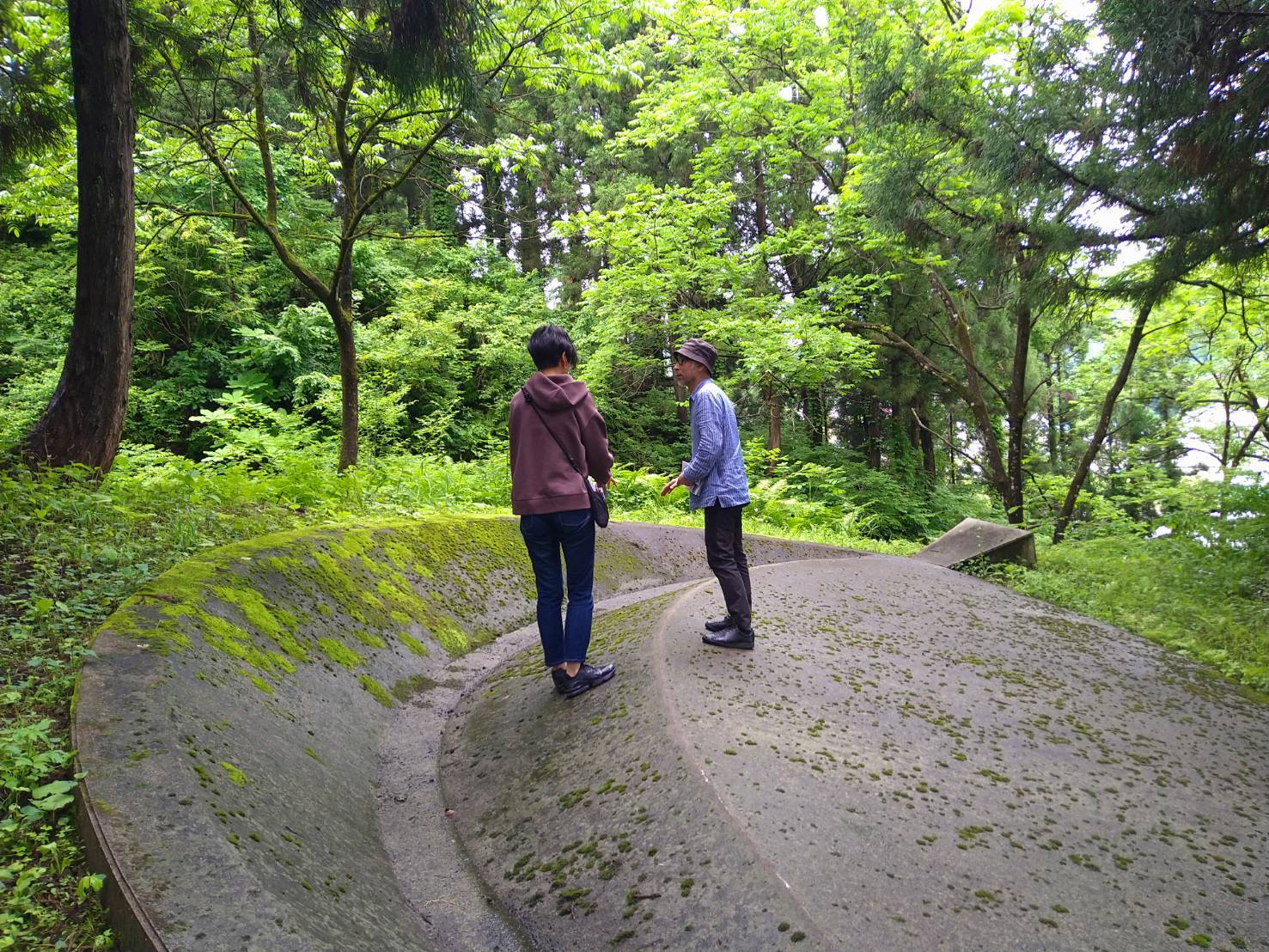
“Crescent” 2023: Scenes from the Artist’s Field Trip
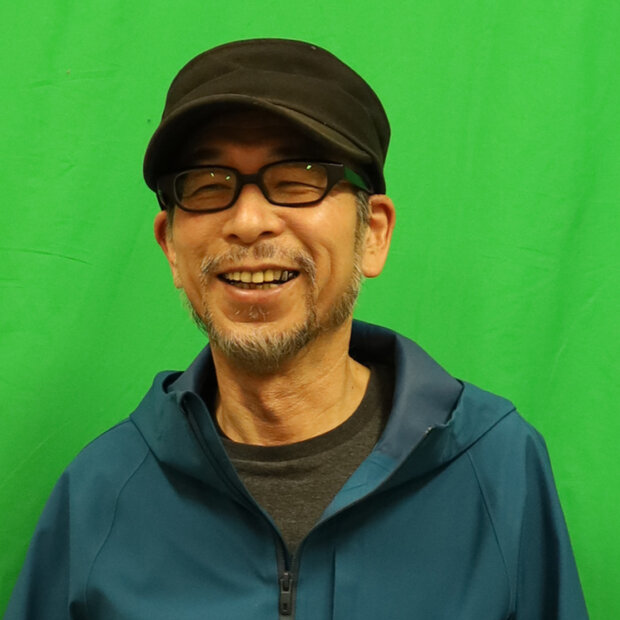
Profile
Ito Makoto
Born in Nagoya in 1955; completed the Sculpture Program at Musashino Art University Graduate School in 1983.In 1996, he spent one year in Ireland as an overseas trainee artist dispatched by the Agency for Cultural Affairs. Since the 1980s, he has been creating and exhibiting artworks centered on contemporary sculpture through various methods, a practice he continues to this day. He is known as an artist characterized by fundamental forms, as exemplified by artworks held in public collections such as the National Museum of Modern Art, Tokyo, and the Chiba City Museum of Art; however, his creative trajectory has expanded from site-specific works—such as“Crescent” (Matsudai Area), to the wearable “Boat” series that began in 2010 and continues today, and to paper-based multiple artworks such as “10 Stories,” created in 2017.
Let's Walk with Our Heads Held High
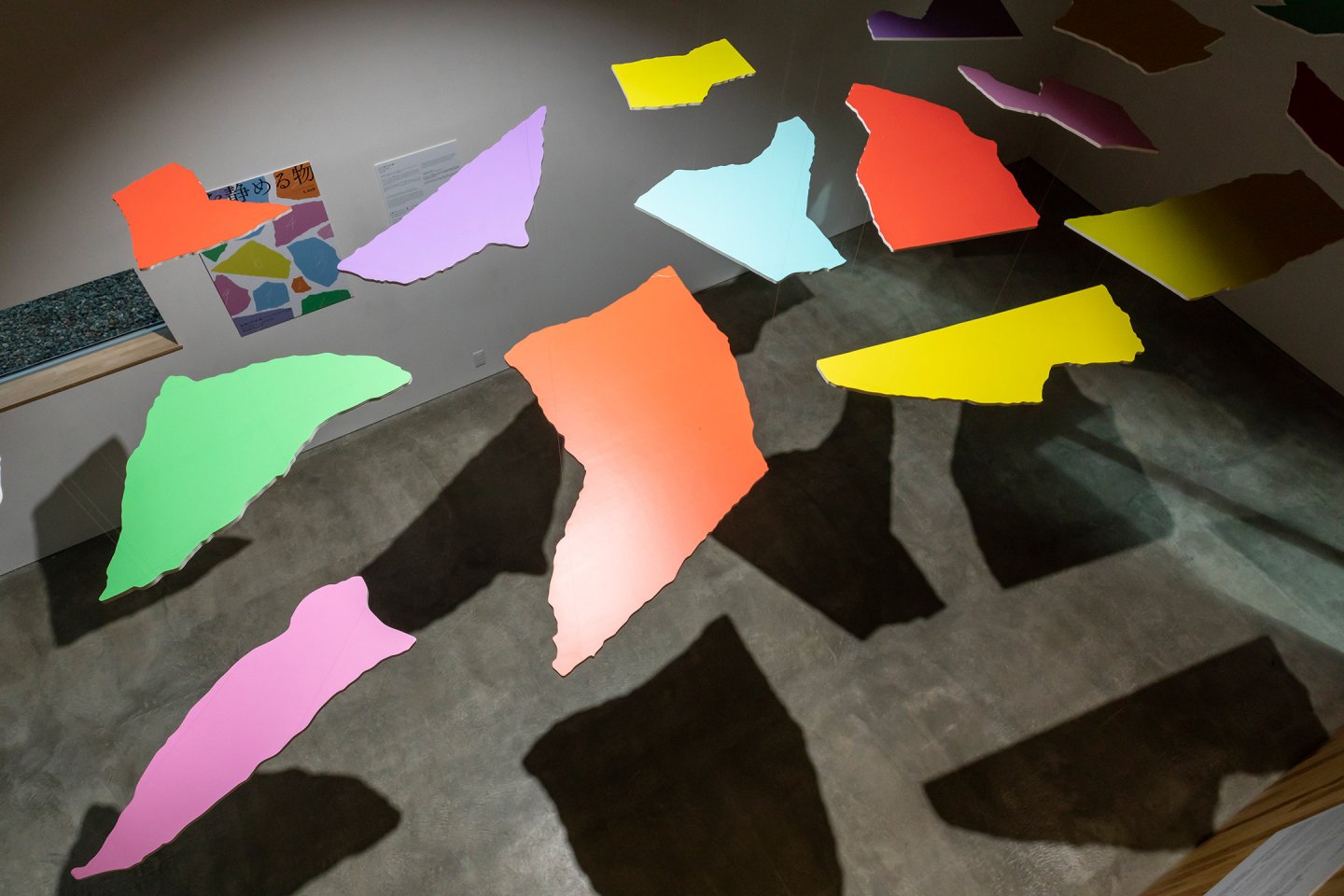
The artworks (installations) at the NUNAGAWA Campus serve not only as tools for experiencing the art but also as tools for performance. While the person wearing the installation is actively experiencing the artwork, for those watching, the very act of seeing someone else experience the artwork is itself a strong element of the performance.
As for the performance aspect, wearing this installation imposes significant physical restrictions, so the wearer moves slowly or in ways that differ from their usual movements.Since the device is worn in front of the body, the wearer inevitably has to maintain their balance. Another aspect is that this state itself constitutes the concrete act of “creating a form.”
There are various types of artworks here, but among the early pieces are those custom-made to fit the wearer’s body type. Some are designed for children, while others are over 2 meters tall. While it’s fine to view them from your own Point of View, I think it’s also worthwhile to consider them from a variety of Points of View.
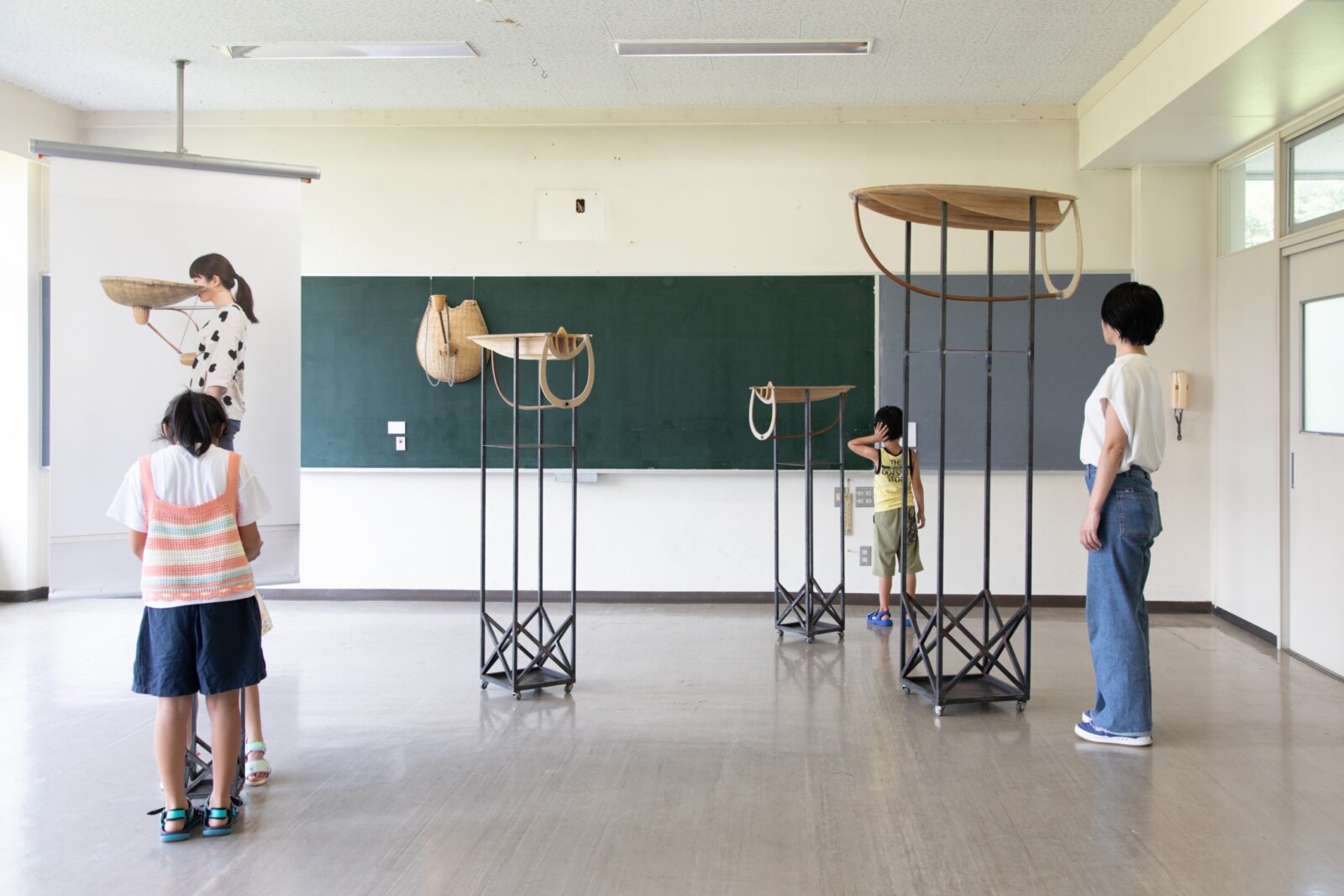
Exhibition View at the NUNAGAWA Campus (Photo by Yanagi Ayumi)
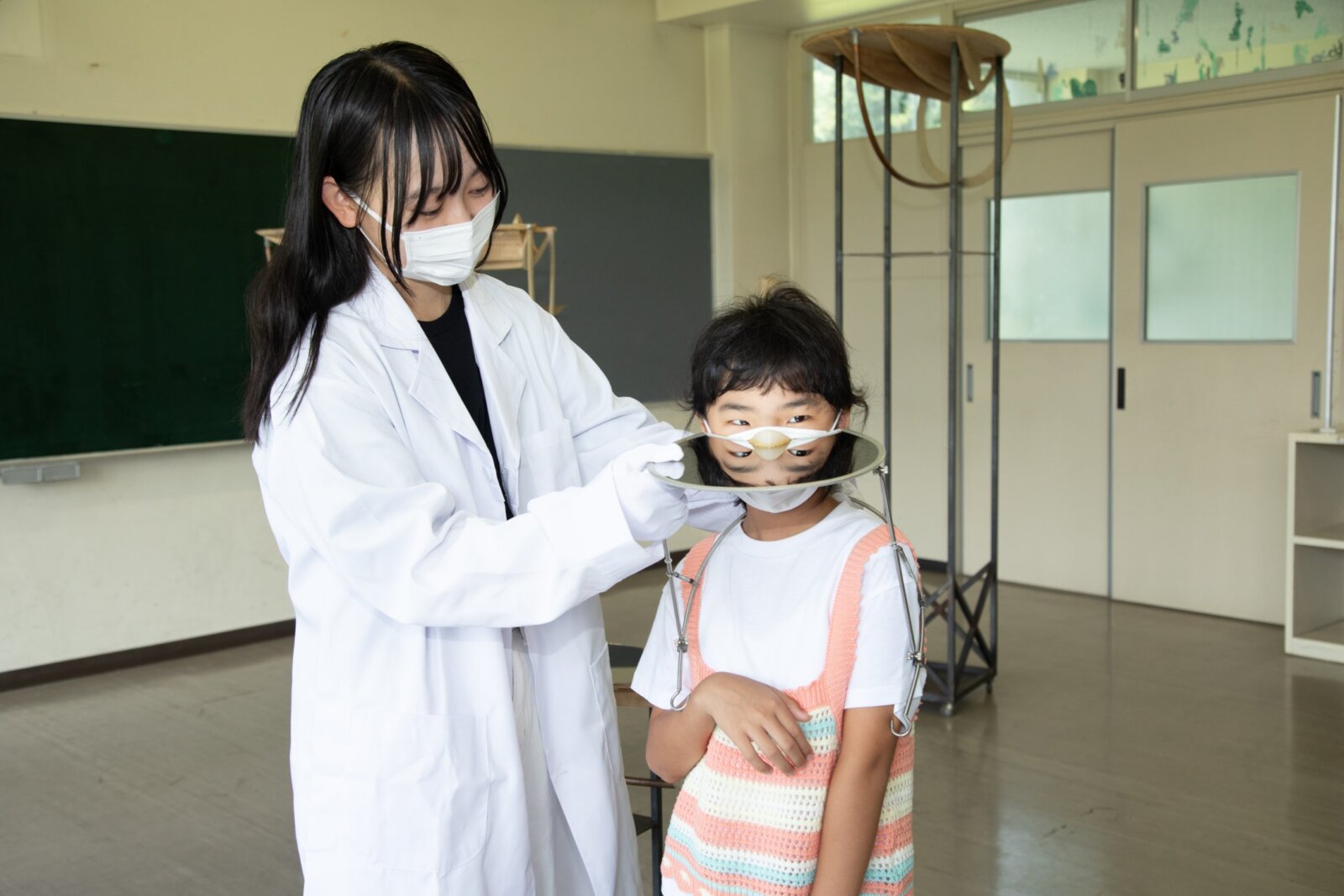
(Photo by Yanagi Ayumi)
If you look closely, you’ll see that this collection also includes pieces from an exhibition titled “M no Tane”*¹ held at the Musashino Art University Ichigaya Campus. Those pieces were made using materials from MUJI. The captions list the names of MUJI products rather than the materials themselves.
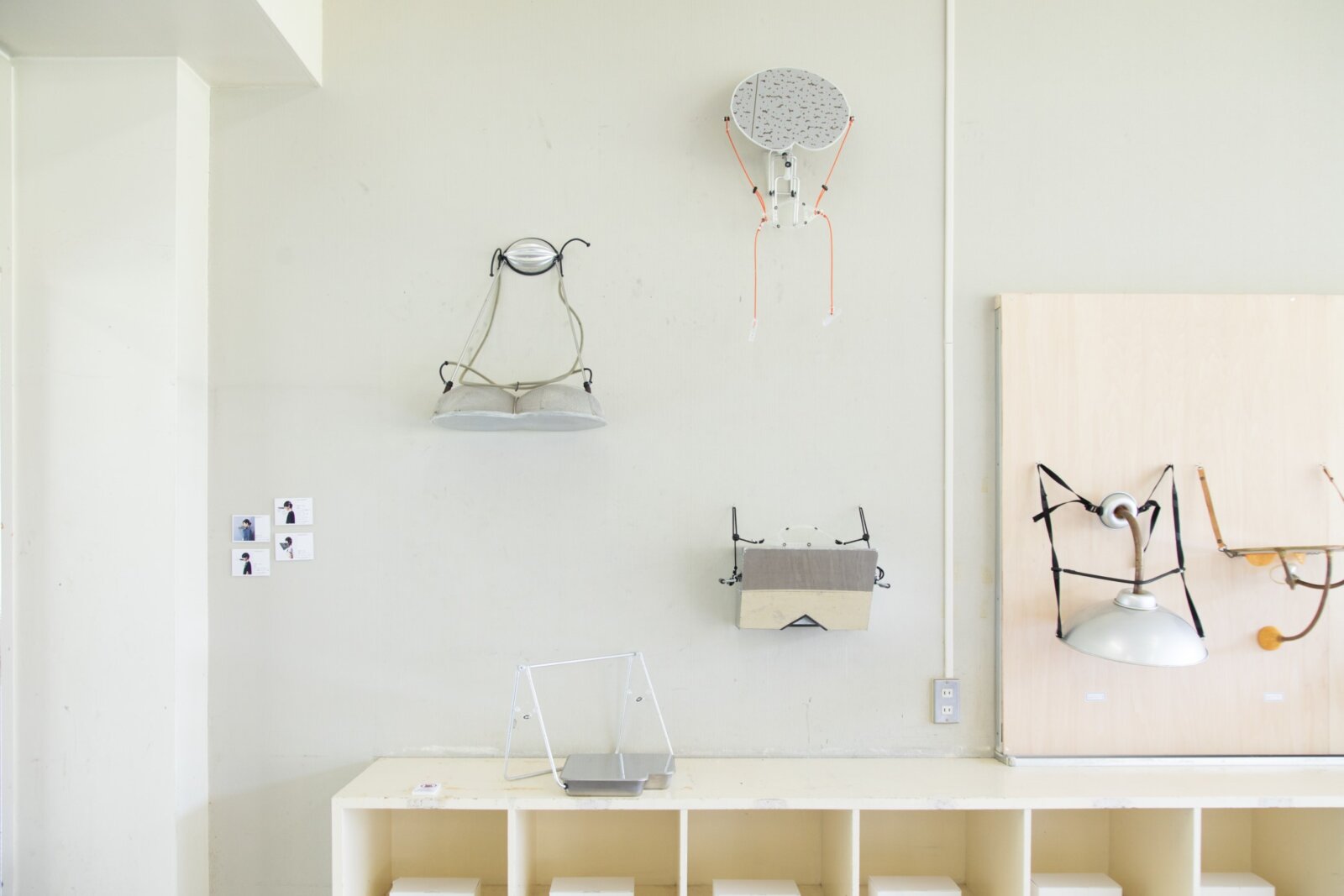
Artworks exhibited at “M no Tane” (Photo by Yanagi Ayumi)
The items on display near the entrance are not only meant to be worn but can also be displayed as objects in their own right. In arranging the display, I also considered incorporating elements reminiscent of a set of mirrors—such as looking into one mirror and seeing the reflection of another.
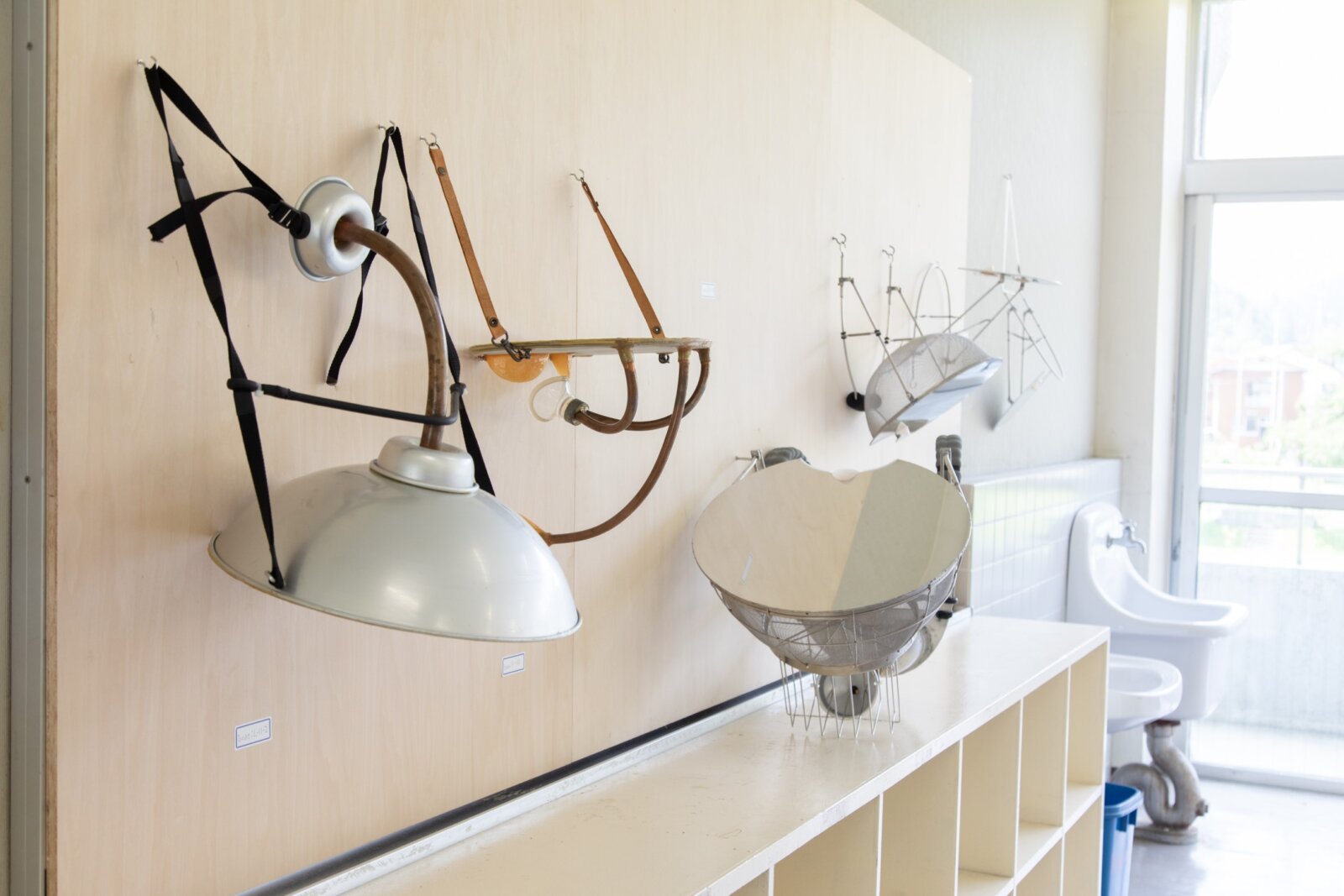
Artwork on display near the entrance (Photo by Yanagi Ayumi)
*¹“Seeds of M”
An exhibition held in 2020 at the MUJIcom store on the Musashino Art University Ichigaya Campus, featuring artworks by faculty and teaching assistants from Musashino Art University. The exhibition showcased artworks that incorporated products and initiatives from Ryohin Keikaku Co., Ltd.
The coordination of body and mind that arises from experiencing an artwork
――You had already presented “Look Up and Walk” as part of the “Side Track”*² project in 2009—were you already thinking about creating an interactive artwork in which the audience members themselves become performers back then?
With “Side Track” at that time, I may have become more interested in the location itself rather than simply the space where the artwork was viewed. Come to think of it, the butoh dancer Tanaka Min performed a “field dance” at the site of that artwork, and he mentioned that he had previously engaged in activities like this—actions similar to the experience of “Let’s Walk with Our Heads Held High”—as one of the catalysts for awakening a different awareness of the body and eliciting unique movements.

Scenes from the “Side Track” Exhibition and Hands-On Activities (Photo by Tadashi Yamamoto)
――So this experience is what it means to adjust or train the body, isn’t it?
The same can be said about creating forms. If one possesses the ability to renew one’s perspective on a given form, I believe one’s consciousness will be such that each time, it feels as though one is seeing that form for the very first time. I believe that focusing on what triggers this renewal of consciousness—and what kind of sequence of spatial experiences it entails—is an essential aspect of continuing to create forms over the long term.
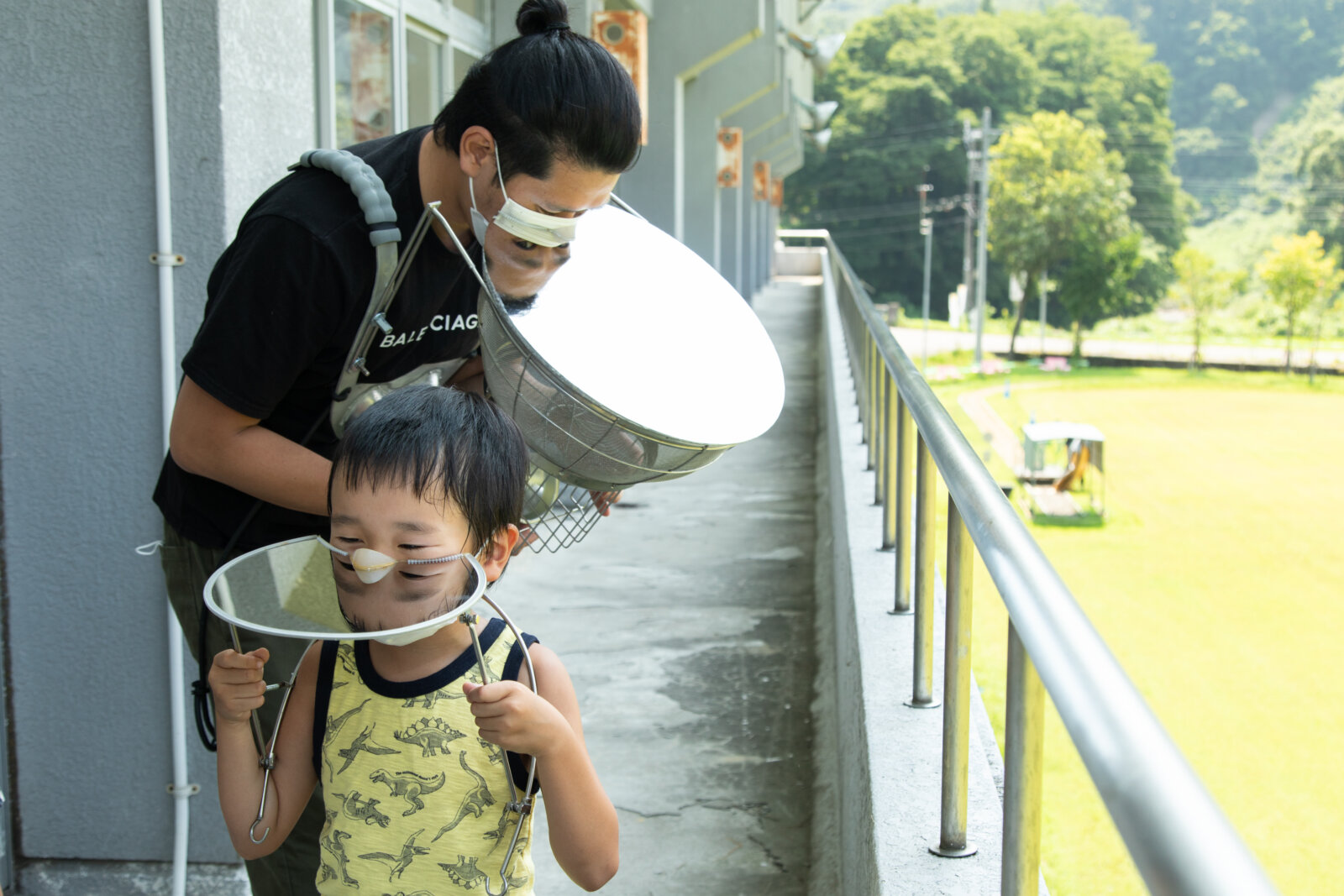
(Photo by Yanagi Ayumi)
The Special Exhibition, which stimulates the five senses through the body and the mind, will be on view from July 29 to August 27, 2023 (Saturdays, Sundays, and holidays). We invite you to come try on the artworks and experience the space for yourself.
Text and Editing: Hana Maruo / NPO Echigo-Tsumari Satoyama Collaborative Organization
*²“Hikinosen”
An independent art project launched in 2008 by artists living in Tokorozawa City, Saitama Prefecture, originating from a former railway vehicle maintenance facility in front of Tokorozawa Station.
NUNAGAWA Campus Special Exhibition: “Let’s Walk with Our Heads Held High”
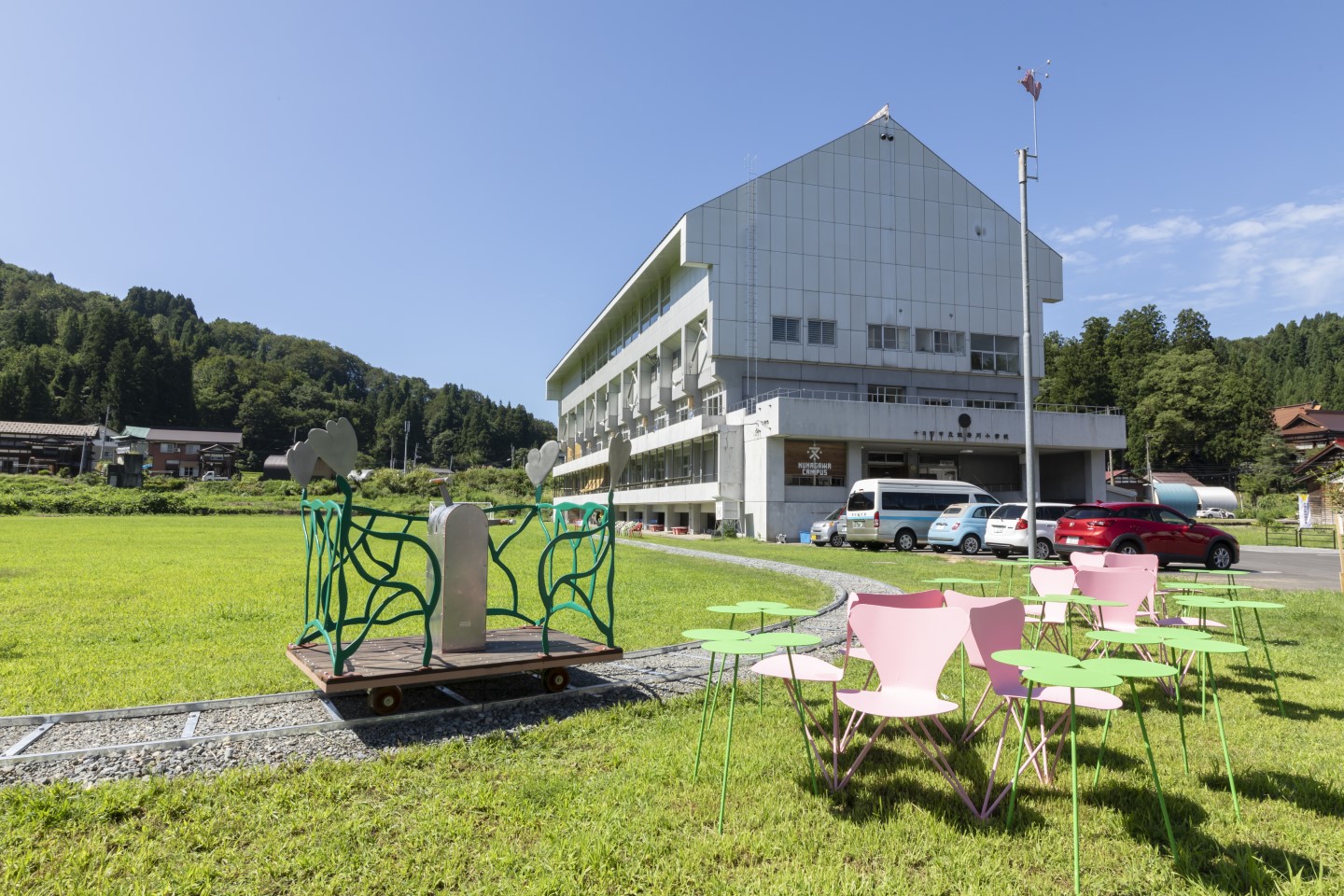
NUNAGAWA Campus
Duration| July 29 (Sat) – August 27 (Sun) | Saturdays, Sundays, and holidays
Hours|10:00 a.m. – 5:00 p.m. (Please note that hands-on activities are not available from 12:00 p.m. to 1:00 p.m. However, visitors are welcome to tour the facility.)
Location|NUNAGAWA Campus (576 Murono, Tokamachi city, Niigata Prefecture)
Fee|Included in the NUNAGAWA Campus admission fee (Adults: 500 yen)
Articles
Latest Articles

Stay connected with the ETAT official social media to receive the latest news and event information, and the many seasonal faces of Echigo-Tsumari as well as new issue of the ETAT official media, “Art from the Land”.