
Thinking 21st century art in the world from Niigata
Echigo-Tsumari Art Field - Official Web Magazine
Staff / Behind the Scenes in Echigo-Tsumari
A New Beginning for Matsudai Castle Hill and the Rice Fields
27 April 2020
"Agriculture × Soccer" Rice Farming Begins in the Art Village
With the number of players on FC Echigo-Tsumari increasing to six this fiscal year, we, the members of the club, have taken on the responsibility of cultivating the rice paddies on Matsudai Castle Hill, a mountain adjacent to the Matsudai NOHBUTAI performance venue.Shiroyama is famous as a mountain dotted with artworks, including “The Rice Fields” by Ilya & Emilia Kabakov, a representative Echigo-Tsumari Art Triennale artwork. It is also home to a wealth of wildlife, including endangered species such as salamanders, red-eyed frogs, red-bellied newts, forest tree frogs, and river crabs.
For this project, we decided to cultivate the rice without using “pesticides or chemical fertilizers during the growing period.” Choosing this method means we’ll be putting more effort into growing the rice than usual.
There are two reasons for this. First, it helps protect the local wildlife. Second, we want to produce even more delicious rice. In this report, I’d like to share some photos and details of our work right from the field.
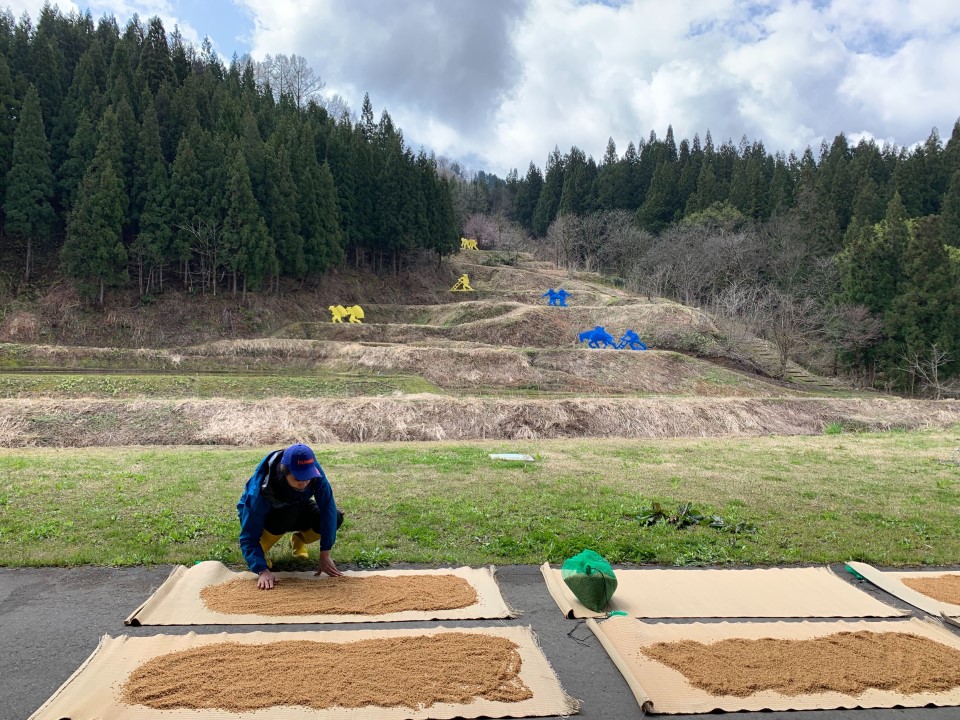
A scene showing the drying of rice seeds (tane-momi) used for sowing.
Securing Water and Raising Seedlings
Our rice farming begins with the melting of the snow.
The first step is securing water for the paddies. The paddies we cultivate are rain-fed fields that rely on snowmelt and rainwater. Since water is arguably the most important factor for rice growth, we manage the water supply with great care.
Alongside water management, we begin raising the seedlings.At the Matsudai Rice Fields Bank, we grow our own seedlings. Since the quality of the rice for the year depends on the quality of the seedlings, we approach this process with the utmost care and attention.
The four athletes who grew seedlings for the first time this year—being new to farming—struggled with the sheer number of seedlings and the weight of each one, which was more than they had imagined. However, they spoke with beaming smiles, saying they had grown attached to the seedlings they had grown themselves and were now looking forward to seeing how they would grow.
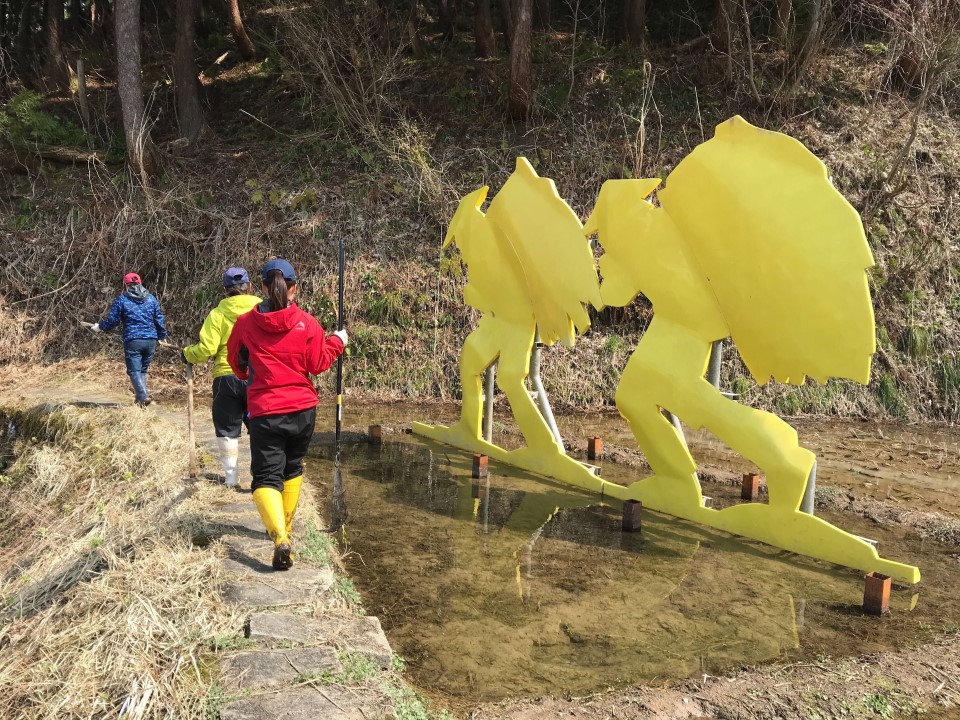
A look at water management.
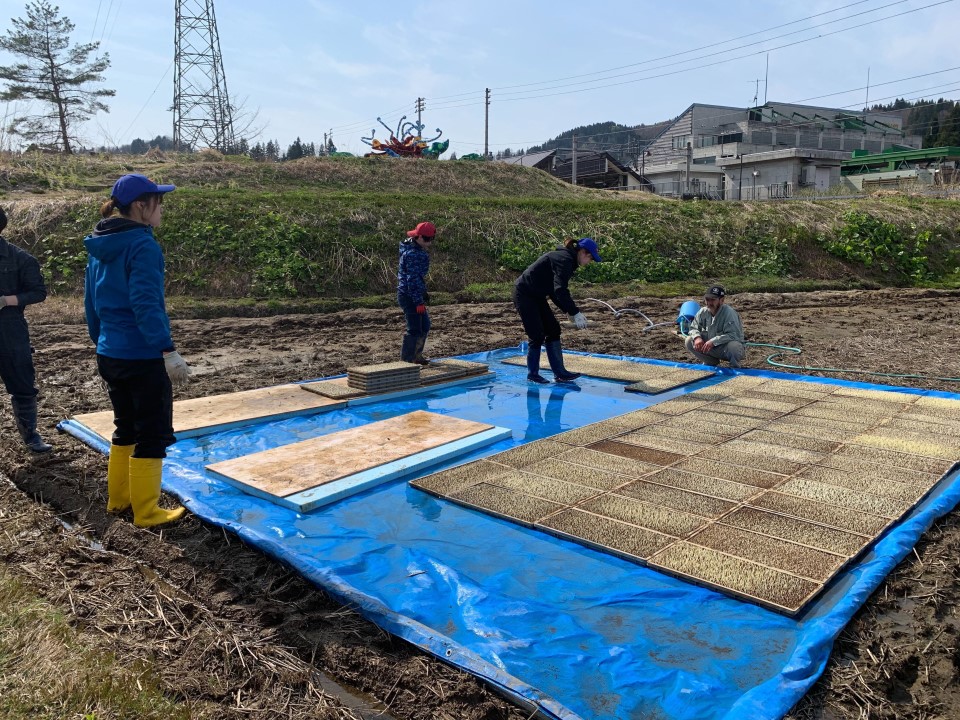
Here, the seedlings are being moved to the area where they will be grown.
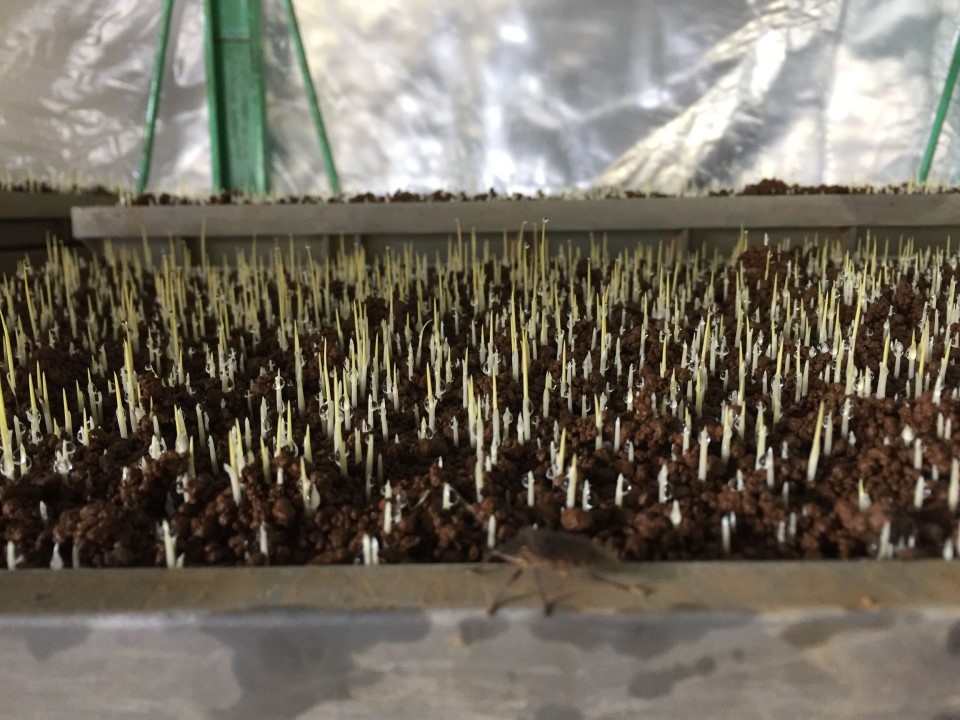
Seedlings that have just sprouted.
Rescuing Salamander Eggs
Just the other day, we relocated salamander eggs from a rice paddy to a safe irrigation pond. The eggs we rescued belonged to the black salamander, a precious species designated as Near Threatened. We moved a total of 30 eggs. Since the new location is right next to the Kabakof rice paddy we farm, we’ll now be able to easily check on them whenever we’re working in the fields. We’re looking forward to watching the salamanders grow.
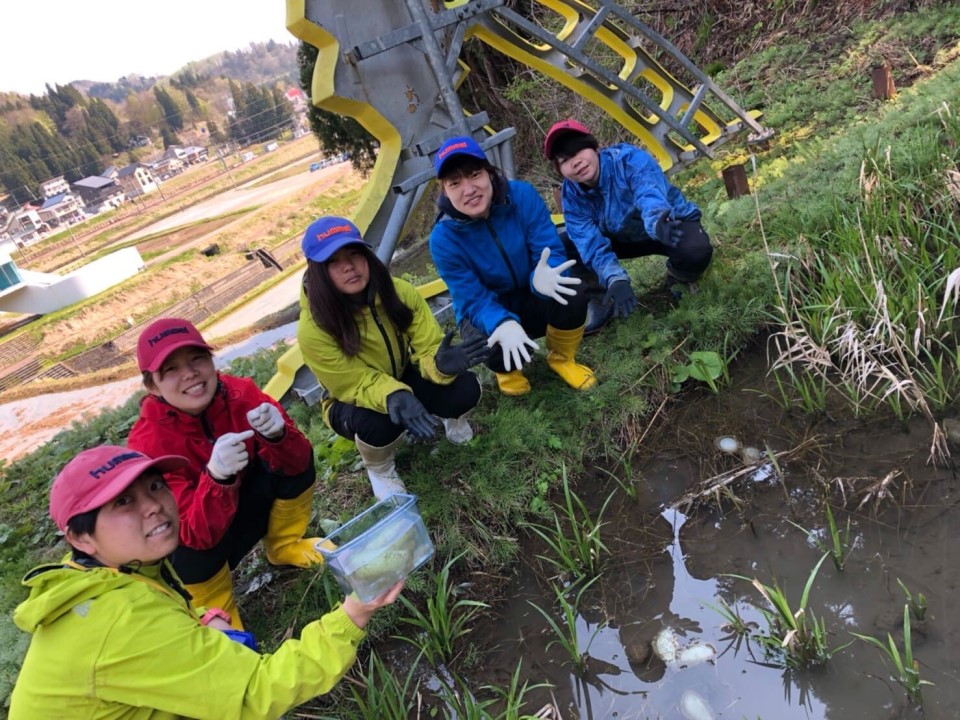
The white beads in the clear container are salamander eggs.
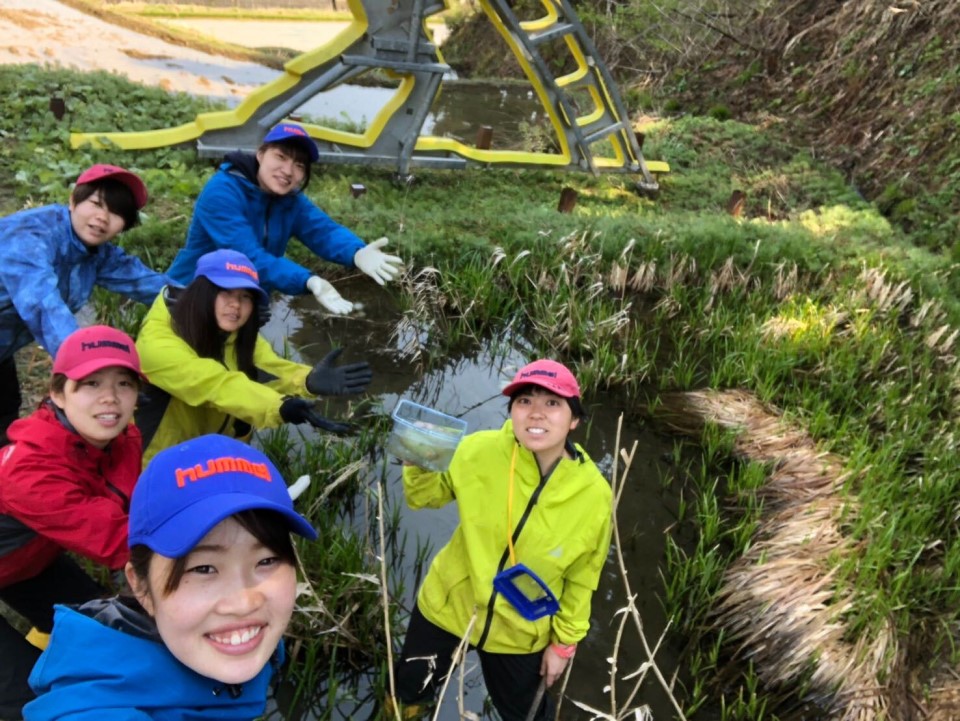
So, what did you think? Did you get a sense of what it’s like at our farm?
It’s said that the character for “rice” (米) was created from the characters for “eighty-eight” (八十八). This signifies that it takes no fewer than eighty-eight steps to produce rice.
I learned that the reason Matsudai rice tastes so good is not only because we put so much effort into growing it, but also because we use snowmelt and rainwater, as well as the temperature difference between day and night during the summer. Every day is a chance to learn and take on new challenges, but we’ll keep working hard to produce delicious rice, so we’d be happy if you’d continue to follow our journey.
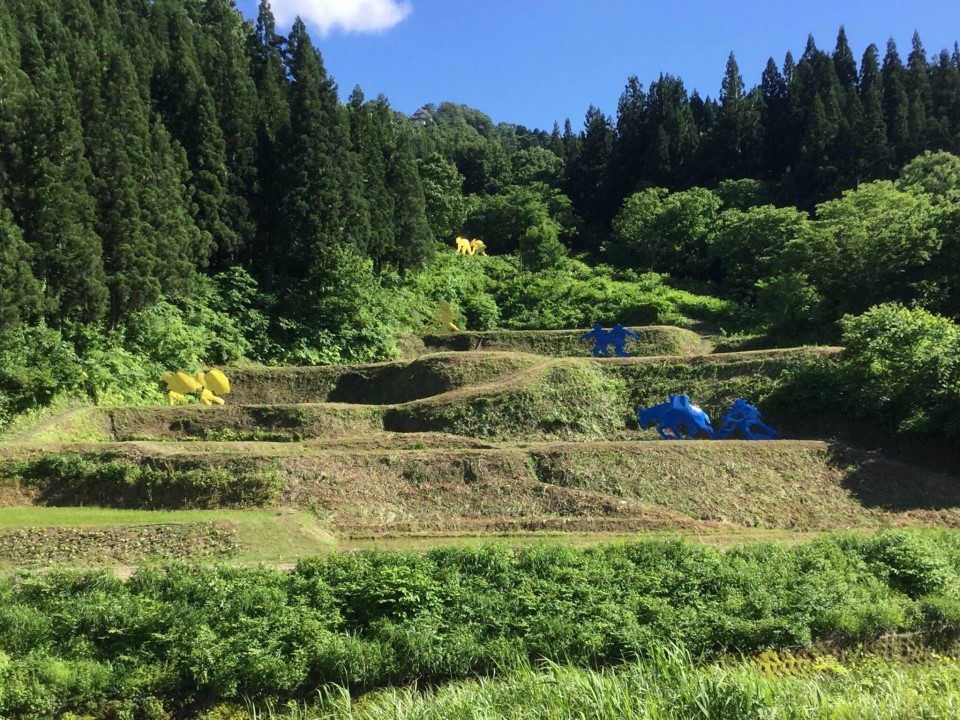
A view of the Kabakof Rice Fields after the rice harvest in 2019.
FC Echigo-Tsumari
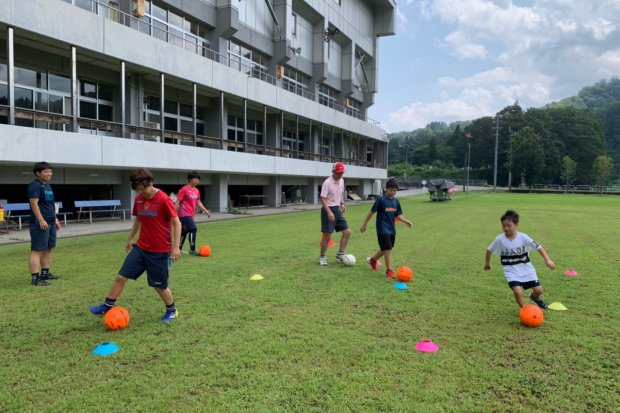
A female soccer player moved to the countryside to become a farmer and is preserving The Rice Fields while continuing to play soccer.
“FC Echigo-Tsumari” is an agricultural corporate team in which women’s soccer players relocate to the region, take up farming as stewards of the Rice Fields, and continue to play soccer. Spun off from the Echigo-Tsumari Art Field, this project proposes a lifestyle that combines professional soccer with living in the satoyama countryside. It is a pioneering initiative—unparalleled anywhere in Japan—that aims to preserve the Rice Fields, which are facing a shortage of workers due to depopulation and an aging population, through the “Matsudai Terraced Rice Field Bank.” The team aims to join the Nadeshiko League in the near future.
Text: Matsudai Rice Fields Bank / FC Echigo-Tsumari—Misato Nishikawa

Articles


Latest Articles

Stay connected with the ETAT official social media to receive the latest news and event information, and the many seasonal faces of Echigo-Tsumari as well as new issue of the ETAT official media, “Art from the Land”.