Thinking 21st century art in the world from Niigata
Echigo-Tsumari Art Field - Official Web Magazine
Travel / Exploring Echigo-Tsumari
A food review of a special lunch featuring fresh, seasonal ingredients at "Katakuri House" in Akiyamago, where the fall foliage is at its peak!
This year, the autumn foliage in Akiyamago reached its peak earlier than usual. Akiyamago is the collective name for 12 villages scattered throughout the mountains of Niigata and Nagano—a region rich in natural beauty that has been selected as one of “Japan’s 100 Hidden Gems.” In this post, I’ll share my experience enjoying a special lunch at “Katakuri House,” an accommodation facility located at the entrance to Akiyamago that was created by renovating a former school.
Text and Editing: Asoview
29 October 2020
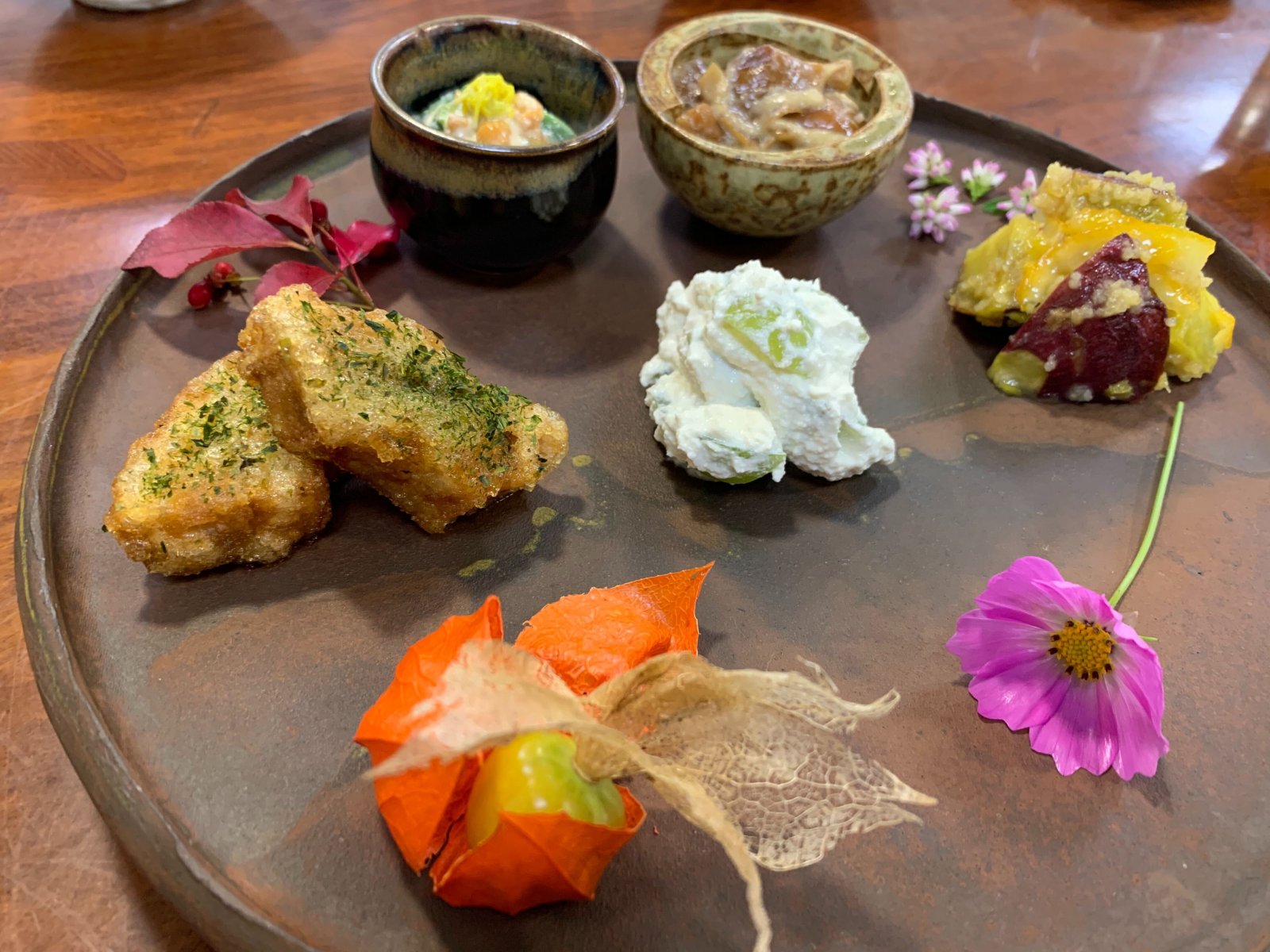
Appetizers arranged in a colorful and vibrant display
First up is a platter of appetizers made with local ingredients. It’s garnished with wildflowers and herbs picked in the fields and mountains around the inn—it’s so beautiful you’ll almost feel bad eating it. Be sure to snap a photo before you dig in to capture the moment.
Of course, every dish is homemade, featuring recipes passed down from the local mothers and our own signature dishes developed through trial and error by our staff.
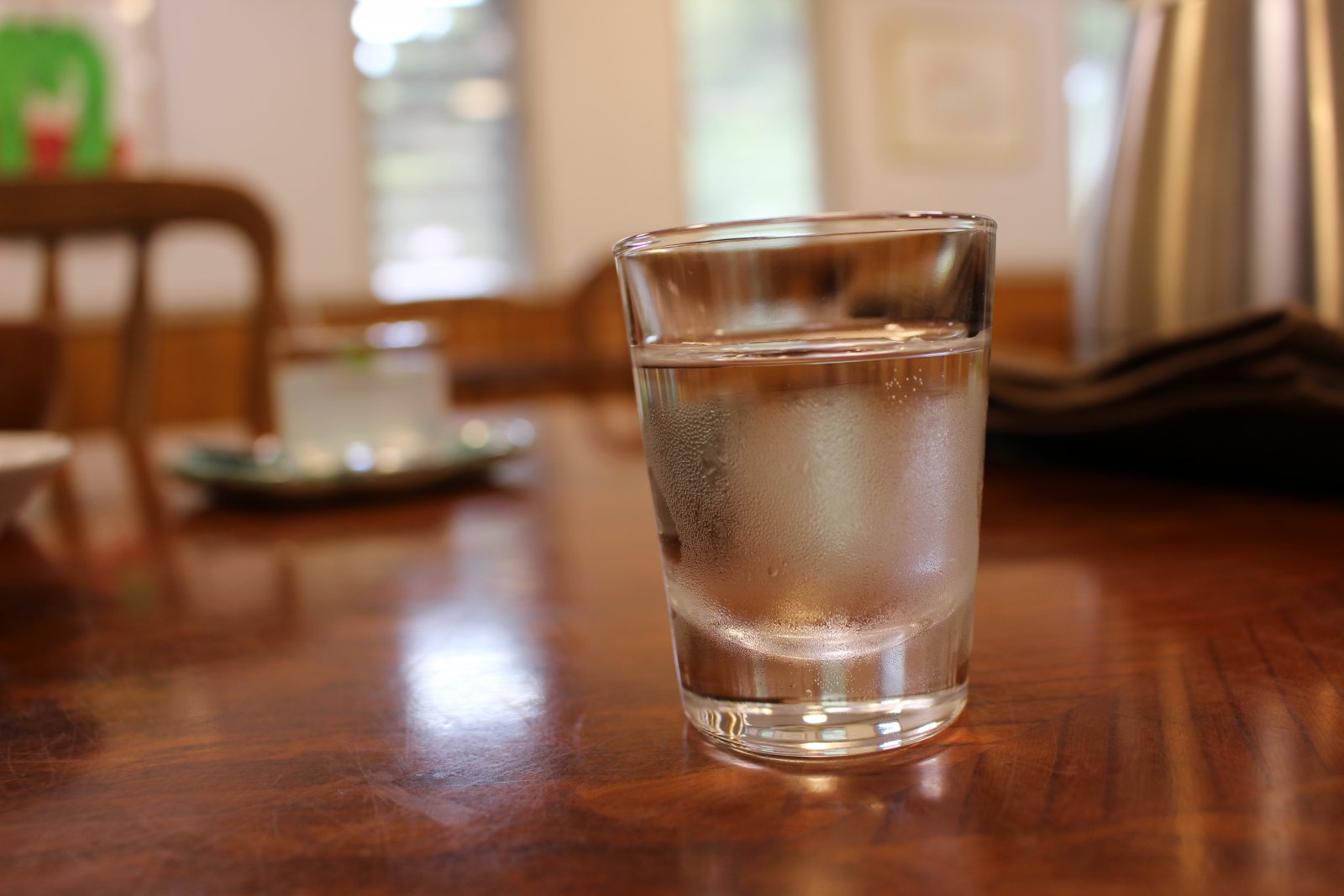
Maple Water from Akiyamago
The first drink I was served was maple water, which is harvested for only a few weeks in the dead of winter. It has a smooth mouthfeel and is easy to drink—a truly exquisite beverage that sets the mood perfectly before a meal. It’s like mineral water with a hint of sweetness, and because it’s so rare, it’s almost a shame to finish the whole glass.
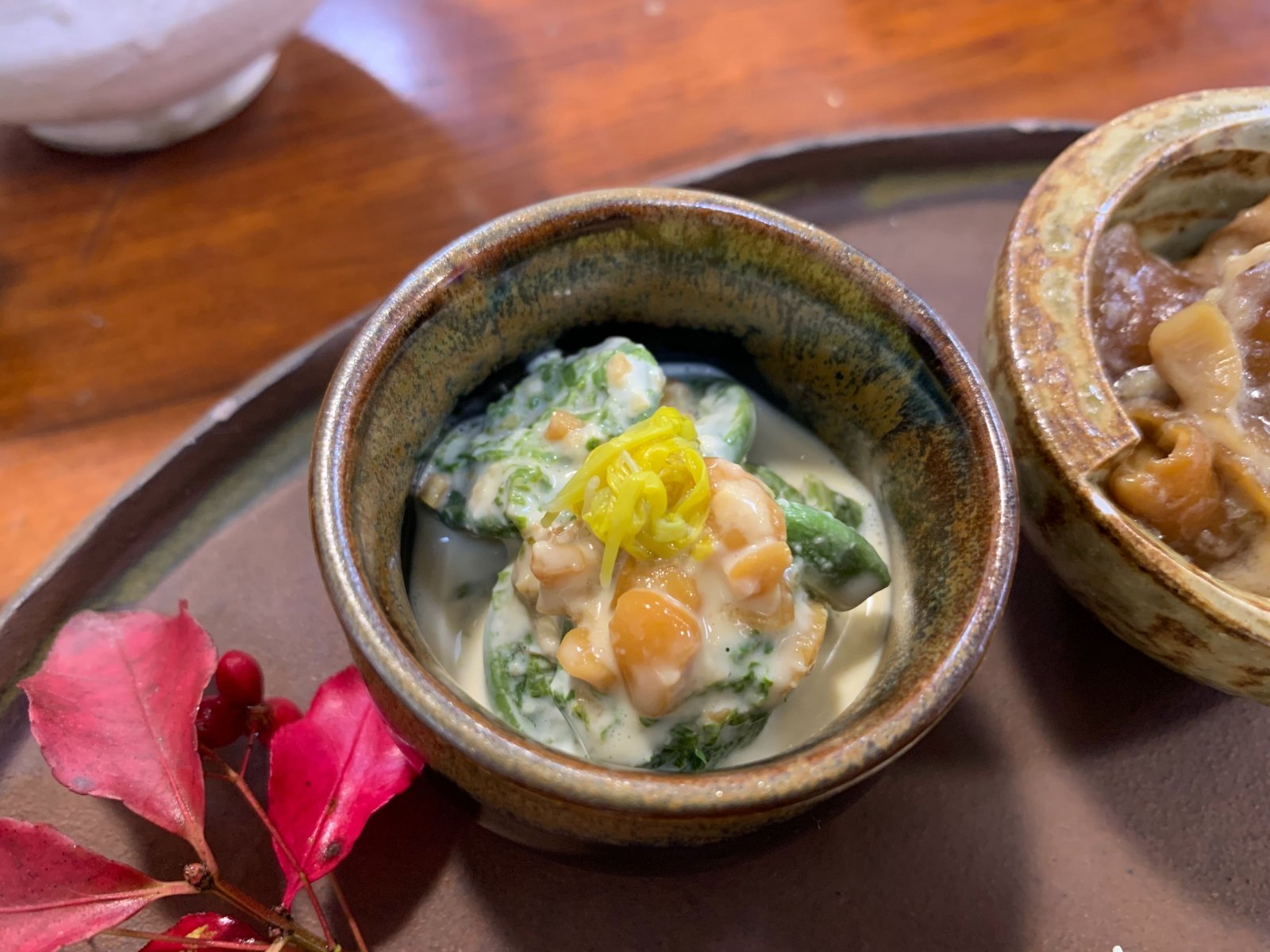
Bracken Shoots Tossed with Soy Sauce and Mayonnaise
Next, we were served a dish of kogomi (bracken shoots) harvested in the spring, tossed with soybean paste—a local favorite in Tsumari—and mayonnaise.
I’ve heard that it’s part of the culinary culture of people living in heavy-snow regions to enjoy wild spring greens throughout the year, so I savored this dish with gratitude for being able to enjoy them during this season.
I’ve heard that about 30 different kinds of wild mountain vegetables can be harvested in this region through mid-June. The wisdom of carefully preparing and deliciously cooking the bounty of the mountains is deeply rooted here.
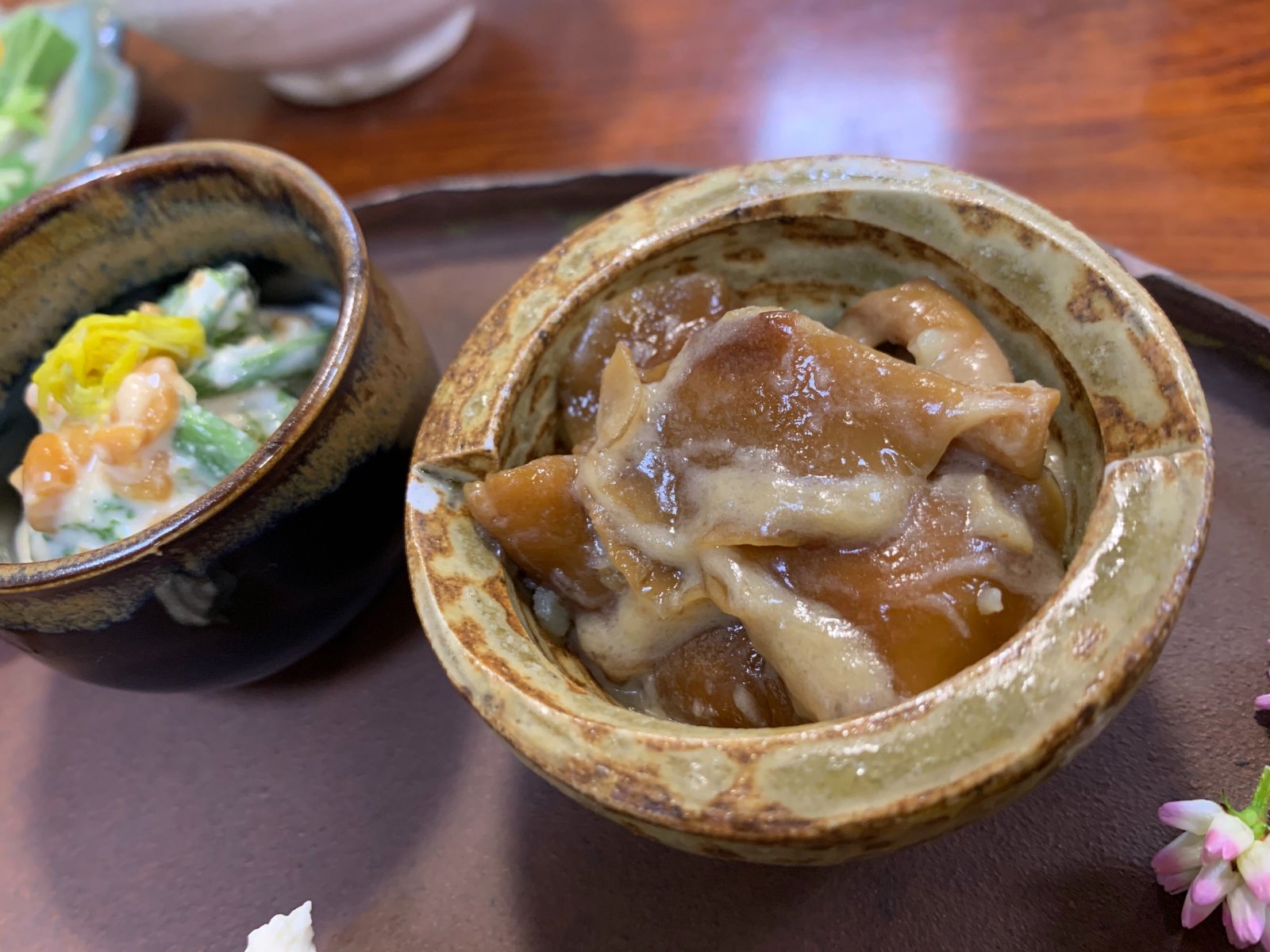
Butter-Sautéed Wild Nameko Mushrooms
This dish features large nameko mushrooms—several times the size of the ones you usually see at the supermarket—sautéed in butter. I was impressed by how the recipe was designed with the slightly chilly weather of this season in mind, making it delicious even when served at room temperature.
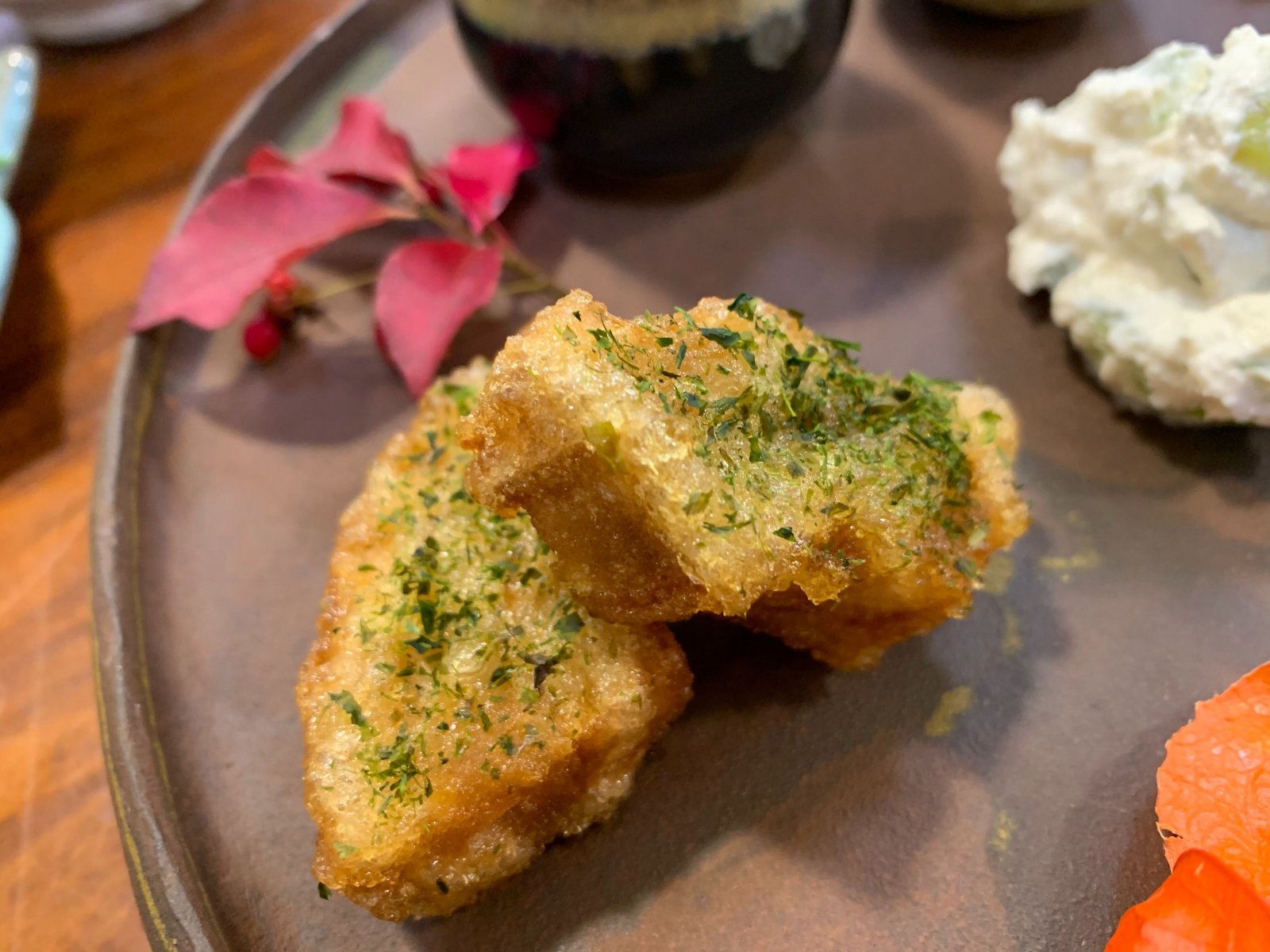
Teriyaki Car-Shaped Wheat Gluten
This dish features kuruma-fu—a traditional ingredient that has long been a favorite in Niigata Prefecture—cooked in a crispy, aromatic teriyaki glaze that brings out the aroma of the sea, creating a flavor that evokes a sense of nostalgia.
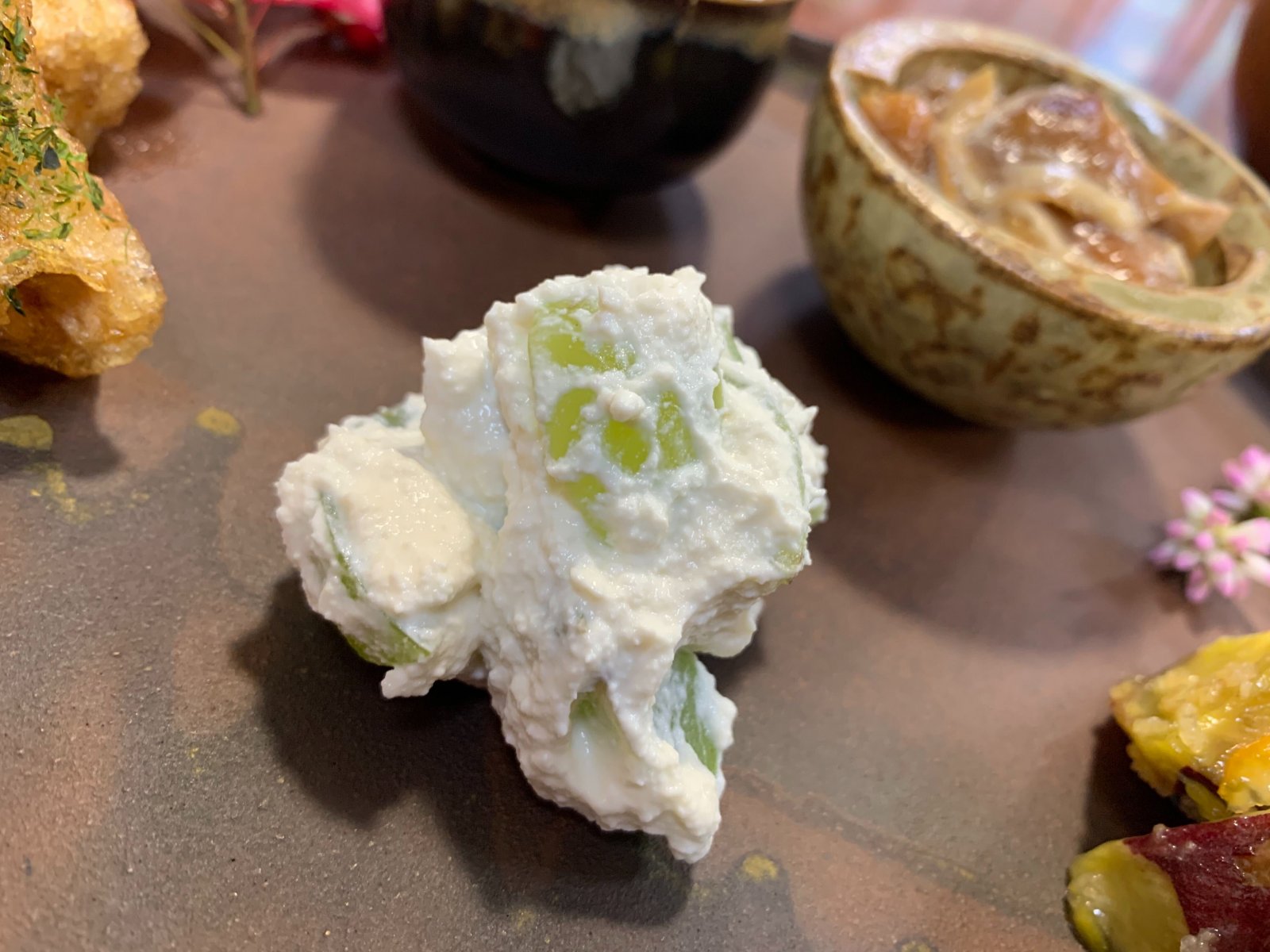
Shine Muscat with White Dressing
This white salad is made with a generous amount of Shine Muscat grapes from the neighboring prefecture of Nagano. It has a light, refreshing flavor and makes a perfect palate cleanser after dishes like bear meat simmered in miso or teriyaki-glazed carafu.
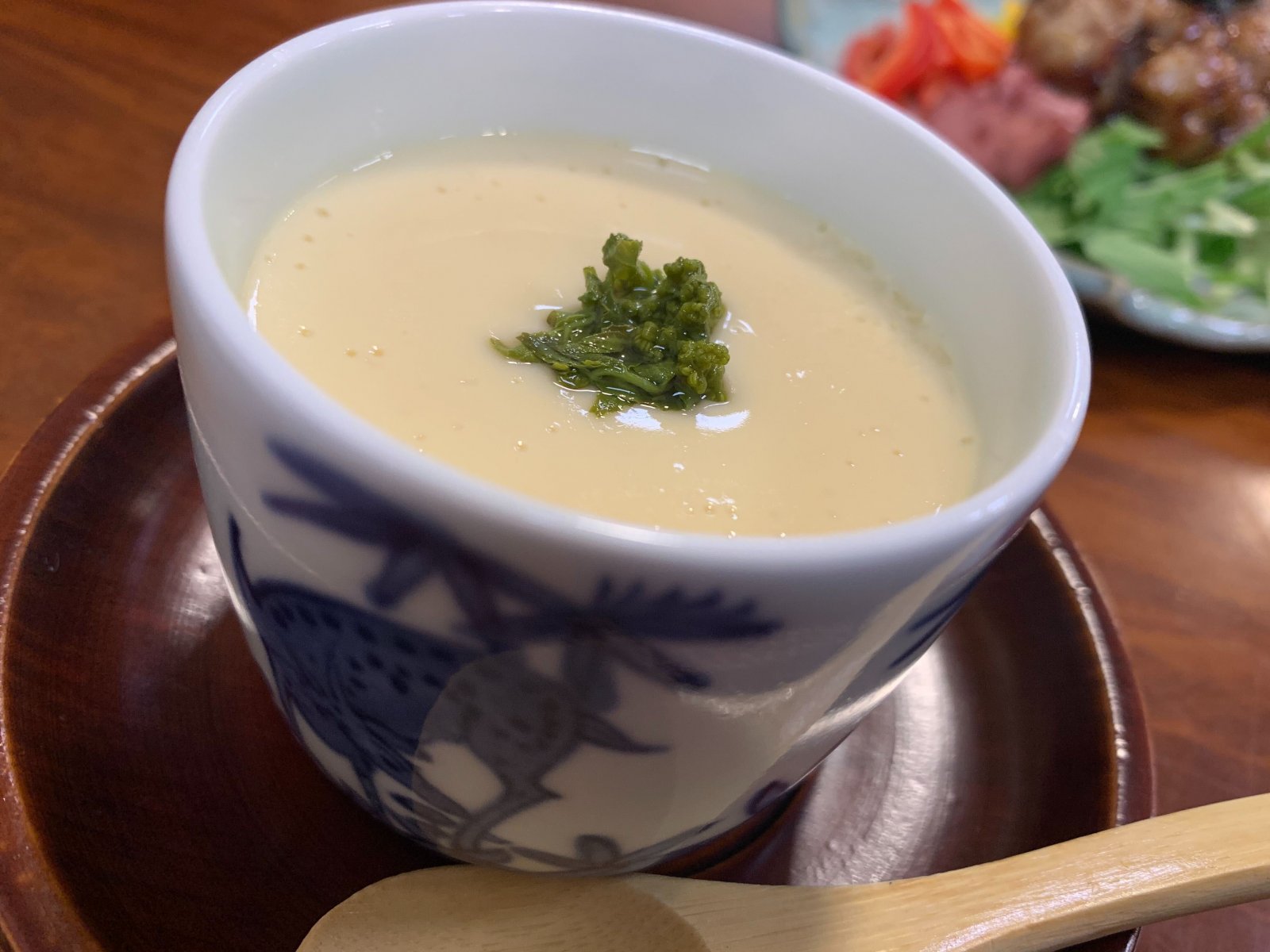
Chawanmushi (Ginkgo Tofu with Flower Pepper)
Before moving on to the main course, we were served a steamed dish. I was already completely satisfied at this point, but there were still more delicious dishes to come.
A chawanmushi packed with rich umami flavor. The flower pepper harvested in this region adds a delightful touch.
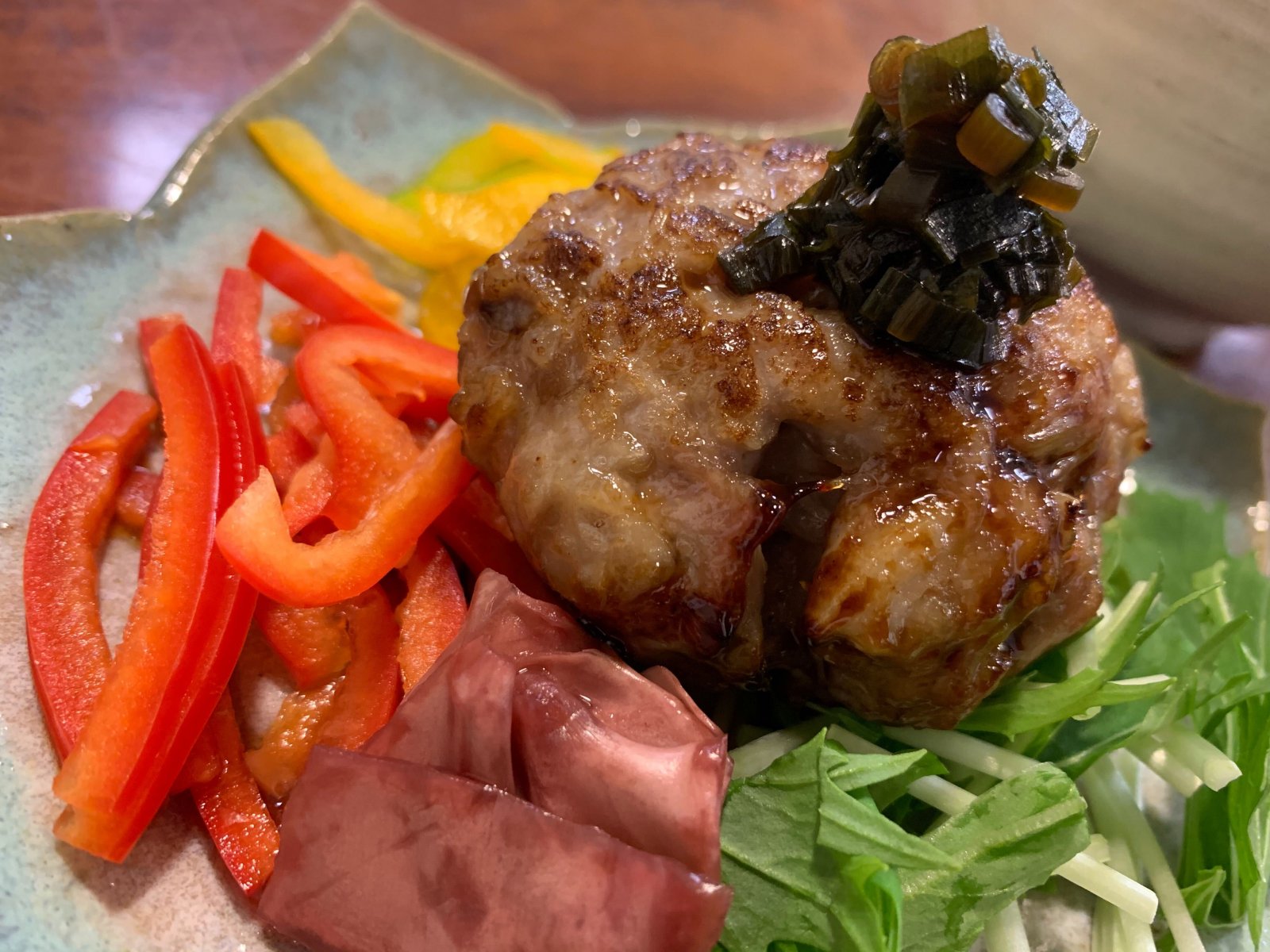
Tsumari Pork Lotus Root Burgers with Wild Garlic Soy Sauce
This hamburger steak is made with “Tsumari Pork,” a Niigata-branded pork known for its tender meat and the sweetness of its fat, blended with lotus root that’s been finely chopped for easy eating.
First, I tried it plain, without the garlic soy sauce. It didn’t have that “rich” feel you usually get from hamburger steak at all—it was so healthy! And when eaten with the wild garlic soy sauce, it really makes you want to keep eating rice.
Since I had plans to have another lunch that day, I resisted the urge to go for seconds. Honestly, I wanted to have one serving with the appetizer and two with the main course… but I had to hold back, hold back.
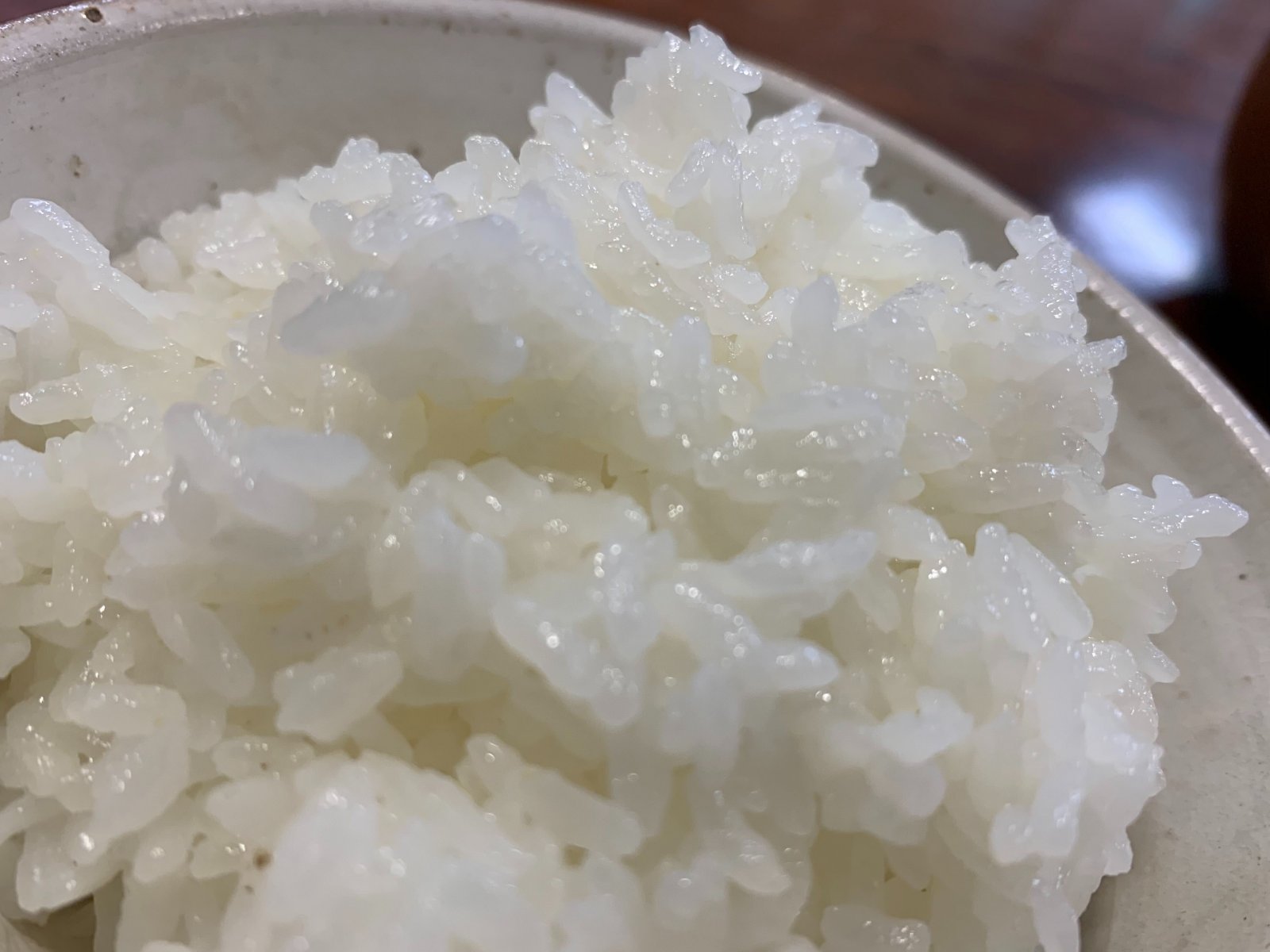
New Harvest Koshihikari from Ishigakida
The rice we received this time was newly harvested from the nearby “Ishigakida” paddy fields. With a lustrous sheen that was truly mesmerizing and just the right amount of stickiness, it was simply outstanding.
As the name suggests, the Ishigakida paddy fields are built with stone walls, making them much more labor-intensive to cultivate than flat fields where mechanized rice farming is possible. The rice from these fields—which have been preserved and passed down through generations—had a special flavor, filled with the care and dedication of the farmers.
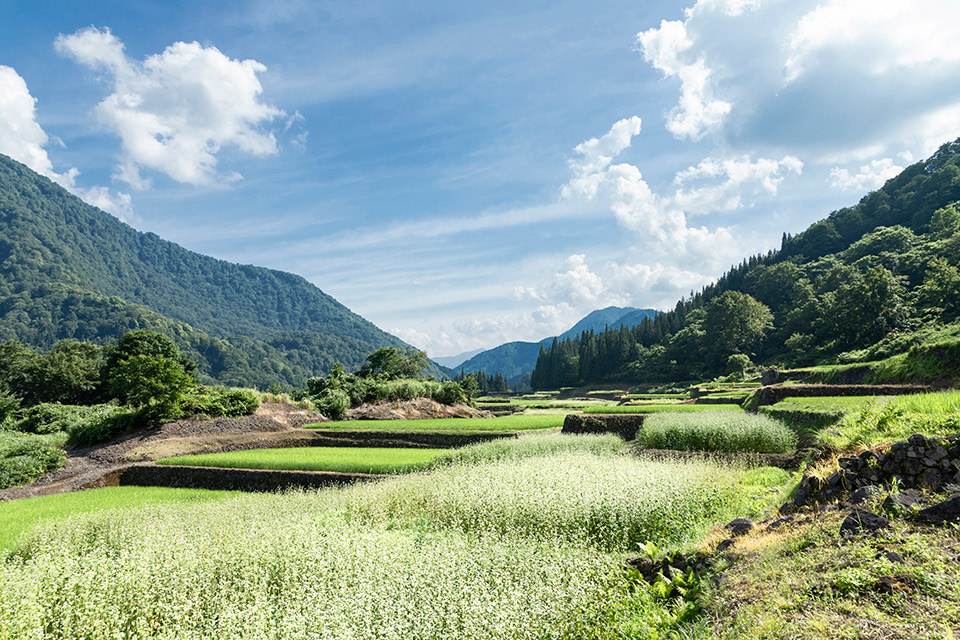
Ketto Stone-Walled Rice Fields (Photographed in summer / From Michihiro Shimabukuro’s “Ketto Stone-Walled Rice Fields artwork, Beehive artwork, and Another Work in Ketto,” presented at the 2018 Echigo-Tsumari Art Triennale) Photo by Osamu Nakamura
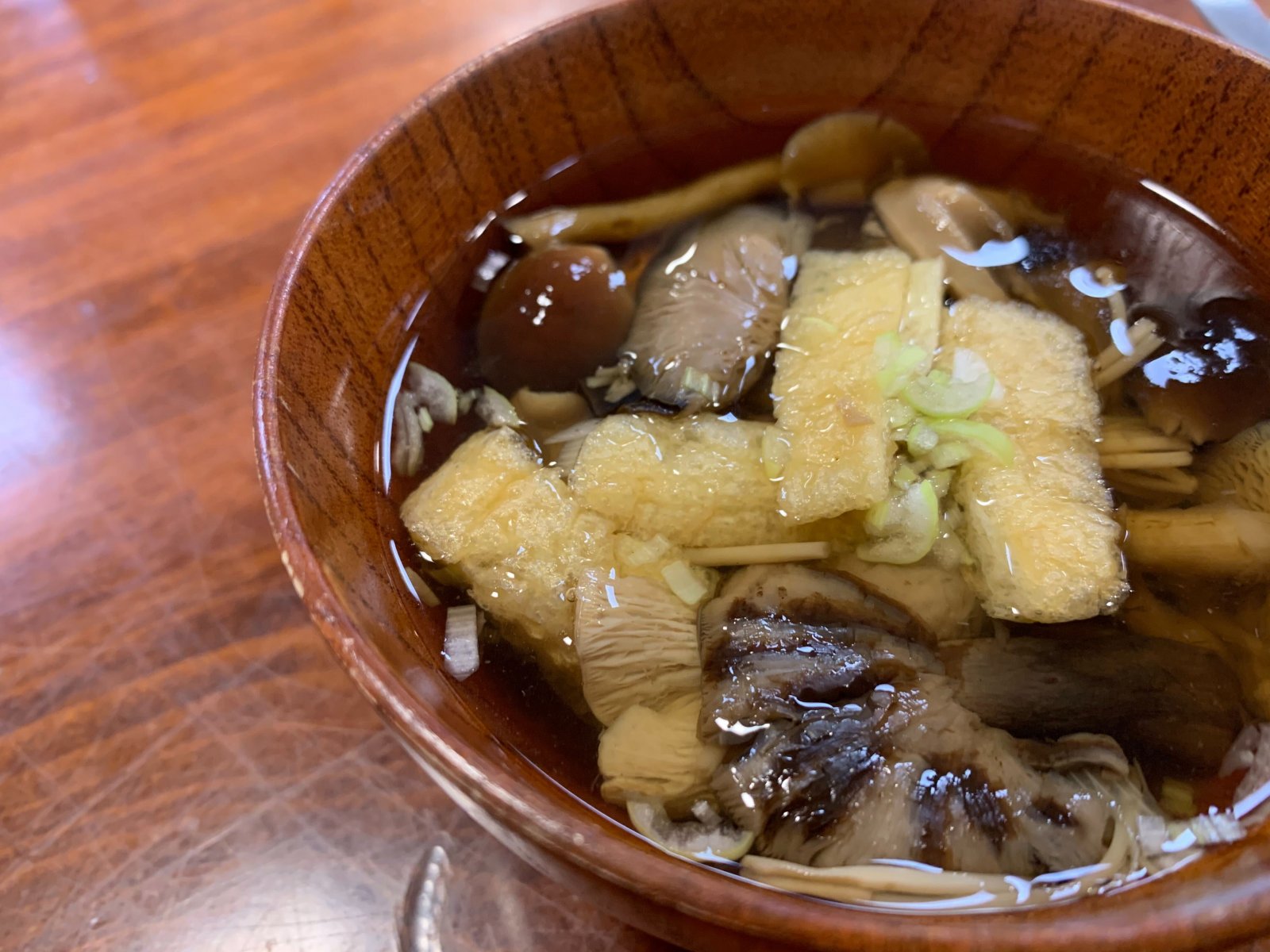
Mushroom Soup
The mushroom soup, packed with nameko, hiratake, and kuritake mushrooms harvested in the fall, is absolutely delicious. Not only does it have the rich umami flavor of the mushrooms, but it’s also filled with such large mushrooms that you wouldn’t even question it if it were served as a main dish.
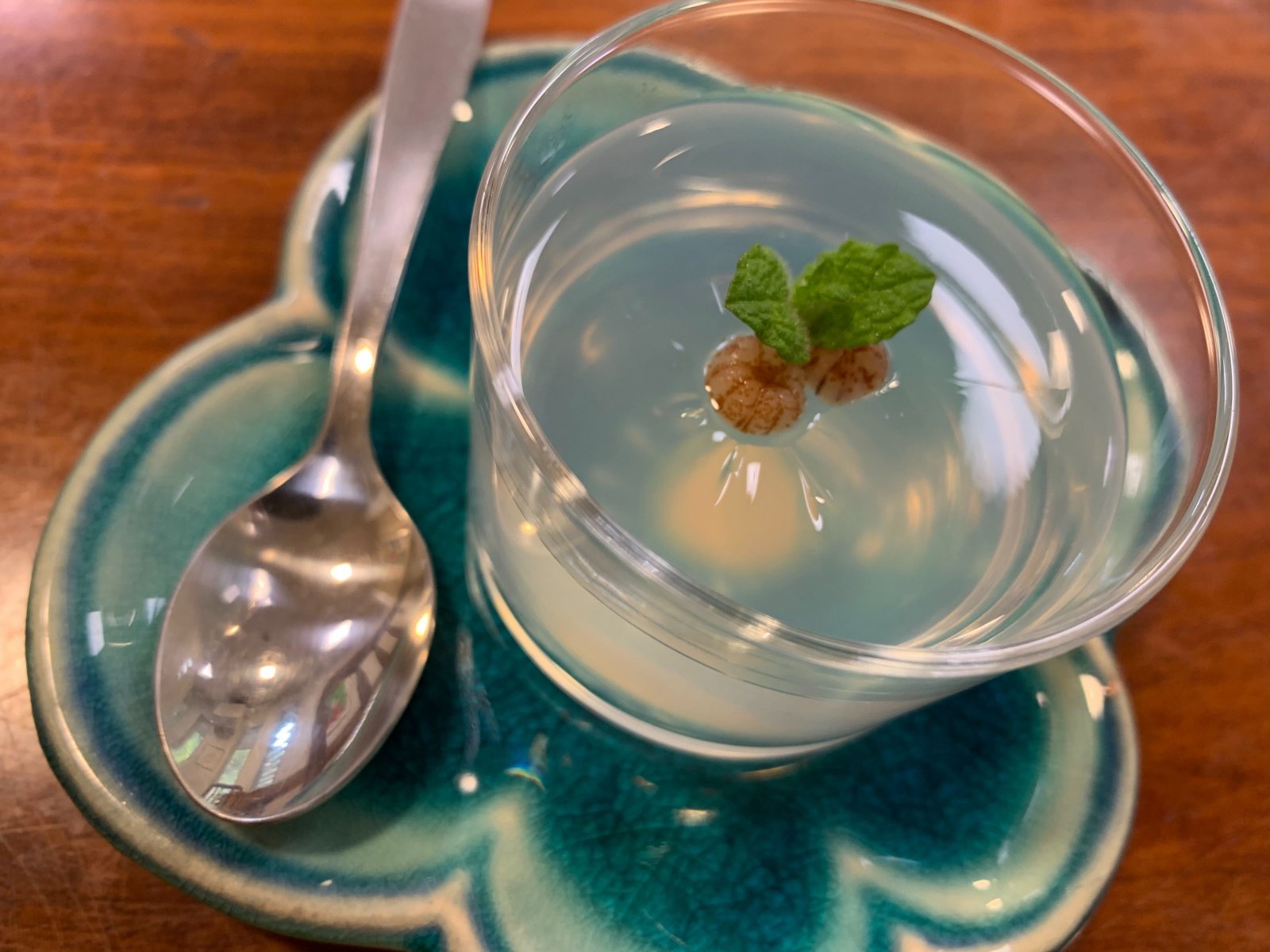
Plum Agar with Iwashi Pears
And the final dish we were served was a dessert made with plum agar. Topped on the translucent agar was “Iwanashi,” a premium ingredient. Because of its rarity, I’ve heard a single one can sometimes sell for several hundred yen. Yet, I was told that even such a precious ingredient used to be eaten as a snack by children in this region.
Incidentally, “Iwa-nashi” is a plant in the azalea family that grows in mountainous areas. It’s named for its tendency to grow on rocky slopes and its pear-like flavor. Indeed, it had a refreshing juiciness reminiscent of a pear.
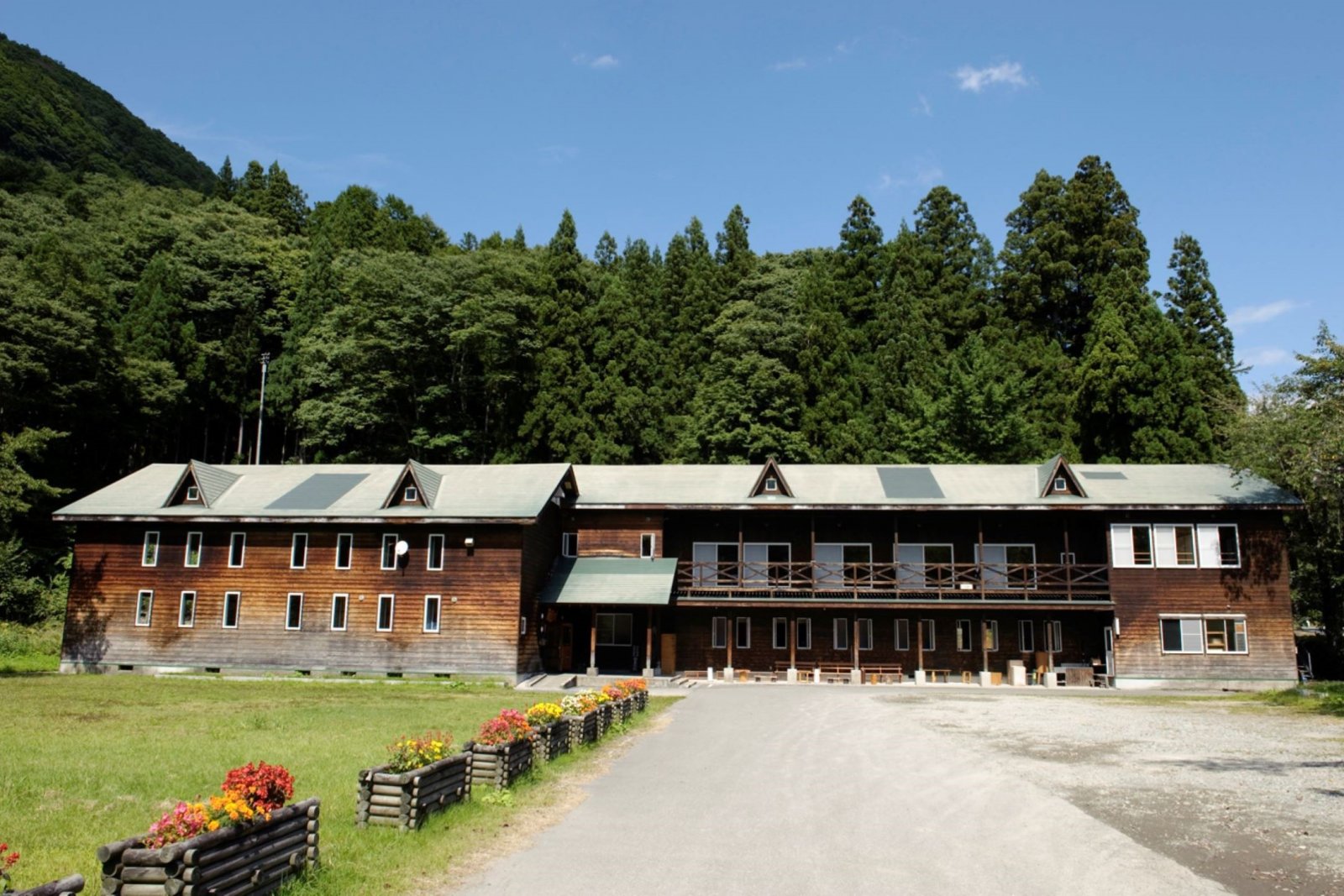
Photo by Hiroshi Noguchi
Katakuri House’s special fall lunch features an abundance of carefully selected ingredients that you rarely get to enjoy in your everyday meals. It’s available every Thursday through Sunday during ETAT at Katakuri House.
Fall is truly in full swing, and the autumn foliage is at its peak. This is your last chance to enjoy the bounty of fall before winter sets in! Why not pay a visit to Katakuri House this fall?
Information
Katakuri House
- Open: Thursdays, Fridays, Saturdays, and Sundays from October 10, 2020 (Sat) through November 1, 2020 (Sun)
- Times: ① 12:00 PM– / ② 12:30 PM–
- Admission: Adults 3,300 yen, Elementary School Students 1,650 yen, Preschoolers 1,100 yen (tax included) *Payment on site. Credit cards accepted
- Reservations: Online reservations or by phone (025-761-5205)
*Online reservations close at 5:00 PM on the day before your visit. After that time, please inquire by phone.
Facility Information
Katakuri House
450-1 Ketto, Tsunan town, Nakauonuma-gun, Niigata Prefecture 949-8316
TEL: 025-761-5205 (9:00 a.m.–4:00 p.m.)
FAX: 025-761-5206
Email: katakuri@tsumari-artfield.com
Website: http://www.tsumari-artfield.com/katakuri/

Articles





Latest Articles


Stay connected with the ETAT official social media to receive the latest news and event information, and the many seasonal faces of Echigo-Tsumari as well as new issue of the ETAT official media, “Art from the Land”.