

Outside Special Exhibition "Hon'yara Dōu - Snow Meeting"
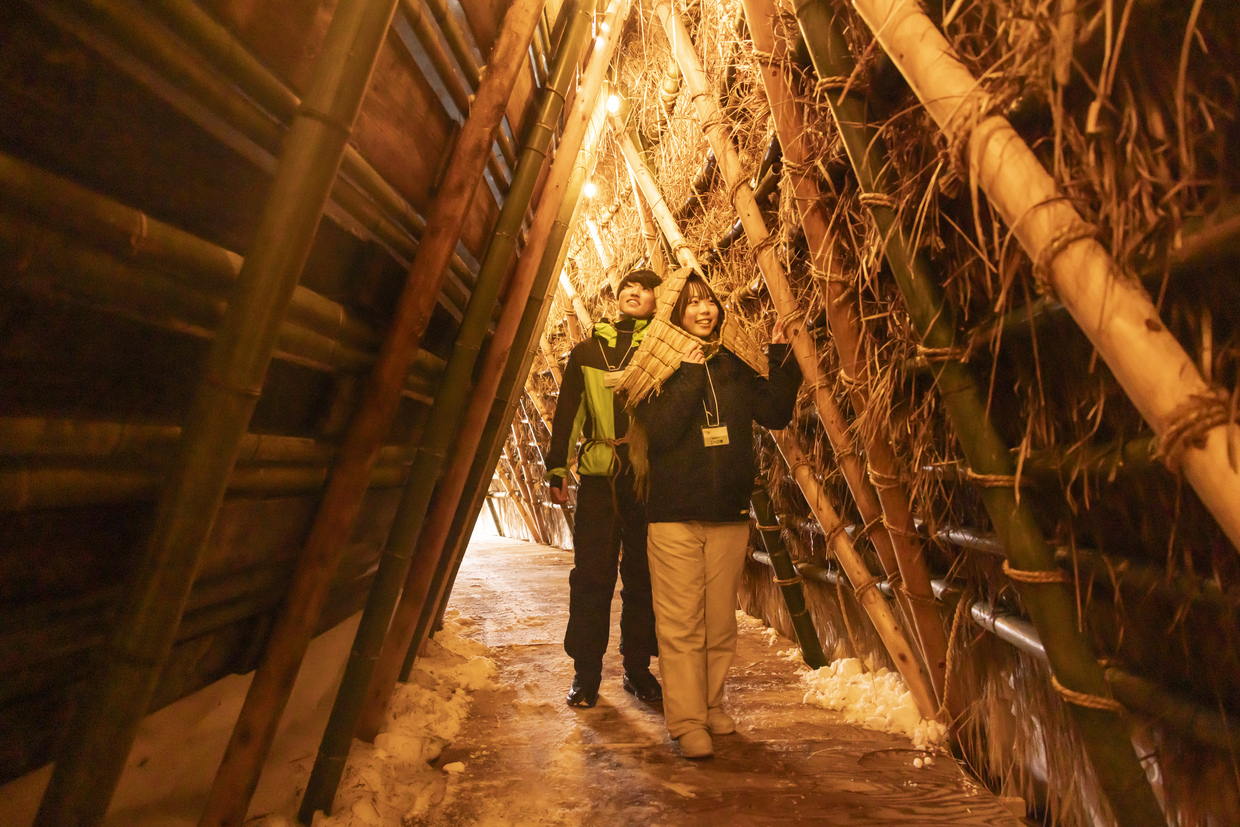
In Tokamachi, there is a custom around the time of Little New Year where people build snow houses called “Hon’yara-dou” and create gathering places for relaxation in each neighborhood. This winter, we will transform the MonET building into a large “Hon’yara-dou” where people can gather to enjoy and experience the snow.
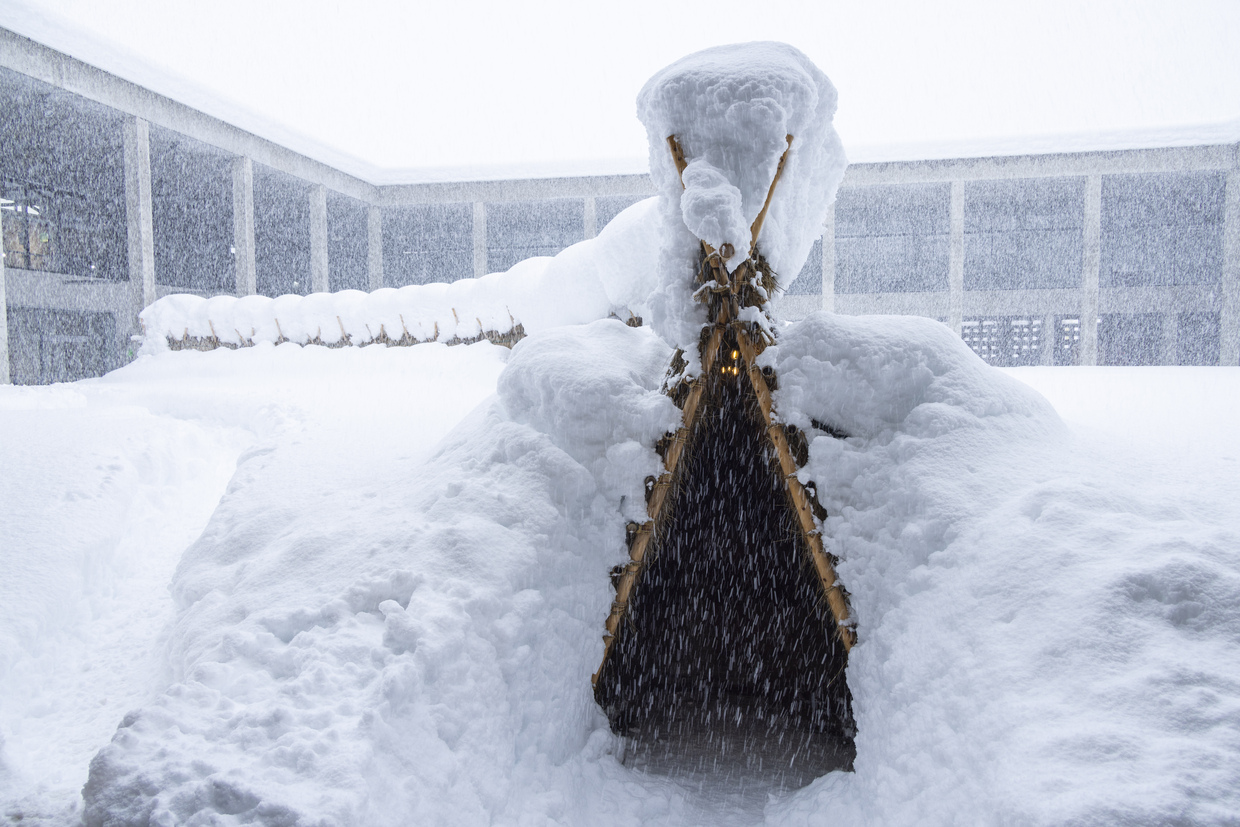
Photo by Osamu Nakamura
【Curated by】BankART1929
【Participating Artists】6lines studio+Tsukamoto Yoshiharu, Yamamoto Aiko, Ihara Koro, Takahashi Keisuke
【Dates】January 24 (Sat) – March 8 (Sun), 2026, 10:00 AM – 5:00 PM (Last entry at 4:30 PM)
【Admission】Corridor: Free (Some experiences require a fee)
【Lighting】Until 8:00 PM in January and February; Until 9:00 PM from March 1 (Sun) onwards
6lines studio + Tsukamoto Yoshiharu
Snow Fence
The lives of Tokamachi’s people coexist with the heavy snowfall that arrives each year. Referencing the temporary snow fences and snow shelves constructed in preparation for the snow, we created a tunnel and a tool shed for snow-related folk tools using thatch, rice straw, and salvaged wood.The courtyard of MonET, described by architect Hiroshi Hara as “a hole for viewing the earth,” transforms into an ethnographic snow garden as snow accumulates, revealing another hole connecting the corridors. We wait for the snow, imagining such possibilities.
Furthermore, the tools for snow life placed in the tool shed can be picked up and experienced firsthand. The snowscape born alongside these tools changes shape day by day.From the “amaya” – a tunnel-like covering extending from the house entrance to the path to protect it from snow – to snow shoveling using “yukigoshi” and “yukinokogiri,” and snow play with sleds and skates, the unique ways of interacting with snow in this region are imbued with abundant wisdom and culture.
Enjoy the ever-changing snowy landscape, its form unknown, and savor the very act of “waiting for the snow.”
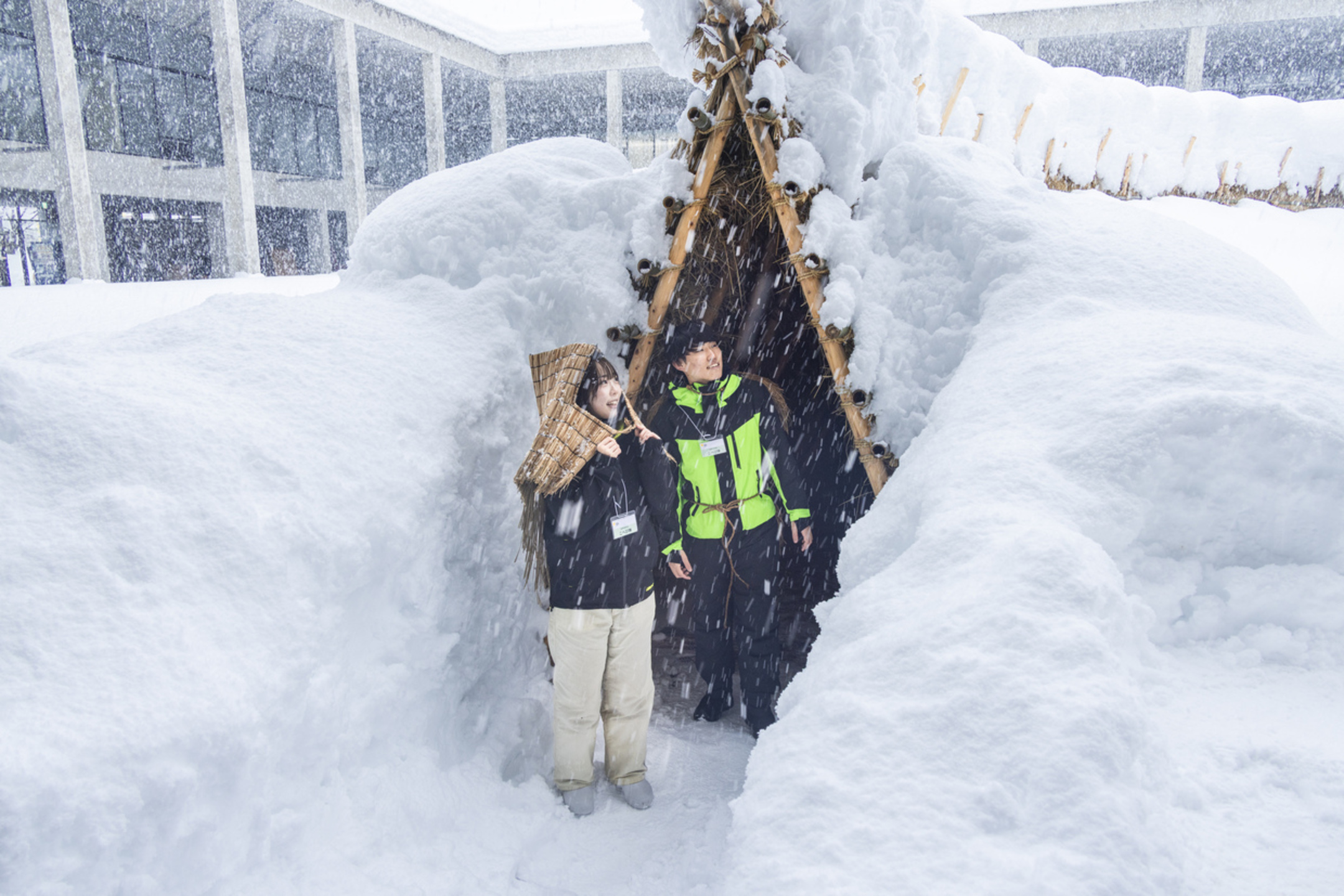
Photo by Osamu Nakamura
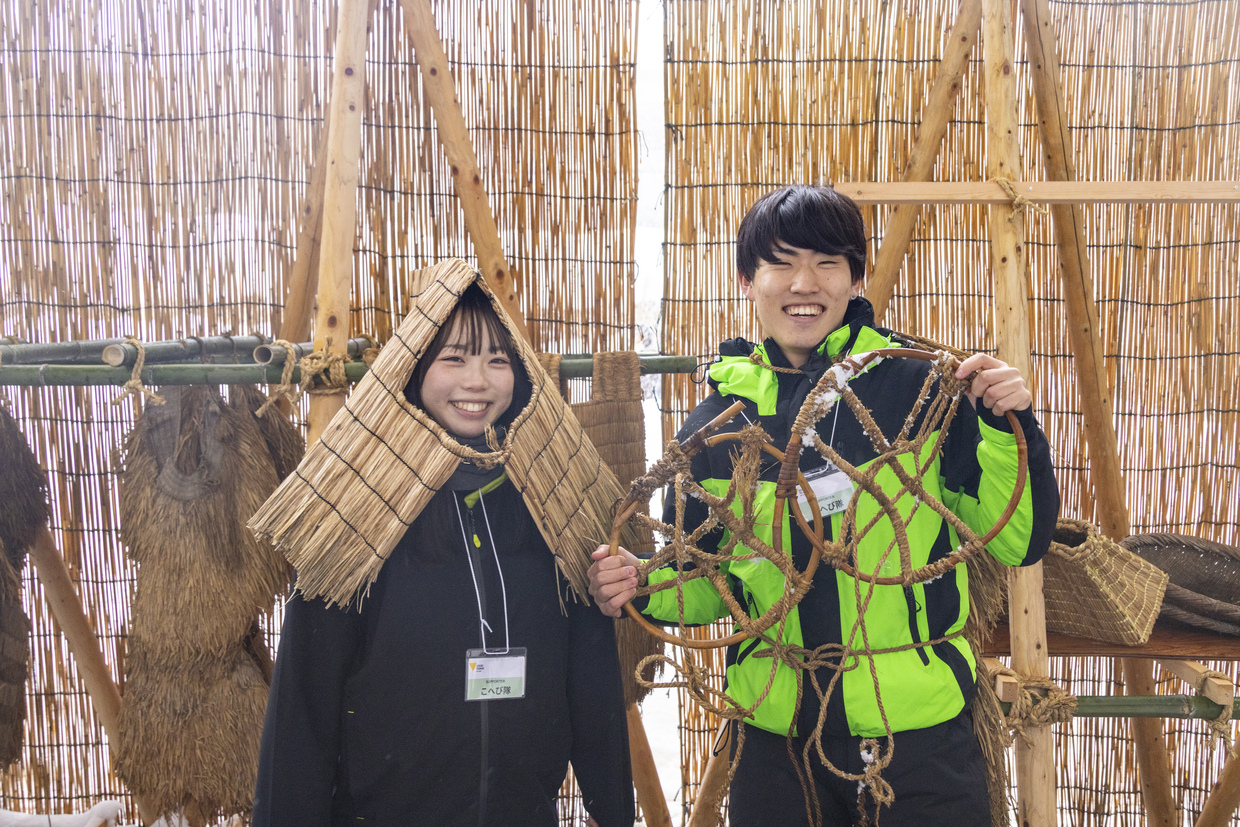
Photo by Osamu Nakamura
Yamamoto Aiko
All Things are in Flux
Artworks that blend plant silhouettes and drawing brushstrokes, utilizing cyanotype techniques. Incorporating motifs from Echigo-Tsumari’s nature, plants, and snow.
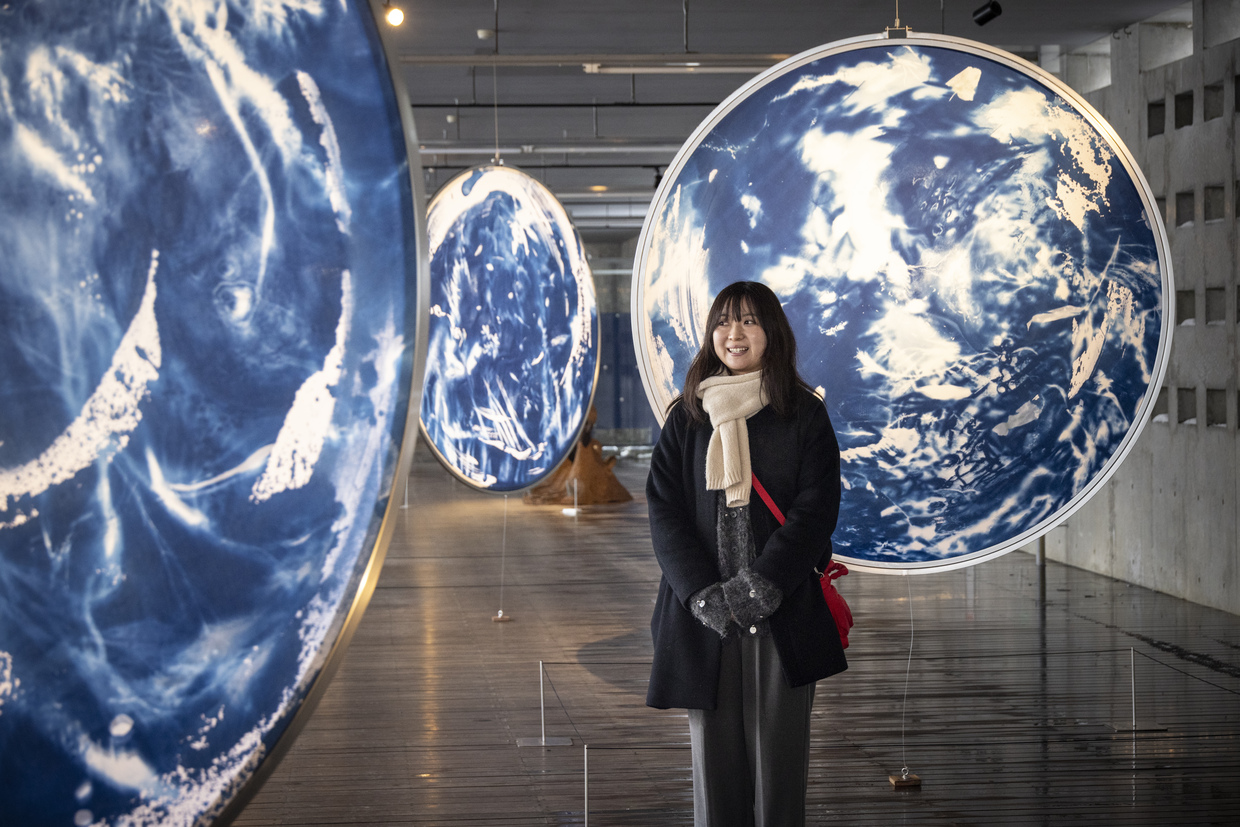
Photo by Osamu Nakamura
Ihara Koro
Turning Footprints Inside Out
Animal tracks found on snow. They gradually weather and eventually vanish, yet they are traces of the animals’ lives. These ephemeral marks are cast in their original form and turned inside out. The space created by the animal’s footsteps is inverted by the mold, rising as sculpture. An artwork that preserves evidence of life, constantly born and fading.
book(ing)
Books damaged by insect infestation. They were books, food for the insects, leftovers, and sometimes their dwelling places. We perceive them as sculptures created by living beings. Using chemicals from conservation and restoration, we preserve the texture of the books while hardening them, allowing them to stand independently like sculptures.These forms, born from the vivid breath of tiny insects, resemble maps viewed from above when scaled differently. They recapture the evidence of life, traversing scales—of disappearance and existence, insects and humans.
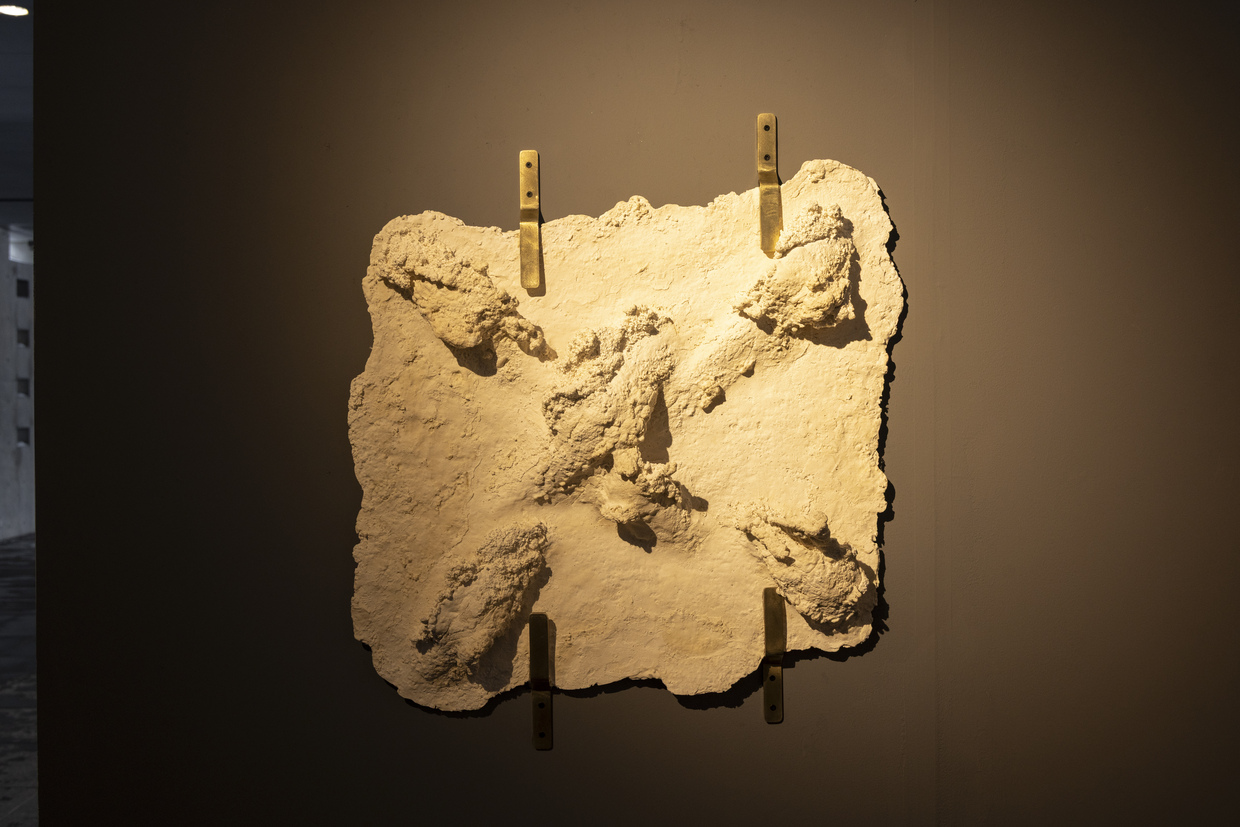
Photo by Osamu Nakamura
Photo by Osamu Nakamura
Takahashi Keisuke
Blue Time
For a limited period, a video artwork by artist Keisuke Takahashi will be projected onto the snowy landscape spreading across the central atrium of MonET. During the period, the museum will remain open until 8:00 PM on Saturday, February 21 and Sunday, February 22. Visitors can view the artwork from above within the museum. (Last admission at 7:30 PM)
Opening days: Friday, February 20 – Sunday, March 1
Opening hours: 5:00 PM – 8:00 PM (until 9:00 PM on March 1)
Admission: Free viewing from the gallery ※ Museum interior requires either the “Echigo-Tsumari Winter 2026” Common Ticket or an individual ticket.
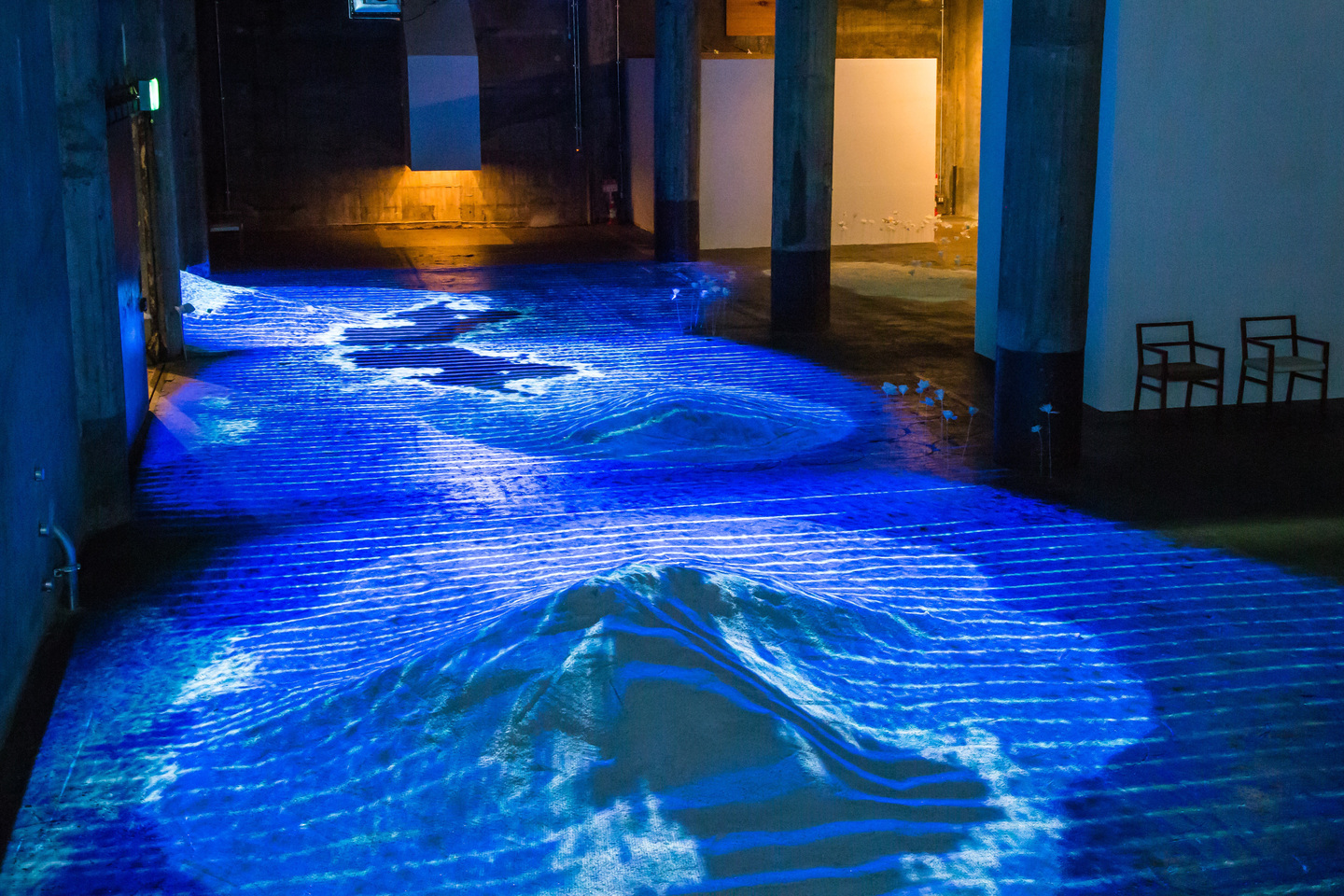
《The Fictional Island》”BankART LifeⅤ ‘Tourism'” (BankART Studio NYK / 2017)
Related Workshops
▼Opening Gallery Talk Tour
On opening day, participating artists will lead an opening gallery talk in a tour format.
Date & Time|January 24 (Sat) 14:00 at MonET Corridor
Participation Fee|Free
Details & Registration Here
▼Ihara Koro”Imagining (Creating) Beneath the Snow — Relief Sculptures Molded from Snow”
Using fingers or tools, indentations and traces are made within boxes filled with snow. Water-based resin is then poured into these shapes to create relief sculptures. Depending on how the snow is packed and the ambient temperature, the form may be clearly imprinted, or the heat of the resin may melt the snow, creating unexpected shapes. The pouring is done only once. Surrendering to chance and the forces of nature, a one-of-a-kind form, born only in this moment, is created.
Date & Time|February 21 (Sat) 1:00 PM – 3:00 PM
Venue|Museum on Echigo-Tsumari, MonET and surrounding area
Participation Fee|Adults: ¥1,000, Elementary/Junior High Students: ¥500 ※Payment on-site
Capacity|10 participants (Elementary school age and above)Details & Registration Here
▼Yamamoto Aiko “NATURE COLOR PICNIC in Tsumari / Botanical Dyeing Workshop vol.2”
Experience plant dyeing using winter plants gathered in Echigo-Tsumari. Enjoy tasting the plants used as dyes as tea. Weather permitting, we will also perform “snow bleaching”—spreading cloth dyed by the artist last summer on the snow. Let’s enjoy the natural cycle and shifting colors together through dyeing during this leisurely time.
Date & Time|March 7 (Sat) ①10:00 AM – 12:00 PM ②2:00 PM – 4:00 PM
Venue|Museum on Echigo-Tsumari, MonET
Participation Fee|Adults: ¥1,000, Elementary/Junior High Students: ¥500 ※Payment on-site
Capacity|15 participants per session (Elementary school age and above)Details & Registration Here
Artist Profile

6lines studio + Tsukamoto Yoshiharu
A collaborative project by Tsukamoto Yoshiharu, Professor of Architecture at Tokyo University of Science (formerly Tokyo Institute of Technology) and co-founder of Atelier Bow-Wow, and the architectural collective 6lines studio—comprising Oyama Ryo, Katayama Kaho, Sasaki Sei , Fuchino Takeshi, Masui Yuzuko, and Miyazaki Riku, all alumni of the Tsukamoto Laboratory.The six members joined Tsukamoto’s satoyama revitalization activities, which he has pursued since 2019 as a director of the general incorporated association “Small Earth.” They began operating as 6lines studio with the construction of the “Satoyama Tiny House Didi-an.” In 2025, they participated in the Tokyo Biennale 2025 “Sukima Project” (Nihonbashi/Bakurocho area).
Yamamoto Aiko
Visual artist. Born in Kanagawa Prefecture in 1991, currently resides in Kyoto Prefecture. Completed the Graduate School of Intermedia Art at Tokyo University of the Arts (2017). Conducted research in China as a Pola Art Foundation Overseas Research Fellow (2019). Through field research and residency projects primarily in Asia and internationally, she creates artworks exploring the relationship between the natural environment and humans, mainly using dyeing techniques.Major exhibitions include “Forgotten Yet Present (It’s Like Breathing)” (gallery N/Aichi 2025), “SENSE ISLAND/LAND 2024” (Kannon-zaki Park/Kanagawa 2024), and “BankART Under 35” (BankART KAIKO/Kanagawa 2021).Her participation in MonET exhibitions continues from the summer/fall show “The Answer is Blown by the Wind.”
Ihara Koro
Born in Osaka Prefecture in 1988. Graduated from the Sculpture Department, Faculty of Fine Arts, Tama Art University in 2011. Completed the Master’s Program in Sculpture, Graduate School of Fine Arts, Tokyo University of the Arts in 2013. His artwork focuses on the byproducts created by living organisms and their habits, transforming these into autonomous sculptures as if made by the creatures themselves.His practice incorporates forms created by nature: artworks like solidifying animal feces with lacquer and returning them to the body that produced them; forming animals from pet food or wool, then burning and casting them; and projects turning naturally built bird nests into vessels. By deliberately turning his gaze toward overlooked creatures and their traces of life, he prompts a reconsideration of ecosystems and their cycles.Her participation in MonET exhibitions continues from the summer/fall show “The Answer Blows in the Wind.”
Summary
| Date and time |
【Dates】January 24 (Sat), 2026 – March 8 (Sun), 10:00 AM – 5:00 PM (Last entry at 4:30 PM) 【Light-Up Hours】Until 8:00 PM in January and February; Until 9:00 PM starting March 1 (Sun) |
|---|---|
| Venue |
Museum on Echigo-Tsumari, MonET Corridor, Pond |
| Admission |
Works in the gallery hall are free to view.
※Some interactive artworks require payment (free with presentation of a Common Ticket or Special Exhibition ticket). Inside the museum: "Echigo-Tsumari Winter 2026" Common Ticket or Special Exhibition (including Permanent Exhibition) ticket: Adults ¥1,200, Elementary/Junior High Students ¥600. ※Due to artwork replacement work inside the museum, some artworks may be temporarily unavailable, and admission fees may be half-price during certain periods. |
Recommended Tours / Itineraries
Related Events

Stay connected with the ETAT official social media to receive the latest news and event information, and the many seasonal faces of Echigo-Tsumari as well as new issue of the ETAT official media, “Art from the Land”.