Thinking 21st century art in the world from Niigata
Echigo-Tsumari Art Field - Official Web Magazine

Feature / The Art of Hospitality

Marina Abramović visits the “Dream House” for the first time in 25 years

Artist: Marina Abramović

A reunion between the artist and the community that has long safeguarded her work. Each artwork, now seemingly a natural part of the landscape, carries its own story. The fact that their journeys continue to be woven even today reminds us that this is by no means something to be taken for granted.

Photo: Nakamura Osamu et al. / Text & Edit: NPO Echigo-Tsumari Satoyama Collaborative Organization

10 December 2025

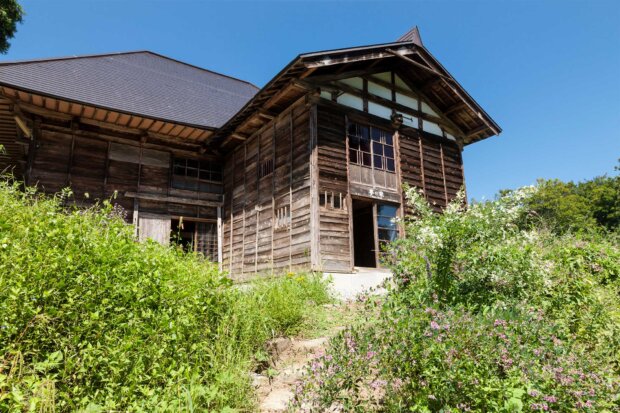
On October 23, 2025, artist Marina Abramović visited her work Dream House. Located in the Uwayu hamlet above the Matsunoyama Hot Spring area in Tokamachi City, Dream House was created for the first edition of the Echigo-Tsumari Art Triennale 2000. The work functions as an accommodation: guests prepare themselves for dreaming during their stay and record the dreams they experience in the Dream Book.

Marina Abramović

Born in 1946 in Belgrade, then part of former Yugoslavia, where the Dada movement had emerged at the beginning of the 20th century. After working in painting, post-object art, and sound works, she presented the performance  “Rhythm 10″ in 1973. Since then, she has developed a series of performances that actively involve the audience, seeking—through the energy generated by spectators—to transcend the physical limits of the body on a spiritual level. From 1976 to 1988, she collaborated with Ulay as her artistic partner.

In 1980–81, she spent time in the Australian desert, where she came to understand the unity of body and nature. Thereafter, focusing on the relationship between nature and human beings, she created works such as walking along the Great Wall of China to sense the differing energies of nature in various places, as well as performances in which she wrapped snakes around her body or invited audiences to physically experience the energy emitted by natural stones such as crystals.

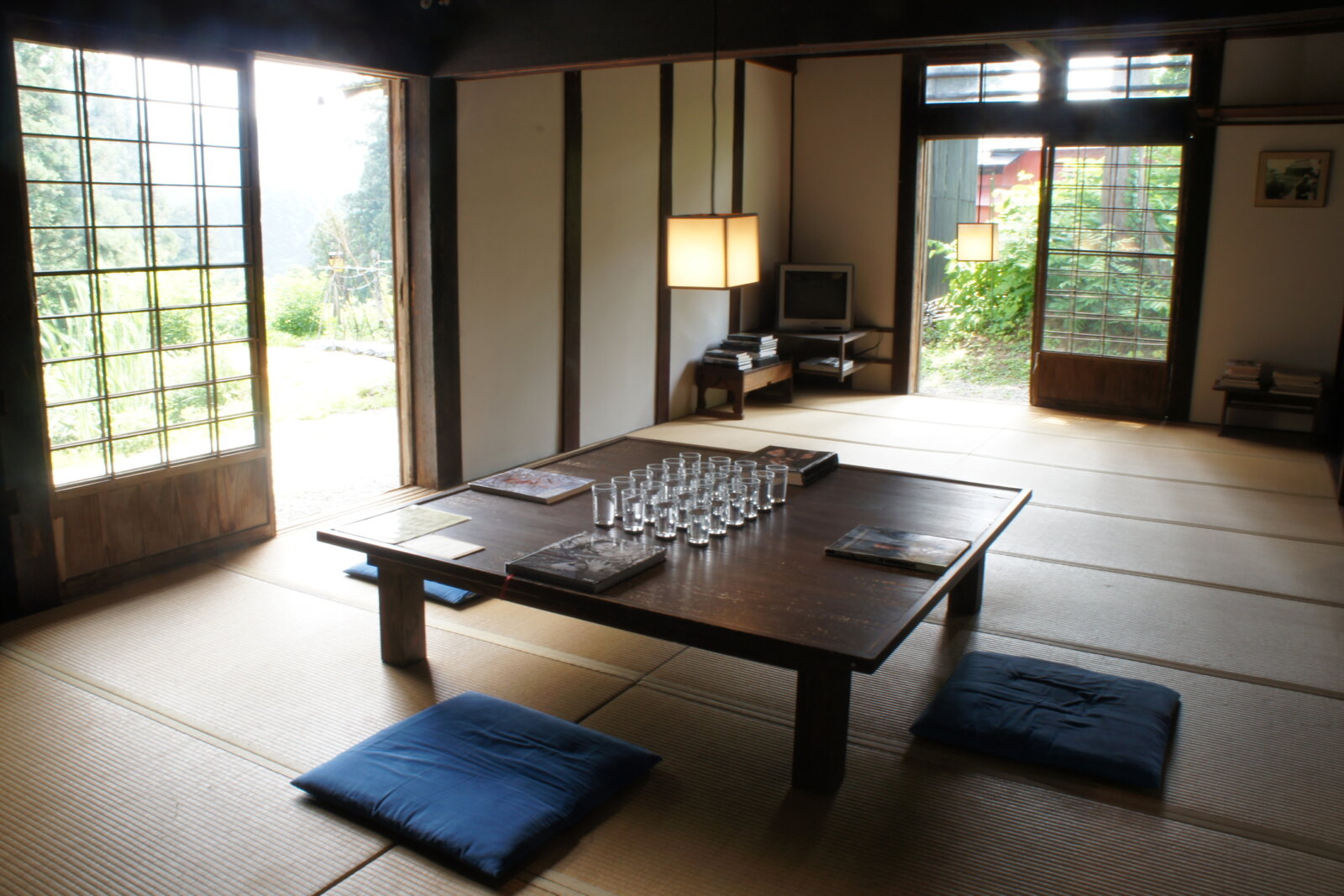
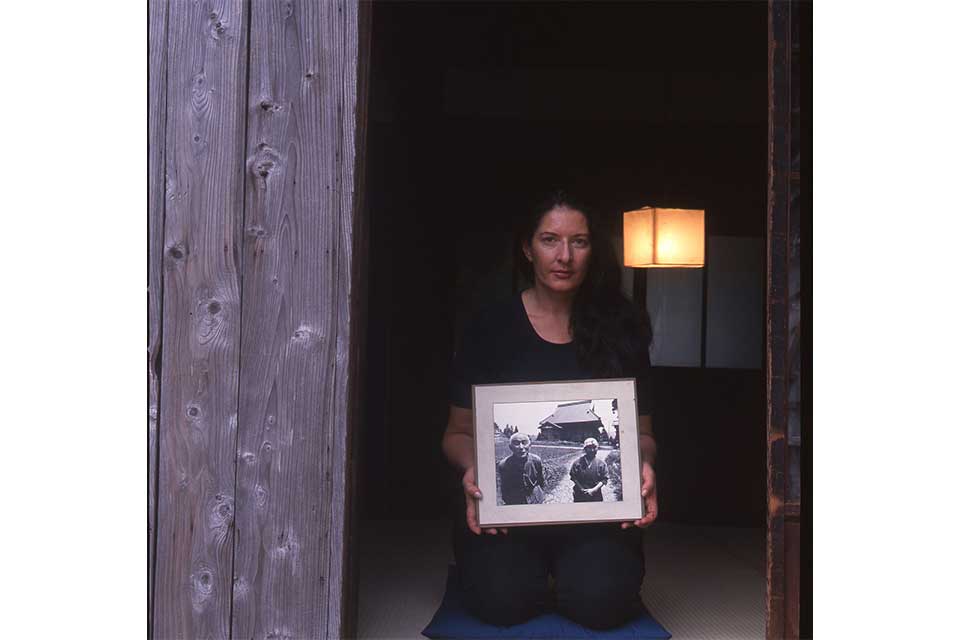
Marina Abramović, "Dream House" Photo ANZAÏ

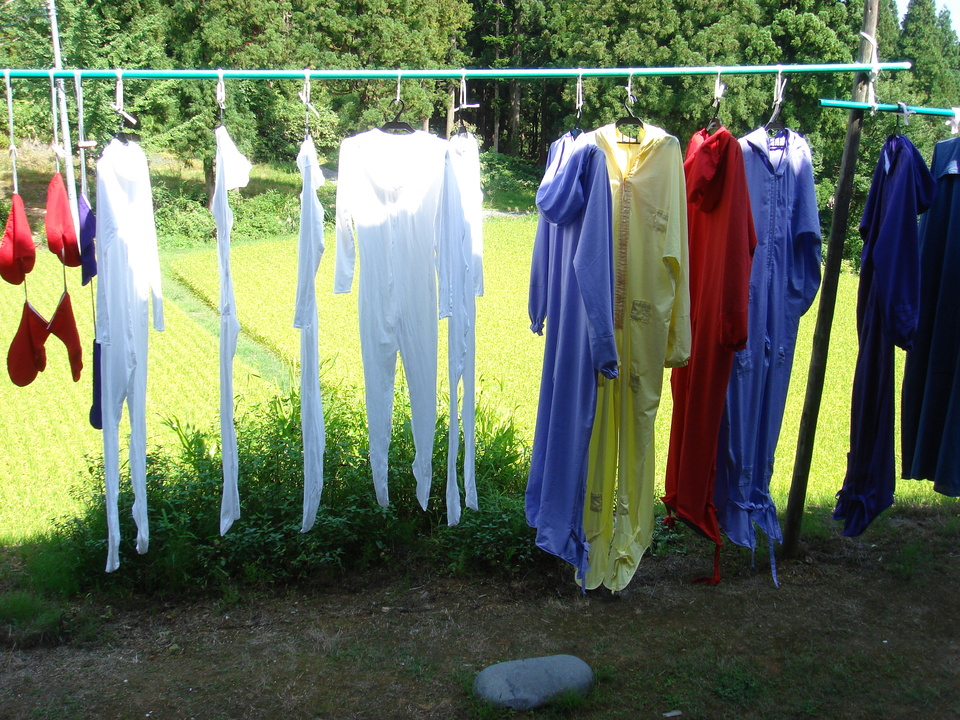
Marina Abramović, "Dream House" Photo Kanemoto Rintaro

Marina Abramović, "Dream House" Photo Nakamura Osamu

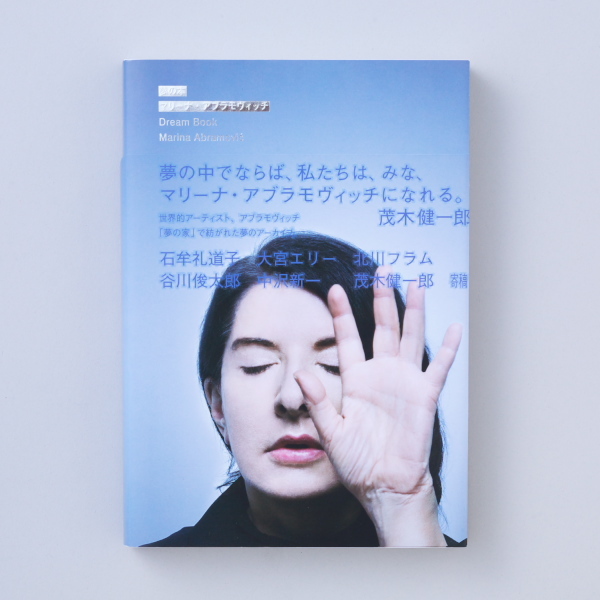
Marina Abramović, "Dream Book"

With the rice harvest complete and under clear skies, four local women who have served as caretakers since the early days began preparing from the morning to welcome Marina. Mindful that stink bugs might appear with the sunshine from late morning onward, they carefully wiped down the space, washed the linens, and, as always, arranged flowers gathered from the mountains in a glass jar at the reception. They also boiled their homemade dokudami (Houttuynia) tea in a kettle, just as they always do.

Dream House

Created in 2000 as an artwork and accommodation designed “for dreaming, ” Dream House is a restored traditional farmhouse that invites visitors to immerse themselves in the rhythms of Satoyama life. Guests prepare themselves for dreaming, don a specially designed “dreaming suit” (pajamas) created by the artist, and sleep in beds intended for dreaming in one of four rooms—red, blue, green, or purple—each distinguished by color. Through this stay, visitors experience a unique form of accommodation dedicated entirely to dreaming.

The dreams they experience are written down in the Dream Book, and the project continues with the publication of this Dream Book.

Also featured in the art column “Art from the Land”
An over 100-year-old minka (house) repurposed as “artwork to stay overnight”

Dream Book

From 2000 onward, approximately 2,000 dreams recorded by guests over more than a decade were collected. From these, 100 carefully selected dreams were compiled and published as the Dream Book. The volume also includes documentation of the project’s creation and contributed essays. A copy is available for viewing at Dream House.

Publisher: Gendai Kikakushitsu
Publication date: June 2012
Price: ¥2,000 + tax
Format: A5 softcover, 242 pages
Onlin-shop


A vacant house over 100 years old becomes “Dream House”

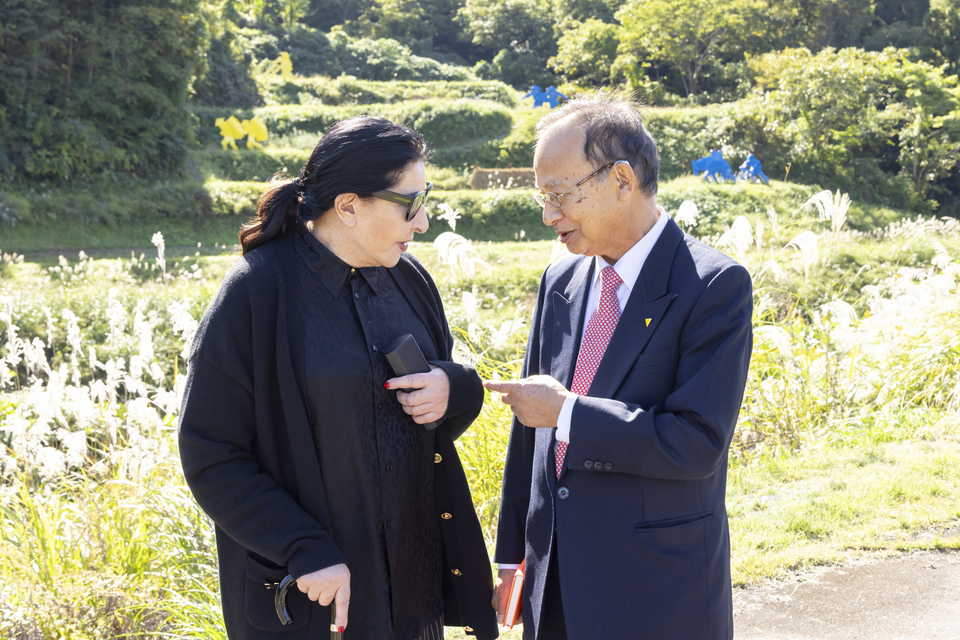
On this occasion, Marina Abramović’s visit to Dream House was realized in conjunction with her trip to Japan to receive the Praemium Imperiale (*1). It was also a long-awaited reunion with Fram Kitagawa, the General Director of the art festival, with whom she has shared a long-standing relationship, making it a rare and valuable opportunity for the two to meet again in Echigo-Tsumari.

Marina and Kitagawa Fram chatting happily, saying, “Did you know we’re the same age?” (Photo Nakamura Osamu)

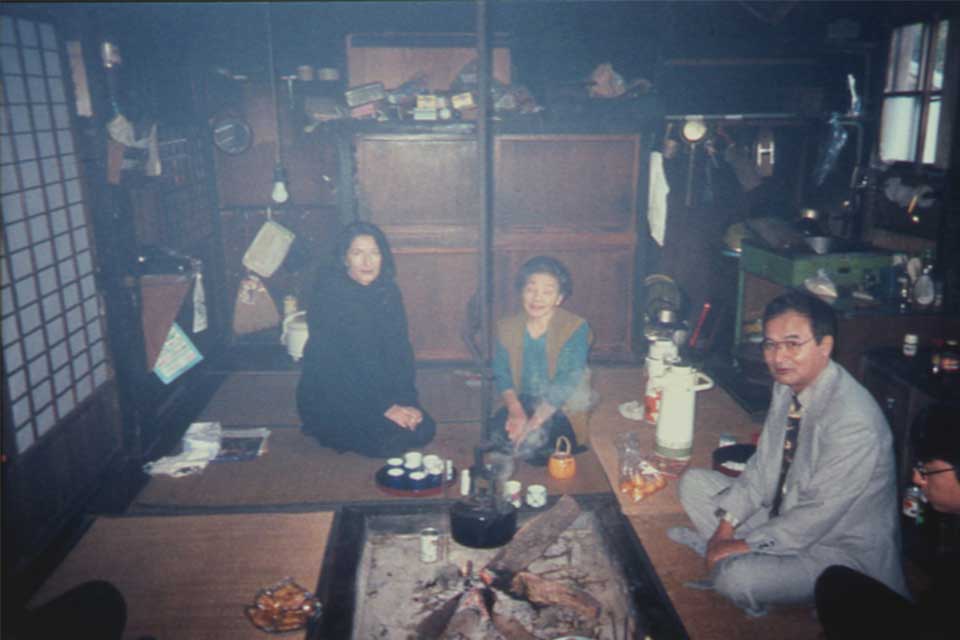
The work was created 25 years ago, in 2000. The artist visited a vacant house more than 100 years old that had been lying dormant in the hamlet of Uwayu in Matsunoyama, and it was decided that this house would be used to create the artwork.

Marina and Fram chatting with the homeowner

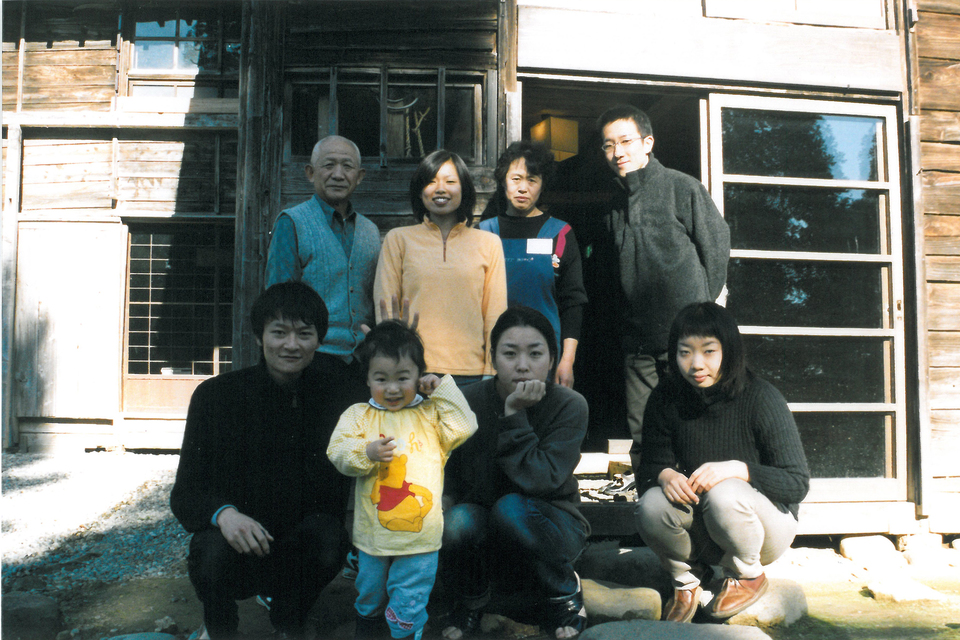
Before beginning production, the artist visited the hamlet and explained the project plan to local residents. From the spring of 2000 until the opening of the art festival a few months later, student supporters from Tokyo known as the Kohebi-tai also joined in, and the clearing and preparation of the vacant house began.

A box-shaped bed fitted with a crystal pillow specified by the artist, a black leather–bound Dream Book, a copper bathtub with an obsidian pillow, and red, blue, purple, and light-purple sleeping bags with twelve pockets were brought into the house. Colored glass was installed in the windows of the four rooms on the second floor, and the operation of the artwork began.

At a time when few people clearly understood what the “Echigo-Tsumari Art Triennale” was, or even what contemporary art itself meant, this moment can now be seen as the starting point of the vacant house project. In her proposal for the work, the artist wrote:

“What is important to me is that this house functions within the everyday lives of the local community and brings a new experience that contributes to people’s daily lives. At the same time, it is also important that people have a point of contact with art.”

The Kohebi-tai and local residents

(*1)Praemium Imperiale in Honour of Prince Takamatsu 

Established in 1988 by the Japan Art Association, the Praemium Imperiale is awarded annually to artists who have achieved outstanding international distinction in the fields of Painting, Sculpture, Architecture, Music, and Theatre/Film. In 2025, the 36th laureates were announced, and Marina Abramović—artist of Dream House—was among the recipients. Numerous artists who have participated in the Echigo-Tsumari Art Triennale have also received this honor in the past.

-Kusama Yayoi (2006)
-Christian Boltanski (2006)
-Daniel Buren (2007)
-Ilya & Emilia Kabakov (2008)
-Antony Gormley (2013)
-Dominique Perrault (2015)
-Annette Messager (2016)
-Nakaya Fujiko (2018)
-James Turrell (2021)

Years in parentheses indicate the year of the award.

With photographs of the homeowners at Dream House.


“This is the first time for me that my work came out of the art context into real life.”

Since the opening of the first edition of the festival, this visit marked Marina’s first return to the work. Dream House began with the concept of offering an overnight stay in which guests record the dreams they experience there in the Dream Book, with the collected dreams to be published as a book ten years later. Over the past 25 years, approximately 3,700 people have taken part in the dreaming experience, more than 82,000 visitors have come to the site, and from the very beginning, local residents of the hamlet have welcomed guests.
In 2011, the work suffered severe damage in the Northern Nagano Prefecture earthquake, and a caretaker who went to inspect the site recalled, “I thought Dream House was finished.” The work was subsequently renovated on a large scale and reopened in 2012. While gradually adapting the details of the overnight experience, it has continued through the COVID-19 pandemic to the present day. Reflecting on Dream House, which the community has steadfastly protected, Marina wrote the following contribution in the Dream Book, published in 2012.

This project was made for the Echigo-Tsumari Art Triennale. But something really incredible happened. The residents of the hamlet where the Dream House was situated, decided to adopt the house as their own and continued to take care of it. The Dream House has became part of their own community. This is the first time for me that my work came out of the art context into real life.

— Marina Abramović, from the Dream Book

It became a large-scale renovation involving lifting the house and rebuilding it from the foundation.

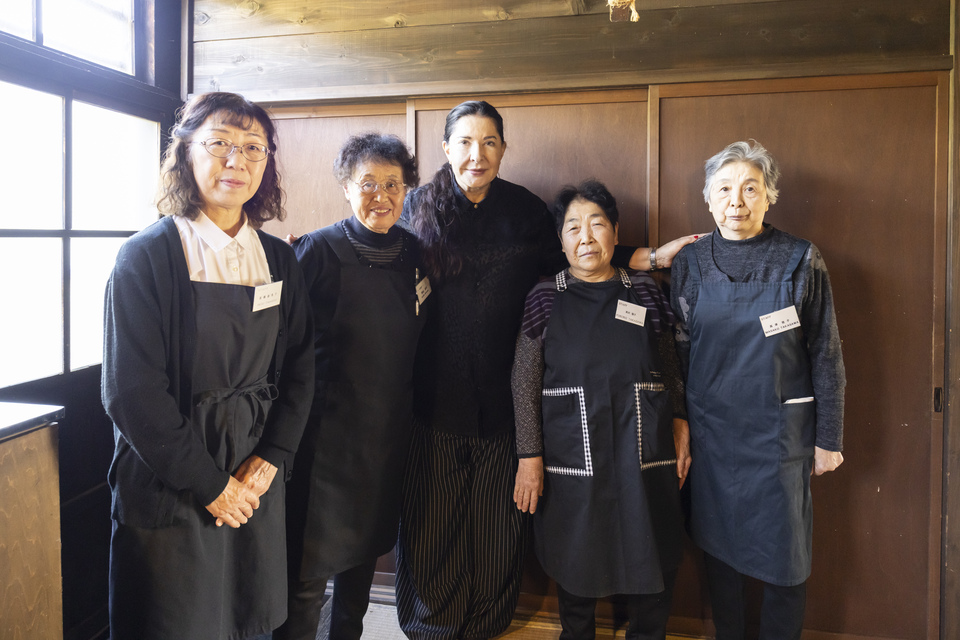
Marina, visibly nervous, embraced each of the caretakers who welcomed her at the entrance. Upon stepping inside, she exclaimed at the well-maintained interior, “It’s wonderful! It’s just as it was when it was completed.” Hearing this, one could sense that the caretakers’ long years of effort were being rewarded.

The tatami mats have never been replaced since the opening, yet because it is an old house, the floors have been carefully wiped with water every time, and meticulous care has been maintained. Plastic items and brightly colored objects have been avoided as much as possible, as they are considered unsuited to Dream House, and the caretakers’ aprons are black. These small, cumulative efforts to uphold the concept of the artwork are what have shaped and sustained Dream House.

Photo Nakamura Osamu

Photo Nakamura Osamu

Photo Nakamura Osamu

Photo Nakamura Osamu

Photo Nakamura Osamu

Photo Nakamura Osamu

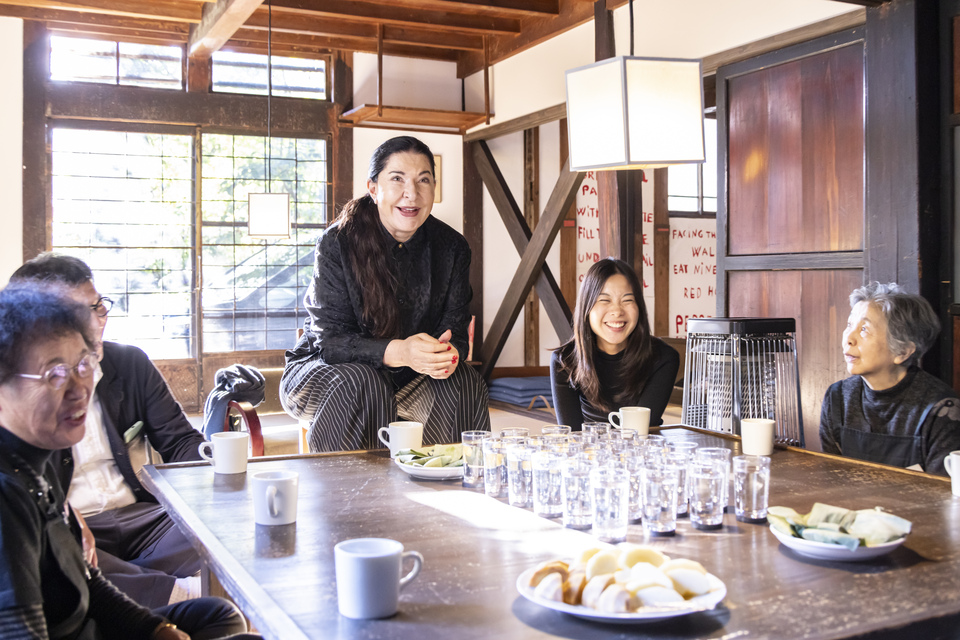
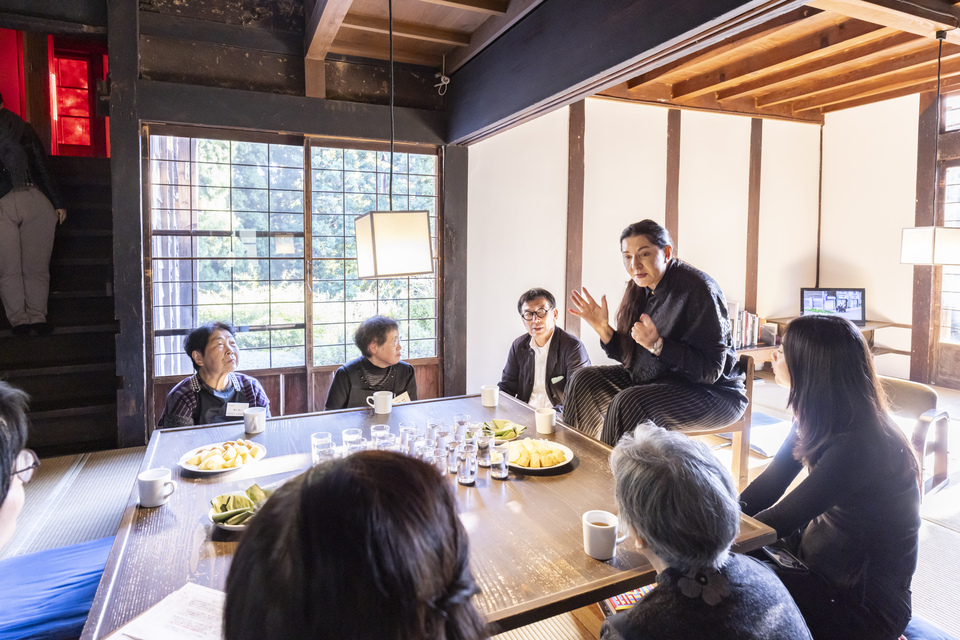
After touring the house, a tea gathering began around a table where magnetized water had been set out, together with the caretakers. Marina first asked the women about their dreams, then inquired in detail about rice cultivation and the current situation of the hamlet. She remarked, “Echigo-Tsumari rice is the most delicious rice I have ever eaten,” and went on to share stories about her hometown and her grandmother, who lived to be over 100 years old.

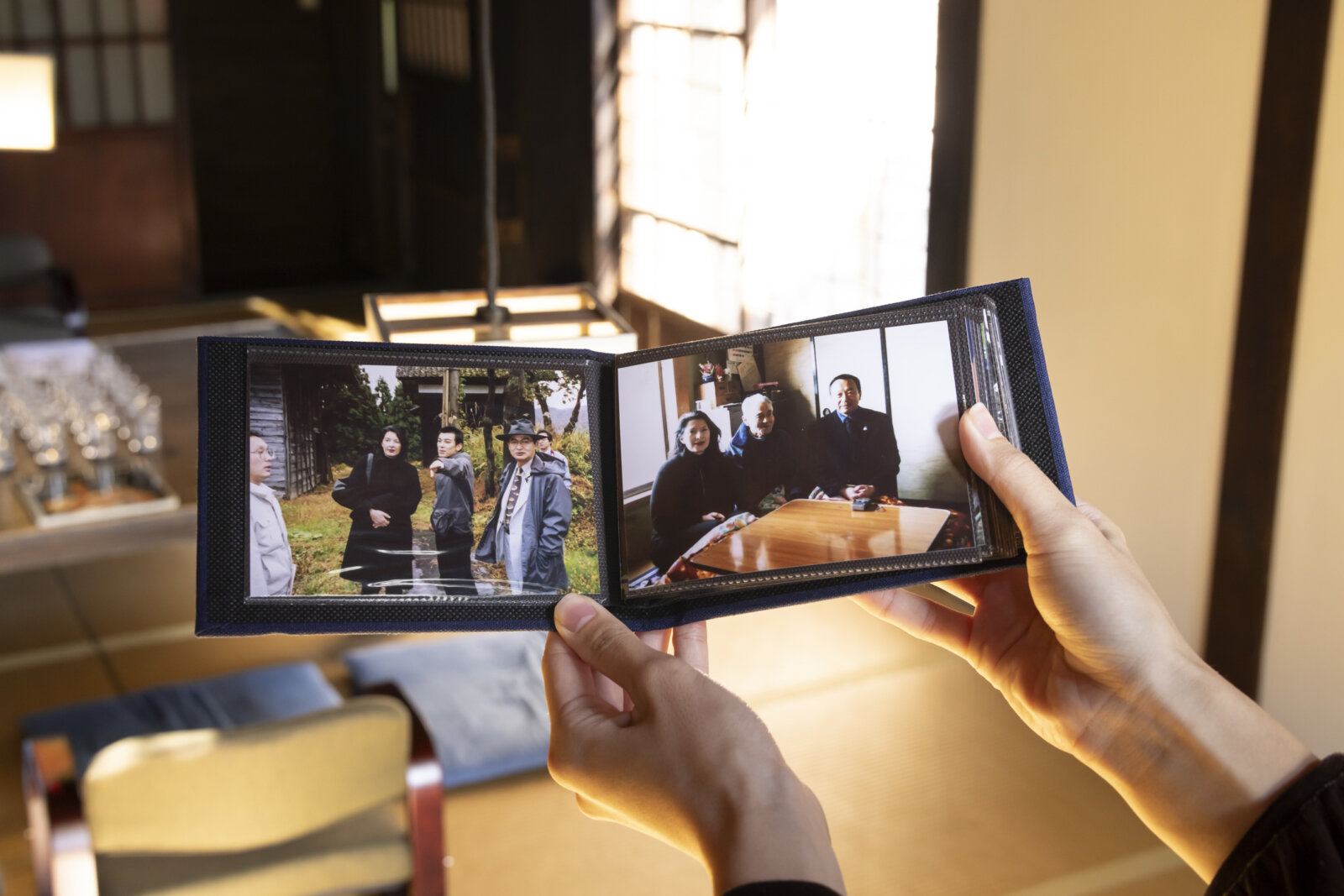
Although the conversation took place through an interpreter, the caretakers—initially tense—soon began to speak naturally. When the topic turned to age, it emerged that Marina and three of the caretakers were almost the same age. Though they had lived very different lives, they spent a moment together at Dream House, enjoying persimmons and Matsunoyama Shinko-mochi (rice cake) served with tea, looking through gifts such as locally grown rice from the hamlet and an album of photographs documenting 25 years of the project, and chatting animatedly. Marina occasionally cracked jokes, and a warm, gentle time flowed by.

Saying, “Next time, I won’t wait another 25 years—I’ll come back much sooner,” she posed for a commemorative photo, and at the end, embraced each person again at the entrance before departing.

Photo Nakamura Osamu

Photo Nakamura Osamu

A handmade album presented by the caretakers, filled with nostalgic photographs from the time of the artwork’s creation, including images of the artist and members of the local community from 25 years ago.
(Photo Nakamura Osamu)


The Continuing Story of “Dream House”

In interviews with various media outlets following her receipt of the Praemium Imperiale, Marina repeatedly spoke about Dream House. According to reports, even in her interview with Bijutsu Techo (*Well-known web media in the Japanese art world), the first thing Marina chose to discuss was the importance of Dream House.

Q: Why is Dream House an important work?

One of the defining features of the Echigo-Tsumari Art Triennale is that it begins by visiting local residents and seeking permission to install artworks. The village I chose had only six residents. One evening, at the village meeting hall, I spoke about what I wanted to do—namely, that I wanted to create Dream House. When this was shared with the villagers, they liked the idea.
After the festival closed, the house was originally scheduled to be dismantled, but the local community expressed their wish to keep it. The work still remains on site today, and the residents even prepare meals for guests who stay there. When the house was damaged by an earthquake, it was the local people who repaired it.
The reason this work is so important to me is that I believe art does not belong to kings, aristocrats, or corporations, but to the people.

— Marina Abramović, from an interview with Bijutsu Techo

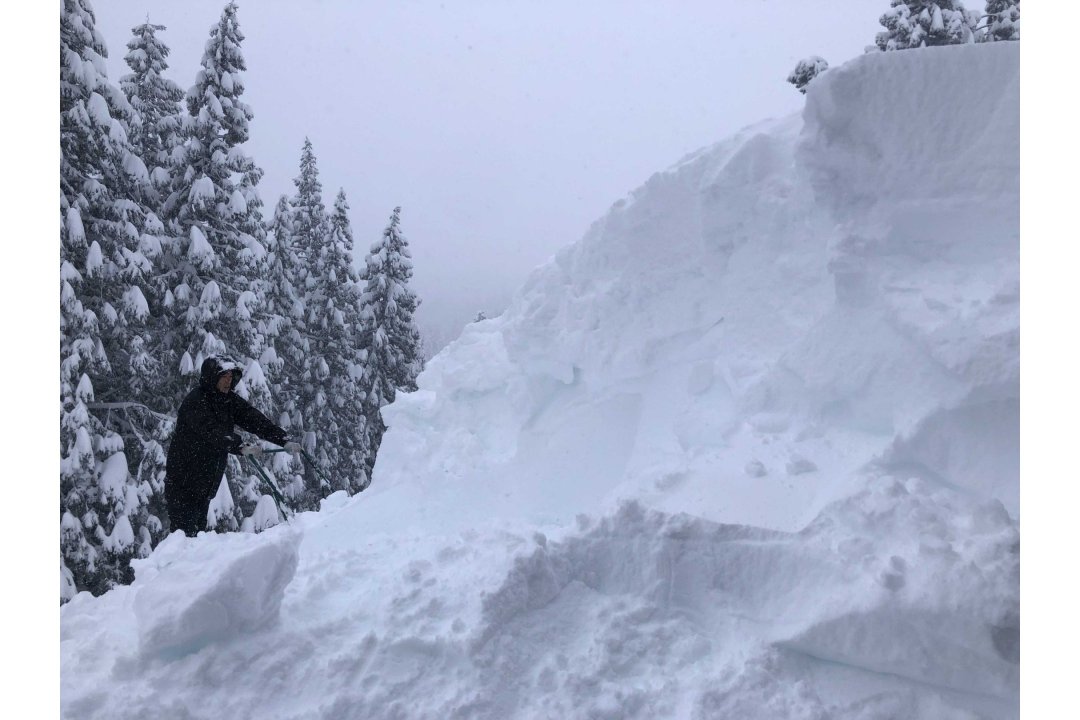
The other day, the annual winterizing work (yukigakoi) was carried out together with members of the local community. In Echigo-Tsumari, where snow has already begun to fall, the long winter is now setting in. As Dream House closes for the season during this time, the operation of Dream House in its 25th year comes to a temporary end. However, the story of Dream House will continue. We hope you will visit again next year to experience dreaming for yourself. The women of the hamlet will surely be there to welcome you, just as they always have.

Information

Dream House

Address: 643 Yumoto, Matsunoyama, Tokamachi City, Niigata Prefecture
Opening days: Irregular
(For the latest information, please refer to the artwork page and the accommodation page.)
*Closed during the winter season
*Opening days differ in part between visits and overnight stays
Fees:

  • Viewing: Adults ¥400 / Elementary & junior high school students ¥200
  • Overnight stay: One group per day ¥33,000

Stay In Touch

Stay connected with the ETAT official social media to receive the latest news and event information, and the many seasonal faces of Echigo-Tsumari as well as new issue of the ETAT official media, “Art from the Land”.